
 How Much Are They Worth?
Celebrity fortunes, explained
How Much Are They Worth?
Celebrity fortunes, explained


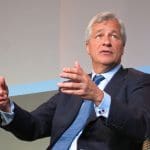



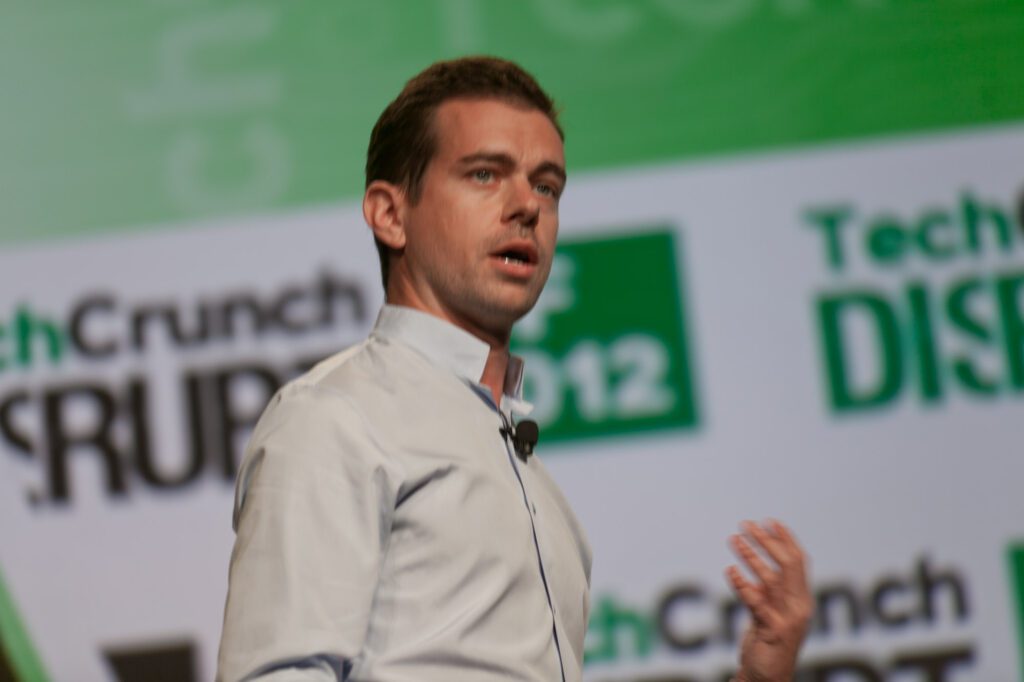
How did Jack Dorsey build this fortune?
The answer unfolds through the career, earnings, deals and assets behind the headline estimate.

Before the fame
The background and early turning points that shaped Jack Dorsey’s route to prominence.
Dorsey was born on November 19, 1976, in St. Louis, Missouri. As a teenager he taught himself to write dispatch-routing software, a hobby that grew out of a fascination with how cities move buses, taxis, and couriers; a version of his code reportedly stayed in use by real dispatch companies for years afterward. He also became known for finding a security flaw in a New York City taxi dispatch system, an episode later cited as an early marker of his technical ability. Dorsey enrolled at the University of Missouri-Rolla in 1995, transferred to New York University two years later, and left NYU one semester short of graduating to pursue software work full time.
Dorsey’s breakthrough came in 2006, when he, Evan Williams, Biz Stone, and Noah Glass built a short-message service inside the podcasting company Odeo. The idea, originally tested internally on Blackberry devices, launched publicly as Twitter and quickly grew into one of the most influential communication platforms in the world. Dorsey served as Twitter’s first CEO until 2008, when he was replaced by Williams and moved into the chairman role, before returning as CEO for a second stint from 2015 to 2021.
The breakthrough years
The career decisions and defining moments that turned recognition into sustained earning power.
In 2009, Dorsey co-founded Square with Jim McKelvey, building a card-reader device that let small merchants accept credit cards through a phone. Square went public in 2015, later expanded into consumer finance through Cash App, acquired a majority stake in the music-streaming service Tidal in 2021, and rebranded as Block in December 2021 to reflect a broader ambition spanning payments, banking, and bitcoin infrastructure. Dorsey stepped down as Twitter CEO in November 2021 and exited his Twitter holding when Elon Musk acquired the company in 2022. In February 2026, as Block’s chairman and chief executive (a title he holds as “Block Head”), he cut roughly 40 percent of the company’s workforce, betting that AI tools would let a smaller team run the business; the stock jumped about 19 percent the next trading day.

What the work can earn
Reported pay, contracts, royalties and performance income reveal how the fortune was funded.
Dorsey does not draw the kind of annual income most people associate with a company founder. Both at Twitter and at Block he has taken a token cash salary rather than a market-rate executive package, and he has requested no annual bonus or new stock awards in recent years. What functions as his “earnings” in any given year is mostly the paper gain or loss on the Block shares he already owns, plus occasional proceeds when he sells a portion of his stake, such as roughly $80 million he realized from a Square share sale in 2018.
Twitter paid Dorsey a symbolic salary of $1.40 a year during his second stint as CEO, a nod to the platform’s original 140-character limit; he had taken no compensation at all in earlier years. At Block, his salary has been set at $2.75 a year, roughly double the Twitter figure, echoing the switch to a 280-character limit, with no cash bonus or fresh equity grants attached. His real financial position comes from ownership: recent SEC filings put his economic stake in Block at roughly 8 percent, and his Class B shares, which carry ten votes each, give him voting control well beyond that economic share. He also held a significant Twitter stake, reported to be worth close to $1 billion, that he exited when Musk’s $44 billion acquisition closed in 2022.

The business beyond the main career
Endorsements, ownership interests and investments can keep compounding long after the initial breakthrough.
There is no reliable public record of Dorsey signing a personal endorsement deal, brand ambassadorship, or paid sponsorship of the kind seen with athletes or entertainers. His public income is tied entirely to the companies he founded and led, not to outside endorsement contracts, so this category does not meaningfully apply to him.
Twitter (later X) and Block (formerly Square) remain the two pillars of Dorsey’s business career. Block’s Cash App has become a major growth driver, and Block took majority ownership of the music-streaming platform Tidal in 2021, part of a push to link artists directly to bitcoin-based payments. Dorsey is also one of bitcoin’s most vocal corporate advocates: Block holds roughly 9,000 bitcoin in its own corporate treasury as of early 2026, and Dorsey has said he personally dollar-cost-averages into bitcoin on a regular basis, though he has never disclosed the size of his personal holdings. Away from Block, Dorsey helped fund and launch Bluesky, a decentralized social-media project that spun out of Twitter in 2019, serving on its board until he stepped down in May 2024 amid reported disagreements over the platform’s direction.

Notable luxury item
A reported property or major asset offers a tangible glimpse of the wealth behind the public estimate.
Dorsey’s best-documented real estate is a compound in the Sea Cliff neighborhood of San Francisco. He paid $10 million in 2012 for a midcentury modern house on a bluff overlooking the bay, then paid $21.9 million in an off-market deal that closed in late 2018 for the house next door, at the time the highest price ever recorded for a Sea Cliff property. Combined, the two homes total roughly 7,300 square feet on about 1.2 acres. Public reporting has not documented a subsequent sale, so this appears to remain his primary residence, though as with most privately held real estate that cannot be confirmed with certainty from public records alone. Separately, Dorsey bought a Hollywood Hills house for $4.225 million in 2018 and sold it about a year later for $4.625 million; that property is a former holding, not a current one. No other specific high-value personal asset, such as a yacht, jet, or major art collection, is reliably documented in public sources.
Jack Dorsey’s estimated net worth
Public estimates vary because private contracts, investments, taxes and liabilities are not fully disclosed.
How this estimate is calculated
This range reflects Forbes’ real-time tracking of Jack Dorsey’s wealth, the primary basis for the estimate used here, over the course of 2026: Forbes valued him at about $5.5 billion in late February 2026, before Block’s stock rallied sharply following the company’s workforce cuts, and its real-time figure stood at roughly $7.5 billion as of August 16, 2026 — the date this estimate reflects. Forbes derives that figure the way it typically does for founders whose wealth is mostly one public stock: multiplying Dorsey’s disclosed Block share count by the stock’s most recent closing price on the New York Stock Exchange (ticker XYZ), then adjusting for other known assets and liabilities. Because that calculation is repriced every trading day, both figures above are snapshots as of the dates cited, not fixed numbers, and the range will already have shifted by the time this is read. The spread within a single year illustrates a defining feature of Dorsey’s finances: almost all of his wealth sits in Block stock, an estimated 8 percent economic stake, rather than in cash, so a double-digit swing in the share price can move his net worth by a billion dollars or more in a matter of weeks. Other trackers use different methodologies and land at different points on the same spectrum: the Bloomberg Billionaires Index has at times valued him several billion dollars higher after revising which private holdings it counts. Recent 2026 range: approximately $5.5 billion to $7.5 billion, reflecting the swing between late February and mid-August alone.
Dorsey’s revenue as a business leader and his personal net worth are two different things: Block reports billions of dollars in annual gross profit, but that money belongs to the company and its shareholders, not to Dorsey personally, whose own cash income is close to zero after years of taking only a token salary. His net worth is also almost entirely unrealized, existing on paper as shares he has not sold, and it excludes an unknown amount of personal bitcoin he has never disclosed, plus the roughly $1 billion in equity he moved into philanthropic giving in 2020, some of which has already been distributed. Given the swings shown above, any single figure should be read as a snapshot of a genuinely volatile position, not a fixed number.
Key moments in the growth of Dorsey’s fortune:
| Year | Event |
|---|---|
| 1976 | Born in St. Louis, Missouri |
| 2006 | Co-founds Twitter with Evan Williams, Biz Stone, and Noah Glass |
| 2008 | Removed as Twitter CEO; remains chairman |
| 2009 | Co-founds Square with Jim McKelvey |
| 2015 | Square goes public; Dorsey returns as Twitter CEO |
| 2018 | Twitter salary set at $1.40/year; buys adjacent Sea Cliff home for $21.9 million |
| 2020 | Pledges $1 billion, about 28% of his wealth at the time, to Start Small LLC for COVID-19 relief and other causes |
| 2021 | Block acquires majority stake in Tidal; Square renamed Block; Dorsey steps down as Twitter CEO |
| 2022 | Elon Musk completes $44 billion acquisition of Twitter |
| 2024 | Departs Bluesky’s board |
| 2026 | Block cuts about 40% of its workforce; stock surges; Forbes real-time net worth approaches $7.5 billion |
Dorsey’s fortune stands out even among his own Twitter co-founders. Evan Williams, who went on to found Medium, has a Forbes-estimated net worth of roughly $2 billion, and Square co-founder Jim McKelvey sits in a similar range; both are wealthy by any normal measure but well below Dorsey because neither held as large a stake in a second breakout company. Biz Stone, another Twitter co-founder, has a far smaller estimated net worth of roughly $250 million, a reminder of how unevenly founder equity can end up distributed. Against a peer like Elon Musk, whose fortune after acquiring Twitter stretched into the hundreds of billions, Dorsey’s multi-billion-dollar net worth is large but comparatively modest, underscoring how much Musk’s wealth is concentrated in Tesla and SpaceX rather than social media.
Sources and references
- Forbes — Real-Time Billionaires profile tracking Jack Dorsey’s net worth day by day; the primary basis for the estimate in this article. Jack Dorsey, Forbes Real-Time Net Worth
- Bloomberg — Bloomberg Billionaires Index profile, an independent methodology-based wealth tracker used here for comparison against Forbes. Jack Dorsey, Bloomberg Billionaires Index
- Forbes — Reporting that Block’s stock jumped roughly 19% after Dorsey announced the February 2026 workforce cuts, the move that widened this year’s net worth range. “Block Shares Surge 19% After Jack Dorsey Cuts Workforce Nearly In Half,” February 27, 2026
- U.S. Securities and Exchange Commission (SEC EDGAR) — Block, Inc.’s own filings, including the proxy statement disclosing Dorsey’s roughly 8% economic stake and $2.75 annual salary. Block, Inc. filings, CIK 0001512673
- Yahoo Finance — Report on Dorsey’s $2.75 annual salary at Block, sourced to the company’s own compensation disclosures. “Jack Dorsey received a salary of just $2.75 last year”
- Forbes — Reporting on the roughly $80 million Dorsey realized selling Square shares in 2018 despite taking no salary. “Billionaire Jack Dorsey, Who Doesn’t Take A Salary, Pocketed $80 Million In 2018”
- CoinDesk — Reporting on Block’s corporate bitcoin treasury approaching 9,000 BTC in early 2026. “Jack Dorsey’s Block nears 9,000 Bitcoin in treasury after Q1 addition,” April 2026