 How Much Are They Worth?
Celebrity fortunes, explained
How Much Are They Worth?
Celebrity fortunes, explained




How did Joan Roca build this fortune?
The answer unfolds through the career, earnings, deals and assets behind the headline estimate.
Before the fame
The background and early turning points that shaped Joan Roca’s route to prominence.
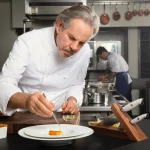
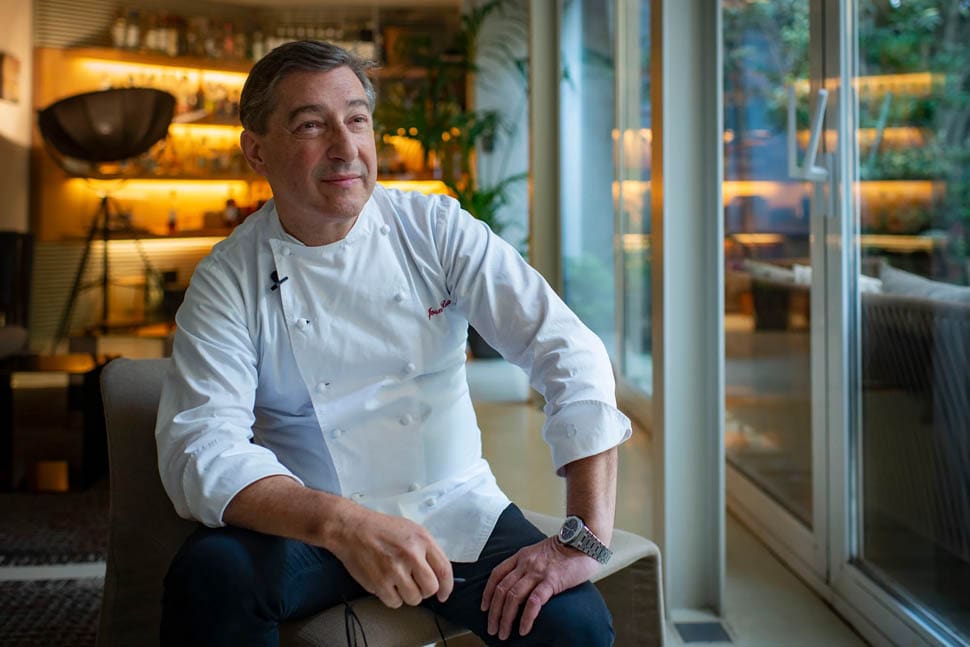
Joan Roca i Fontané was born on February 11, 1964, in Girona, Catalonia. He grew up above and around Can Roca, the traditional neighbourhood restaurant run by his parents, Josep Roca and Montserrat Fontané. At nine he began helping his mother in the kitchen, absorbing Catalan stews, hospitality and the economics of a family dining room. He later studied at the Escola d’Hostaleria de Girona and returned as a teacher, establishing the educational outlook that would remain central to his career.
His childhood and training are described by Michelin’s profile and the World Economic Forum biography.
In 1986, at 22, Joan opened El Celler de Can Roca beside his parents’ restaurant with his brother Josep, who led wine and front of house. Their first dish was hake with rosemary and garlic vinaigrette. Jordi later joined as pastry chef, completing a division of roles the brothers describe as an equilateral triangle. Joan combined Catalan memory with sous-vide, distillation and other modern techniques without abandoning the family model of hospitality.
The opening, first dish and brothers’ roles are documented in Michelin’s exact interview.
The breakthrough years
The career decisions and defining moments that turned recognition into sustained earning power.
El Celler earned its first Michelin star in 1995, a second in 2002 and a third in 2009. In 2007 the brothers moved to a purpose-built site at Can Sunyer, giving the kitchen, dining room and large wine cellar space for more ambitious work. The breakthrough was gradual rather than overnight: more than two decades separated opening from the third star, reflecting sustained family investment and technical evolution.
The star timeline and move are reported by Forbes España and confirmed by the MICHELIN Guide listing.

What the work can earn
Reported pay, contracts, royalties and performance income reveal how the fortune was funded.
El Celler de Can Roca was named the world’s best restaurant in 2013 and again in 2015, while ranking second several other years. Joan received major individual recognition including the International Academy of Gastronomy’s Grand Prix de l’Art de la Cuisine and top placements in The Best Chef awards. The brothers received an honorary doctorate from the University of Girona, and their restaurant has retained three Michelin stars into its 40th anniversary year.
The global rankings and honours are summarised by Forbes; current three-star status is confirmed by Michelin.
Roca is recognised not only as a chef but as a researcher and educator. He became an honorary academic of the Royal European Academy of Doctors, has published reference books and registered culinary innovation patents. His work bridges science, sensory anthropology, agriculture and Catalan tradition. This intellectual profile differentiates his public brand from celebrity chefs built mainly through television.
His patents, La Masia research centre, publications and honours are listed by the Royal European Academy of Doctors.
The business beyond the main career
Endorsements, ownership interests and investments can keep compounding long after the initial breakthrough.
The brothers’ most consequential long-term partnership has been with BBVA, which supported international restaurant tours and culinary talent programmes. Joan has described those tours as a way to exchange knowledge rather than simply export a tasting menu. The family has also collaborated with The Macallan on TimeSpirit in Scotland, a limited overseas restaurant concept linking Roca cooking with the whisky estate. Commercial terms remain private.
The BBVA-supported Cooking Tour Experience is documented by the World Economic Forum, and the Macallan collaboration is reported by the HuffPost España.
The Roca family enterprise has expanded beyond El Celler into research, education and additional hospitality concepts. La Masia functions as an R&D centre, while the brothers have developed projects including Casa Cacao, Normal, Rocambolesc and Fontané. International collaborations allow the family to take its name abroad without cloning the flagship. Books, teaching and intellectual property add income streams, but ownership is shared across a family organisation rather than belonging entirely to Joan.
The research and innovation structure is described by the Academy; the new Fontané family-tribute project is reported by Cadena SER.
Notable luxury item
A reported property or major asset offers a tangible glimpse of the wealth behind the public estimate.
The family’s principal visible asset is the purpose-built El Celler de Can Roca property and operating business in Girona, alongside its name, recipes, cellar and intellectual property. The restaurant’s extensive wine collection and specialised R&D facilities represent substantial business value. However, those assets are shared with Joan’s brothers and family companies; assigning all of their value to Joan would overstate his personal position.
The location, three-star operation and sustainability facilities appear on the Michelin listing; the 2007 custom site is described in Michelin’s chef feature.
Joan Roca’s estimated net worth
Public estimates vary because private contracts, investments, taxes and liabilities are not fully disclosed.
How this estimate is calculated
The estimate weighs Joan’s family ownership in a durable three-star restaurant, nearly four decades of chef income, additional Roca concepts, books, patents, teaching, tours and brand partnerships. It applies value to El Celler’s global reputation, wine cellar and purpose-built operation but divides enterprise value to reflect shared family ownership. It also recognises large staff, product, property, research and cellar costs.
No public consolidated accounts disclose Joan’s individual stake, debt or private property, so the result is a reasoned range rather than a precise figure. It excludes his brothers’ separate earnings and does not treat UN work as commercial income. The main anchors are the restaurant history reported by Forbes España, Michelin’s current listing and the Academy’s record of patents and projects.
Roca has served as a Goodwill Ambassador for the United Nations Development Programme and uses food to discuss sustainability and social development. El Celler supports local producers, grows vegetables and operates Roca Recicla to repurpose glass, plastic and polystyrene. The Terra Animada botanical project has catalogued thousands of wild species for potential recovery and culinary use, connecting research with public environmental awareness.
His UNDP role is listed by the Royal European Academy of Doctors, while Michelin details Roca Recicla and local sourcing.
Joan Roca has largely avoided personal scandal. Scrutiny focuses instead on the exclusivity, pricing and long waiting list of a restaurant whose public message emphasises family and social responsibility. The brothers respond through education, accessible concepts and community projects, but El Celler remains a luxury destination. Rankings also require caution: being named “best in the world” is an award outcome, not an objective valuation of the business.
Michelin notes the exceptional demand and long waiting list on its current restaurant page, while Forbes records Joan’s view that returning customers matter more than ranking position.