
 How Much Are They Worth?
Celebrity fortunes, explained
How Much Are They Worth?
Celebrity fortunes, explained

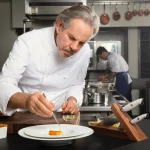



Paolo Casagrande (Italy) – Lasarte
Net worth revealed after 6 slides
Begin the countdown ↓How did Paolo Casagrande (Italy) – Lasarte build this fortune?
The answer unfolds through the career, earnings, deals and assets behind the headline estimate.
Before the fame
The background and early turning points that shaped Paolo Casagrande (Italy) – Lasarte’s route to prominence.
Paolo Casagrande was born in 1979 in Susegana, a small town near Conegliano in the Veneto region of Italy, and trained at the Alfredo Beltrame Hospitality School in nearby Vittorio Veneto before entering professional kitchens, according to Identita Golose’s chef profile.
Though the site categorizes this profile under “Italy,” Casagrande has spent the core of his career, and built his reputation, in Spain: he has led the kitchen at Lasarte in Barcelona since 2012, and it is that three-Michelin-star restaurant, not an Italian address, that defines his professional life, per the official Lasarte team page.
Casagrande began working in kitchens across Italy before moving abroad in the late 1990s, spending time in London in 1998 and then training under Pierre Pommel at a restaurant in Chateauneuf-du-Pape, followed by three years in Paris under chef Alain Soliveres, according to Reporter Gourmet’s chef biography.
That circuit through Italian, English and French kitchens gave him a classical technical foundation before the move that would define his career: in 2003, at age 24, he joined the team of Basque chef Martin Berasategui, a partnership that has now lasted more than two decades, per Foods and Wines from Spain’s profile of the chef.
The breakthrough years
The career decisions and defining moments that turned recognition into sustained earning power.
Working within the Berasategui group, Casagrande was appointed head chef of M.B., the restaurant inside the Ritz-Carlton Abama resort in Tenerife, where he earned his first Michelin star in 2009, according to Reporter Gourmet. He went on to oversee the kitchen at Casta Diva Resort on Italy’s Lake Como for two years before Berasategui gave him the role that would define his career.
On September 2, 2012, Casagrande arrived in Barcelona to take over the kitchen at Lasarte, Berasategui’s outpost inside the city’s Monument Hotel, according to the restaurant’s official team page. Four years later, in late 2016, Lasarte was awarded a third Michelin star, effective from the 2017 guide, making it the first restaurant in Barcelona ever to hold the distinction, per Catalan News’ report on the award.

What the work can earn
Reported pay, contracts, royalties and performance income reveal how the fortune was funded.
Lasarte has held its three Michelin stars continuously since 2017, a run of essentially uninterrupted top-tier recognition under Casagrande’s day-to-day leadership of the kitchen, according to Reporter Gourmet’s feature on his tenure. In February 2019, on his 40th birthday year, he also received the 3 Soles distinction, the highest rating in Spain’s Guia Repsol, awarded at a 40th-anniversary gala in San Sebastian alongside four other chefs, according to Repsol’s official press release.
Since February 2016 he has also directed the entire gastronomic operation of the Monument Hotel, expanding his remit beyond Lasarte to include the hotel’s Ristorante Oria and Hall0 Bar, a broader mandate that reflects how central he has become to the property’s food and beverage identity, per Reporter Gourmet.
Casagrande is a member of JRE (Jeunes Restaurateurs), the pan-European association that vets and admits chefs based on peer recognition of quality and consistency, which describes him as an “award-winning top chef with a love for seasonal products,” according to his JRE member profile.
He has also become a recurring name on the European trade and speaking circuit, appearing among the listed speakers for Alimentaria, Spain’s major food industry trade fair held in Barcelona, according to the Alimentaria speaker directory. Italian trade press has also profiled him specifically as a rare case of a Veneto-trained chef reaching three-star status abroad, framing him as a point of national pride, per Reporter Gourmet’s profile.

The business beyond the main career
Endorsements, ownership interests and investments can keep compounding long after the initial breakthrough.
Casagrande has not built a broad consumer-facing endorsement portfolio comparable to television chefs; his commercial visibility instead runs through professional and trade channels. His paid instructor role for Scoolinary functions as a recurring licensing-style arrangement, with the platform marketing him using his Michelin-starred credentials to sell course access, according to the Scoolinary listing.
He is also listed as a speaker for Alimentaria, a paid or expenses-covered engagement typical for chefs of his standing on the European trade-fair circuit, per the Alimentaria speaker page. No major appliance, spirits, or lifestyle brand ambassadorship for Casagrande is documented in available reporting, and no book or product line under his own name has surfaced.
Casagrande does not own Lasarte; the restaurant operates as part of Martin Berasategui’s group inside the Monument Hotel, and his role is that of head chef and gastronomic director rather than proprietor, according to the restaurant’s own team page. That distinction matters for how his personal financial upside should be read: his compensation is tied to salary, bonus and profile-driven outside income rather than restaurant equity.
Within that structure he has built out new revenue-generating formats, most notably Il Milione, an ultra-exclusive chef’s table for two to eight guests launched on Lasarte’s mezzanine level, priced at roughly 490 euros per person for a 13-course tasting menu themed around Marco Polo’s travels, according to Reporter Gourmet’s coverage of the concept’s launch. He also teaches paid online courses, including a risotto class and a tasting-menu masterclass, through the culinary education platform Scoolinary, according to his Scoolinary instructor page.
Notable luxury item
A reported property or major asset offers a tangible glimpse of the wealth behind the public estimate.
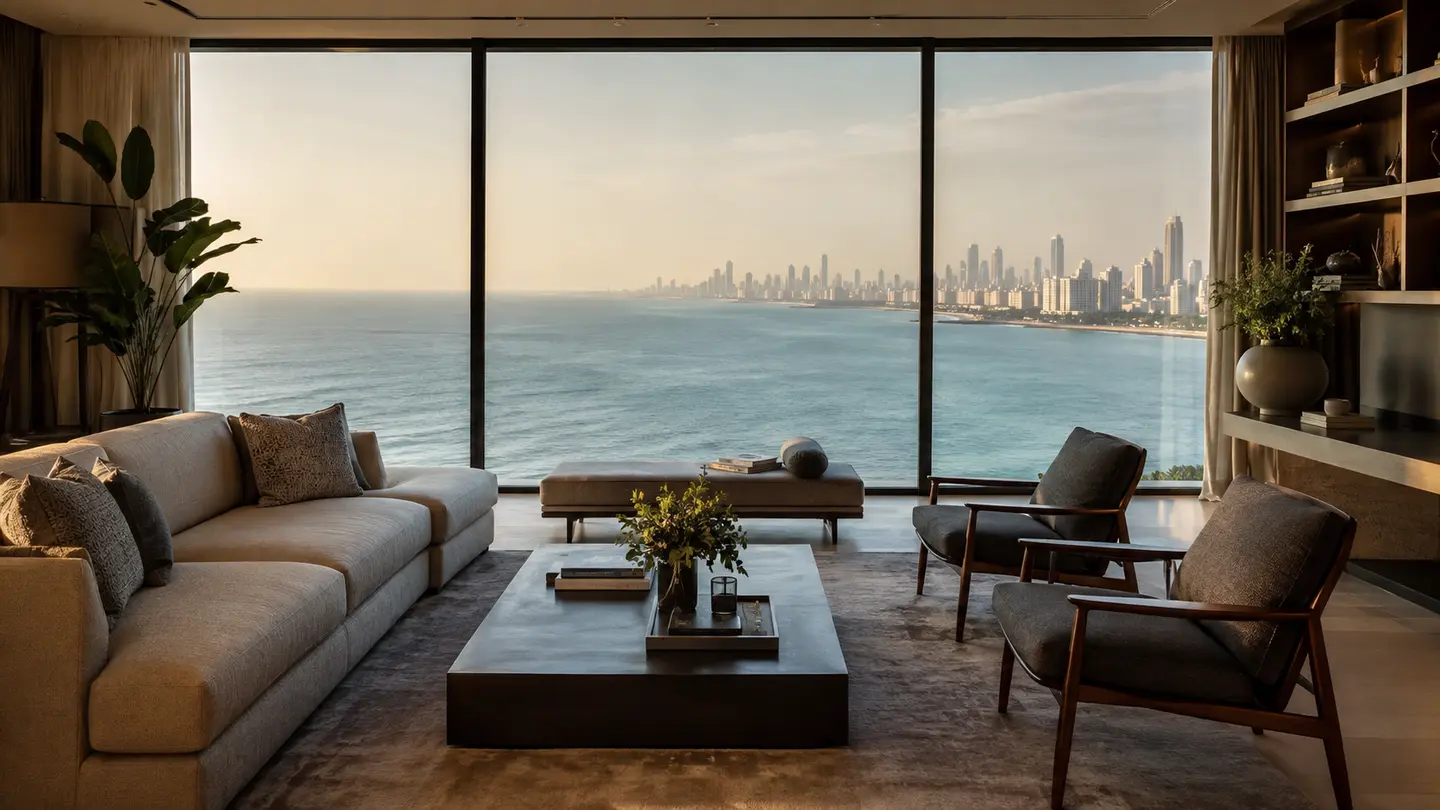
No reliable public record of personal real estate, vehicles, or other major assets held by Paolo Casagrande has surfaced in Italian or Spanish reporting, and no specific figures for personal holdings should be assumed from restaurant-level figures.
The only asset consistently tied to his name in press coverage is the Lasarte kitchen and its Il Milione chef’s table space itself, which is owned by the Monument Hotel and the Berasategui group rather than by Casagrande personally, according to the restaurant’s official page. No valuation of that property or of any stake he might hold in it has been publicly disclosed.
Paolo Casagrande (Italy) – Lasarte’s estimated net worth
Public estimates vary because private contracts, investments, taxes and liabilities are not fully disclosed.
How this estimate is calculated
Paolo Casagrande does not appear prominently on English-language celebrity-wealth trackers. One such secondary aggregator places his net worth in a broad $1 million to $5 million range, but the figure is unsourced and should be treated as a rough indicator rather than verified data, per TheCityCeleb’s biography page.
Because Casagrande is a salaried head chef and gastronomic director within Martin Berasategui’s restaurant group rather than an owner of Lasarte, his personal wealth is best modeled as a senior chef’s compensation package rather than restaurant-scale business equity. That base is layered with secondary income: Il Milione’s premium per-person pricing likely supports performance-linked bonuses tied to the venue he built, teaching fees from Scoolinary’s paid courses, and appearance fees from speaking engagements such as Alimentaria. More than two decades of continuous employment within a single high-profile restaurant group, three sustained Michelin stars, and the added responsibility of an entire hotel’s gastronomic program support a moderate estimate, while the absence of ownership stakes, endorsement deals, or a personal product line argues against assuming wealth near that of owner-chefs with comparable star counts.
Casagrande is a participating chef in ChefsForChildren, a Spanish initiative under the tagline “Comer sano es divertido” (“Eating healthy is fun”) that uses gastronomy to promote healthy eating habits among children, with his cooking on the project described as based on fresh product with a playful touch, according to the ChefsForChildren chef page.
No dedicated charitable foundation bearing his own name has been documented. Publicly, he is generally profiled as a disciplined, understated craftsman rather than a celebrity chef, with the JRE association specifically citing “commitment, consistency, and dedication to hard work” as his defining professional traits, per his JRE profile.
No major personal or financial scandal involving Paolo Casagrande is documented in Italian or Spanish press. The scrutiny that exists is limited to professional food criticism of Lasarte itself. Veteran critic Andy Hayler scored the restaurant 16 out of 20 after a visit, writing that “only the service really seemed to me to be of three star level” and that the meal fell short compared with other three-star meals he had eaten the same week, according to his published review.
The same review flagged Lasarte’s wine list markups as excessive, citing examples such as a Vega Sicilia Unico 1999 priced at 990 euros against a roughly 347-euro retail price, and a Can Feixes white sold at 50 euros against a 12-euro high-street price, per Hayler’s account. Diner reviews have echoed similar concerns, with some describing Lasarte as the most expensive of Barcelona’s three-star restaurants without a proportionate gap in the dining experience itself.