 How Much Are They Worth?
Celebrity fortunes, explained
How Much Are They Worth?
Celebrity fortunes, explained

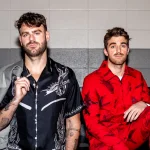








How did Tchami build this fortune?
The answer unfolds through the career, earnings, deals and assets behind the headline estimate.
Before the fame
The background and early turning points that shaped Tchami’s route to prominence.
Tchami is the stage name of Martin Joseph Leonard Bresso, a French DJ and record producer born May 12, 1985, in Cahors, in the Occitanie region of southwest France, according to his Wikipedia biography. He began classical music training at age four, and his family relocated to the outskirts of Paris when he was eight, where he grew up with two younger sisters. It was in that Paris suburb that he became close friends, in his mid-teens, with a fellow future producer named William Grigahcine, who would go on to become DJ Snake, a friendship that later shaped much of his career. On the origin of his stage name, Tchami has said it is “a name that has been given to me in Africa which is an honour,” adding that it “sounded catchy” so he kept it.
Bresso entered the electronic music scene in 2013 with a remix of Janet Jackson’s “Go Deep,” but his breakout came on July 24, 2013, when Fool’s Gold Records released his free EP “Promesses,” featuring British vocalist Kaleem Taylor and co-written and co-produced with DJ Snake, per the dedicated Wikipedia entry on the track. A commercial radio edit followed through Ministry of Sound in January 2015, and the song became a genuine UK hit, reaching number 7 on the UK Singles Chart, topping the UK Indie Chart, and hitting number 2 on the UK Dance Chart, before going on to earn a UK Gold certification for combined sales and streams of 400,000 units. The success established the sound he and a small circle of collaborators were pioneering, a melodic, bass-driven strain of house music that would soon get a name of its own.
The breakthrough years
The career decisions and defining moments that turned recognition into sustained earning power.
Bresso is widely credited as the DJ who coined the term “future house” to describe his sound, and he spent 2015 through 2017 defining it record by record, according to his Wikipedia page. He launched his own independent label, Confession, in 2015, the same year he became a founding member of Pardon My French, a collective he formed with DJ Snake, Malaa and Mercer, four Paris-area producers who, in DJ Snake’s words, had known each other “since we were 15 years old” and wanted to “promote French electronic music around the world,” as described on the collective’s own Wikipedia page. Signature Confession-era singles followed in quick succession: “Siaw” in August 2016, the Malaa collaboration “Prophecy” that September, and the genre-defining “Adieu” in February 2017, followed by the “Revelations EP” that August.

What the work can earn
Reported pay, contracts, royalties and performance income reveal how the fortune was funded.
Bresso’s biggest recognition beyond dance music arrived through pop production work. He first produced for Lady Gaga on “Applause” from her 2013 album “ARTPOP,” and years later he co-produced four tracks on her 2020 album “Chromatica,” including lead single “Stupid Love” and the Ariana Grande duet “Rain On Me,” a collaboration confirmed directly by Tchami in a Grammy.com interview. “Chromatica” went on to earn a Grammy nomination for Best Pop Vocal Album at the 63rd Annual Grammy Awards in 2021, putting his production work on a Grammy-nominated release. That same interview covers his own debut studio album, “Year Zero,” released October 23, 2020, on Confession, a 16-track record featuring Gunna, HANA, Daecolm, Zhu and Chace, and a BroadwayWorld report on the album’s release put his career streaming total at more than 475 million plays across platforms at that point. He also peaked at number 62 on the DJ Mag Top 100 DJs poll in 2015.
Tchami has built a decade-plus festival resume that includes Coachella in 2016 and 2022, mainstage sets at Ultra Music Festival in 2017, 2019 and 2023, a 2019 Tomorrowland appearance, and dates at Lollapalooza, EDC Mexico and CRSSD Festival, per his Wikipedia biography. He is known as much for a distinctive stage persona as for his music, performing behind the decks in a priest’s clerical collar with altar and stained-glass-style visuals, a look he has described as central to his own sense of spirituality on stage. He has also headlined his own branded tours, including the “No Redemption Tour” with Malaa in late 2017 and the “Confession Tour” across North America in 2018, extending his live footprint well beyond guest festival slots.

The business beyond the main career
Endorsements, ownership interests and investments can keep compounding long after the initial breakthrough.
No major consumer beverage, apparel or paid touring-equipment sponsorship is documented in mainstream music press for Bresso, which sets him apart from some touring peers who carry those kinds of cash contracts. His clearest brand relationship is a gear partnership rather than a disclosed cash endorsement: high-end headphone maker Audeze features him as an artist partner, with Tchami saying its LCD-5 headphones “unlocked a new level” in his critical listening and helped him make better mixing decisions, according to Audeze’s own artist page. He is also known to perform on Pioneer DJ’s CDJ-2000NXS2 and DJM-900NXS2 club equipment, though no formal sponsorship arrangement with that brand is documented.
Confession, the label Bresso founded in 2015, has become his primary business platform, releasing his own catalog and signing outside talent; Malaa’s own Wikipedia page confirms he “is signed to Tchami’s label Confession,” which has released much of Malaa’s discography including compilation projects. Beyond the label, the Pardon My French collective he co-founded turned into a commercial brand of its own: the group launched a clothing line in 2016 with pop-up shops in Paris, then partnered with Levi’s on a collaboration in 2018, according to the collective’s Wikipedia entry. On the touring-business side, industry listings show Tchami holding a 2026 club residency at Daylight Beach Club in Las Vegas, a dayclub booking that functions as a standing revenue arrangement rather than a one-off show, according to Electronic Vegas’ resident DJ list.

Notable luxury item
A reported property or major asset offers a tangible glimpse of the wealth behind the public estimate.
No mainstream real-estate press or publicly reported purchase price exists for a personal home belonging to Bresso. His most substantial verifiable asset tied to a physical venue is his standing 2026 club residency at Daylight Beach Club in Las Vegas, a recurring dayclub booking rather than a real-estate holding, listed on Electronic Vegas’ Las Vegas resident DJ directory. Beyond that booking, his most substantial assets are business and intellectual property rather than real estate: his founder’s ownership of Confession Records, an independent label he has run for a decade with a signed roster that includes Malaa, and his publishing and production catalog, which spans his own UK Gold-certified “Promesses” and his production credits on Lady Gaga’s Grammy-nominated “Chromatica.”
Tchami’s estimated net worth
Public estimates vary because private contracts, investments, taxes and liabilities are not fully disclosed.
How this estimate is calculated
This estimate is built from several overlapping income streams rather than a single dominant source. The largest is likely more than a decade of headline and festival touring, from mainstage sets at Ultra, Coachella and Tomorrowland to his own branded runs like the No Redemption Tour and Confession Tour, plus his current 2026 dayclub residency at Daylight Beach Club in Las Vegas, a standing booking on top of one-off festival fees. Layered on that is a durable recorded-music and publishing catalog: the UK Gold-certified “Promesses,” a career streaming total that had already passed 475 million plays by 2020, and, notably, songwriting and production royalties from outside pop work, including four production credits on Lady Gaga’s Grammy-nominated 2020 album “Chromatica,” among them the Ariana Grande collaboration “Rain On Me,” one of the biggest pop singles of that year. His founder’s equity in Confession Records, a label he has run since 2015 with a roster that includes Malaa, adds label-side income from streaming shares and artist royalties, and the clothing brand and Levi’s collaboration built around the Pardon My French collective adds a further, smaller merchandise revenue line. Standard industry deductions apply against that gross figure: agency and management commissions, touring production and crew costs, and label operating expenses typically remove roughly half of gross entertainment-industry receipts. One secondary aggregator figure exists for context: Networthlist’s net worth page lists a flat $14 million figure without citing a specific primary source or methodology. That figure is treated here only as a secondary, non-authoritative data point rather than a confirmed number, and it does not appear to account for the Chromatica Grammy nomination or his more recent Las Vegas residency booking. No primary Forbes or Billboard net-worth figure specific to Martin Bresso was located, so the range below is built from his documented income streams rather than any single reported number.
Bresso has channeled his most visible charitable work through a bracelet collaboration with lifestyle brand Electric Family, released because, in his words, “more children should have access to education.” Proceeds do not go to a single named charity but instead flow into Electric Family’s “Greater Good Fund,” a pooled fund distributed quarterly across the brand’s partner charities, according to Electric Family’s own product page for the bracelet. Outside that partnership, his public image centers on his music and stagecraft, built around the recurring priest persona and the future house sound he helped originate, rather than tabloid visibility or a high-profile personal foundation.
No significant public controversy, legal dispute or scandal involving Bresso turned up in mainstream music press, official biography sources or business listings reviewed for this profile. The one notable incident tied to his name was accidental rather than reputational: in October 2015, Tchami and DJ Snake were both injured in a car accident that forced them to cancel scheduled performances, an event noted on his Wikipedia page as a health and safety matter rather than any kind of scandal. Beyond that, what public discussion exists is limited to ordinary genre debate among fans and critics over the direction of future house as a sound, rather than any personal or business controversy, and his off-stage public record is essentially clean.