 How Much Are They Worth?
Celebrity fortunes, explained

How did Dolly Parton build this fortune?
The answer unfolds through the career, earnings, deals and assets behind the headline estimate.
Dolly Parton before the fame
The background and early turning points that shaped Dolly Parton’s route to prominence.
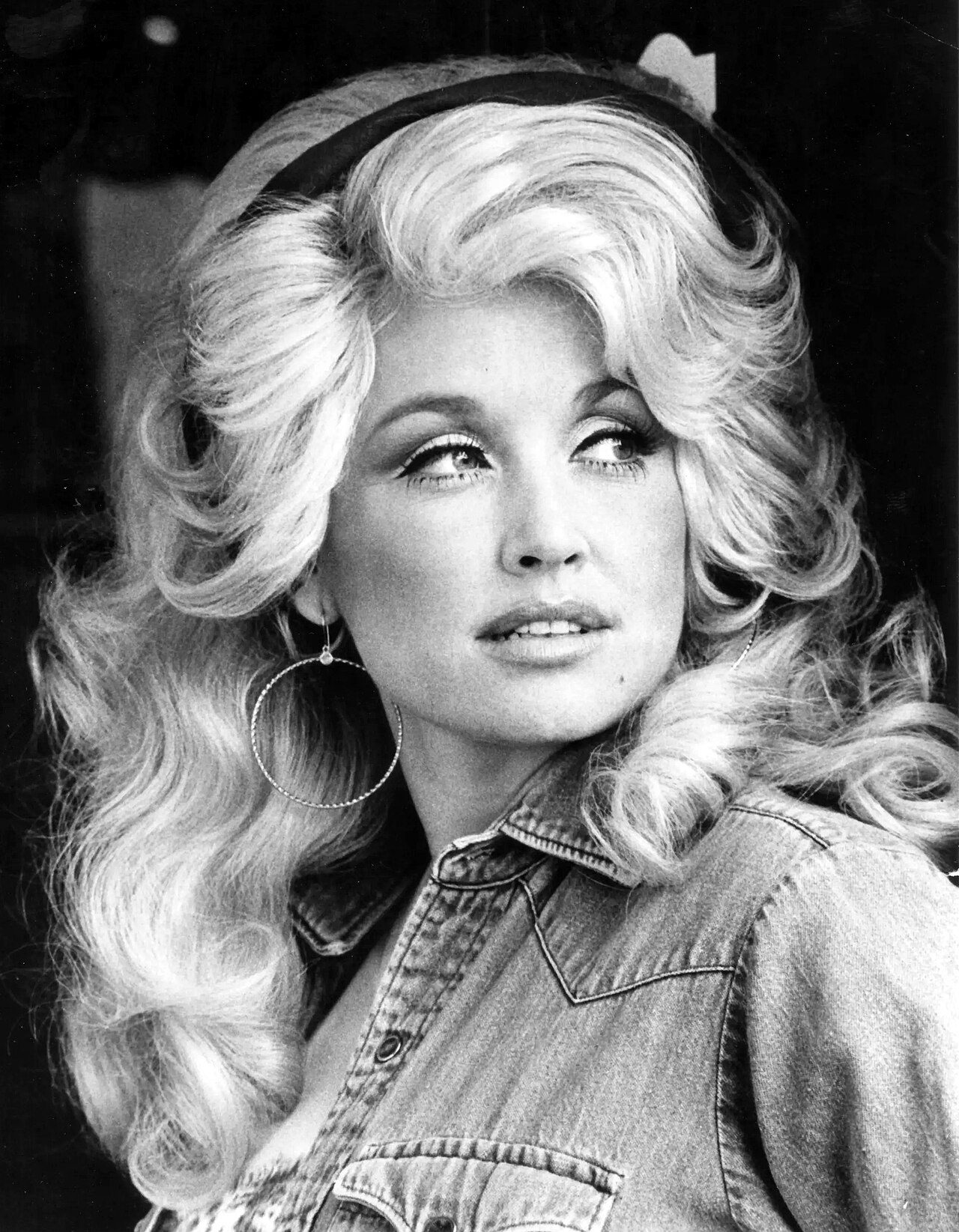
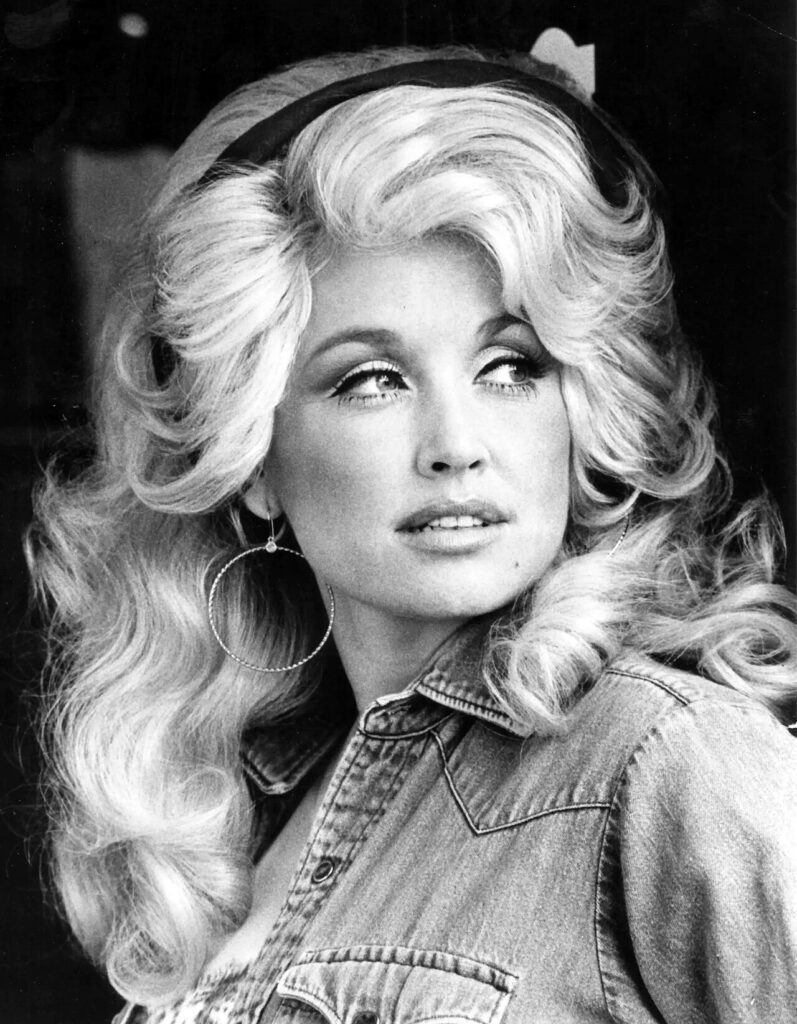
Dolly Rebecca Parton was born on 19 January 1946 in Sevier County, Tennessee, the fourth of twelve children in a family with very little money. She wrote songs as a child, moved to Nashville the day after finishing high school, and spent the next six decades becoming one of the most widely loved figures in American life – a songwriter of more than 3,000 songs, a performer, an actress, a businesswoman and a philanthropist (NPR, Variety).
She died at her home in Nashville on 25 August 2026, aged 80, after what her family described as a brief battle with cancer, surrounded by the people closest to her.
She arrived in Nashville in 1964 and signed as a songwriter with Combine Music, then as a singer with Monument Records. When the Combine contract expired in 1966 she founded her own publishing company with her uncle, Bill Owens, at twenty years old, and with a handful of exceptions she owned her songs for the rest of her life (Forbes).
The break was The Porter Wagoner Show in 1967, which made her a household face across the South; Jolene and I Will Always Love You followed in 1973 and 1974, both her own copyrights.
Dolly Parton’s breakthrough years
The career decisions and defining moments that turned recognition into sustained earning power.
If one moment explains Dolly Parton’s wealth, it is a telephone call she turned down. Elvis Presley wanted to record I Will Always Love You. His manager, Colonel Tom Parker, made it conditional: half the song’s publishing. That was ordinary practice at the time (The Hollywood Reporter). She said no, and described crying all night over it (CNBC).
In 1992 Whitney Houston recorded it for The Bodyguard. It sold around eleven million copies in the United States alone and has since drawn close to a billion streams, and every cent of the songwriting income belonged to Parton (Forbes). That one recording paid her about 10 million dollars in royalties, some of which she used to buy a Spanish Mission-style building in Nashville’s 12 South neighbourhood that she called the house that Whitney built (WSMV). The catalogue as a whole, more than 3,000 songs, was valued by Forbes at about 150 million dollars in 2021, more than a third of her fortune (Forbes), and by Billboard at about 120 million (Billboard); at the multiples such catalogues trade on, that is publishing income of 8 to 12 million dollars a year, on our estimate.
What Dolly Parton’s work can earn
Reported pay, contracts, royalties and performance income reveal how the fortune was funded.
9 to 5 in 1980 gave her a number one single, an Oscar nomination and a film career; Steel Magnolias followed in 1989. On the road she remained a draw into her seventies: the Pure & Simple Tour of 2016 grossed 26.1 million dollars from 330,956 tickets across 48 reported shows (Pollstar).
Across sixty years, our estimate of what the craft paid her – publishing on songs she owned, record royalties on around 100 million records, film and television fees and the tours – is 250 to 350 million dollars before tax, with the publishing the largest single stream because she never sold it. Dollywood, set out below, is the extra.
Eleven Grammy awards including a lifetime achievement award, membership of the Country Music Hall of Fame from 1999 and the Rock and Roll Hall of Fame from 2022, the National Medal of Arts and a Kennedy Center Honor mark the official record. On her death the Empire State Building was lit pink, the Grand Ole Opry held a memorial concert (The Hollywood Reporter), and tributes came from Paul McCartney, Taylor Swift, Miley Cyrus and Cher among many others. Jane Fonda called her “the voluptuous embodiment of empathy” (NPR, CNN).
Dolly Parton’s business beyond the main career
Endorsements, ownership interests and investments can keep compounding long after the initial breakthrough.
Late in life the name became a licensing business of its own: a Duncan Hines baking range, a Williams Sonoma homeware collection, Doggy Parton pet products and a Jeni’s ice cream flavour whose proceeds went to the Imagination Library. On our estimate the licensing brought in a few million dollars a year at its peak, a useful stream and a small one beside the catalogue and the park.
Her largest single asset was not her music. In 1985 the Herschend family, who ran the theme park at Pigeon Forge, offered her a share in it. She took half, and the park was renamed Dollywood (Billboard). She held 50 per cent of The Dollywood Company, the joint venture with Herschend Enterprises. Forbes valued the wider Pigeon Forge resort complex – the park, water parks and hotels – at around 165 million dollars in 2021, with her stakes in Splash Country and the DreamMore Resort worth a further 20 million and 15 million to her (Forbes).
The company also bought commercial property, including a downtown Nashville building acquired in 2024 (Billboard), and it made her the largest private employer in the county where she was born with almost nothing.

Dolly Parton’s notable luxury item
A reported property or major asset offers a tangible glimpse of the wealth behind the public estimate.
Beyond the Dollywood stake and the catalogue, the assets were Nashville property: the 12 South studio building, the Brentwood home she shared with Carl Dean, her husband of nearly sixty years, and commercial buildings held through the Dollywood Company. The estate’s value is overwhelmingly in the catalogue and the park.
Dolly Parton’s estimated net worth
Public estimates vary because private contracts, investments, taxes and liabilities are not fully disclosed.
How this estimate is calculated
Forbes assessed her at 350 million dollars in 2021, when she first appeared on its list of America’s richest self-made women, with roughly a third in the catalogue and Dollywood as the largest asset (Forbes). That is the anchor. Worth stating carefully: the 165 million dollar figure is a valuation of the resort complex, not of her personal shareholding, and half a joint venture is not half a property valuation; The Dollywood Company’s accounts are private, so her half is modelled at 60 to 90 million dollars.
Rolling the anchor forward five years: the catalogue at 120 to 150 million, growing with streaming; the Dollywood interests at 95 to 125 million including Splash Country and DreamMore; the 12 South and Nashville property; and five further years of publishing income at 8 to 12 million a year, licensing and the remaining screen work. Against that, deducted deliberately, is very large charitable giving over almost forty years. She spent a substantial part of the fortune on purpose, which is why her figure is lower than her earnings would suggest. The assumption is that the estate passed intact into a family trust and the foundation. Our piece on artists who sold their catalogues sets out what the alternative usually looks like.
She refused Elvis half of one song at 27 and gave away much of what that refusal earned her at 80, which is why the figure below is smaller than the fortune and larger than almost anyone else’s from three chords and a typewriter.
The working supports a range of $400 million to $500 million. The figure we publish is its midpoint.
Confidence: Partly documented — anchored to the Forbes 2021 assessment and Billboard’s catalogue valuation, with the Dollywood stake and the effect of her giving modelled.
Think you know Dolly Parton? Take the quiz: Easy · Medium · Legendary
Any honest account of her finances has to include the money that left. She founded the Dollywood Foundation in 1988 and in 1995 started the Imagination Library in Sevier County, posting free books to children every month. By 2025 it had given away more than 300 million books across five countries (Billboard). After the 2016 wildfires her My People Fund paid nearly a thousand displaced families 1,000 dollars a month for six months, about 9 million dollars in all (Global News). In 2020 she gave a million dollars to coronavirus research at Vanderbilt University, work that contributed to the Moderna vaccine (NPR), and Forbes estimated her lifetime giving in the many millions (Forbes).
Her family’s statement called hers “a rhinestone life that shone bright enough for the world to see” (Billboard). She was buried on 28 August in a private family service in Nashville, next to Carl Dean, who had died in March 2025 (Billboard).
There was very little. She declined her first Rock and Roll Hall of Fame nomination in 2022 on the grounds that she was not a rock artist, then accepted when the vote went ahead anyway. On the money there was no dispute in sixty years of public life.