
 How Much Are They Worth?
Celebrity fortunes, explained
How Much Are They Worth?
Celebrity fortunes, explained


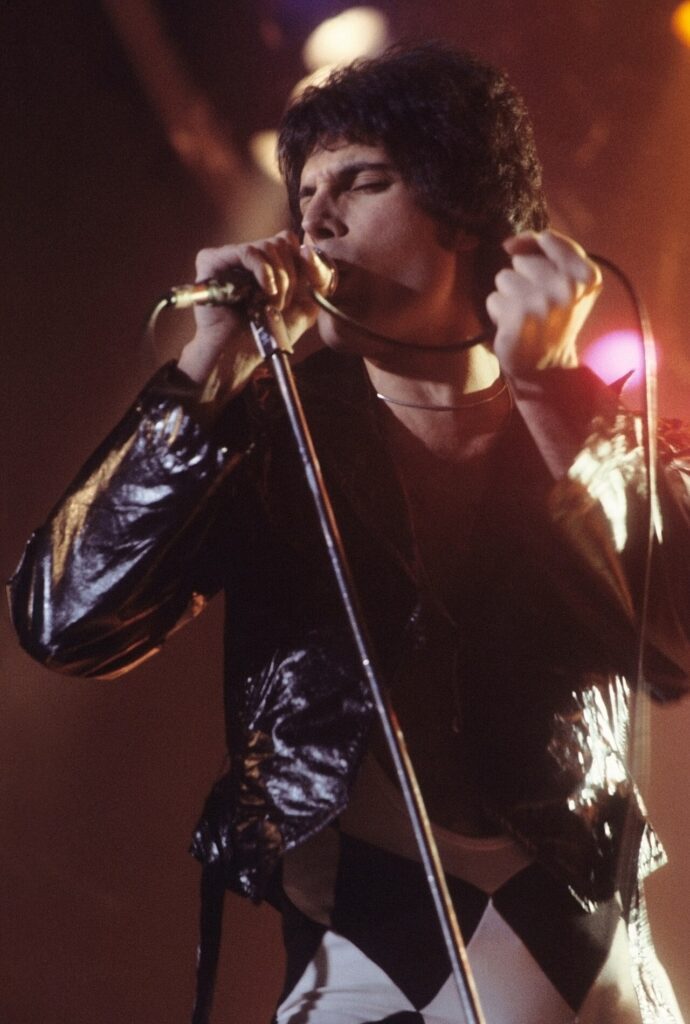
How did Freddie Mercury build this fortune?
The answer unfolds through the career, earnings, deals and assets behind the headline estimate.
Freddie Mercury before the fame
The background and early turning points that shaped Freddie Mercury’s route to prominence.
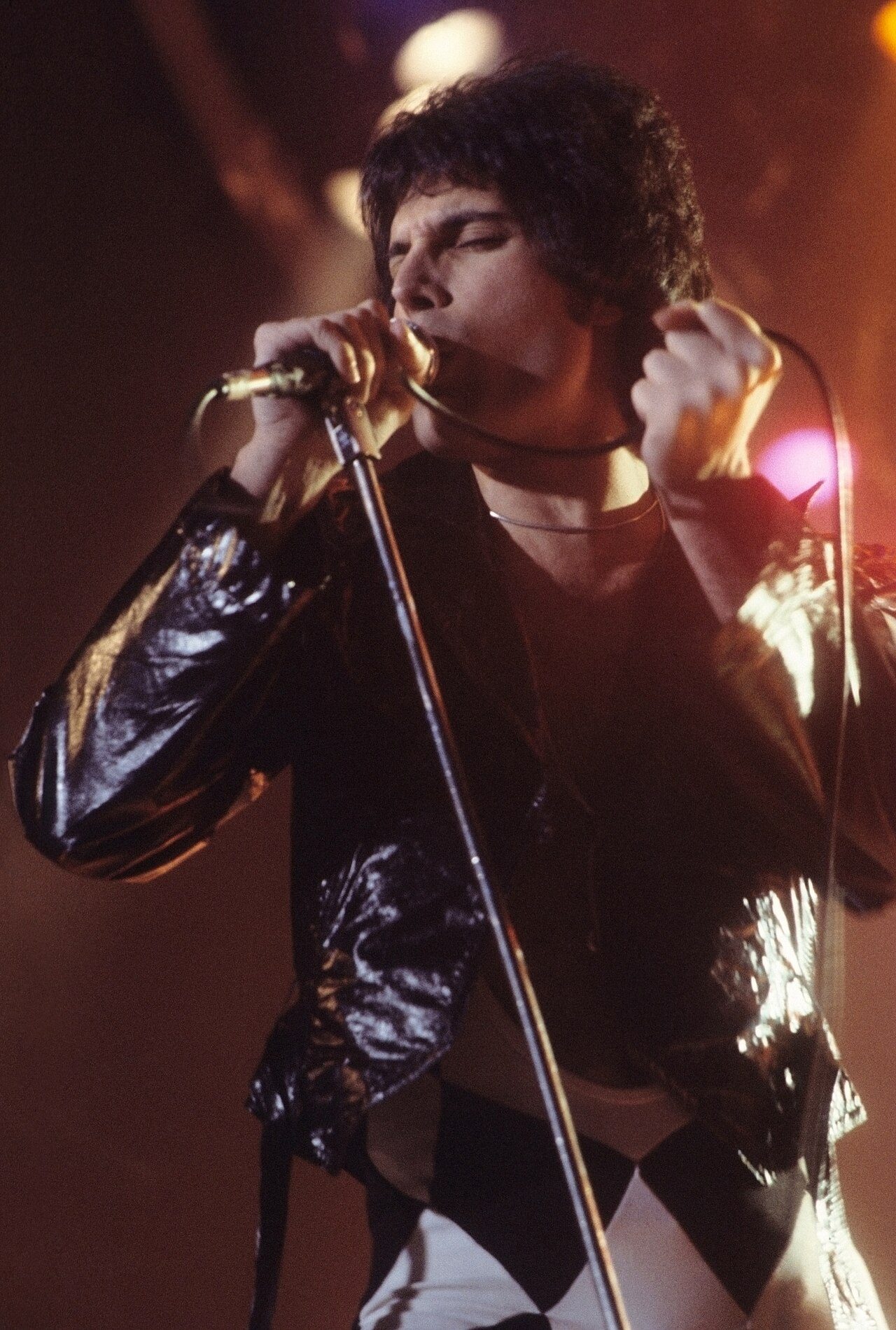
Born Farrokh Bulsara on 5 September 1946 in Zanzibar, Freddie Mercury was educated at boarding school in India, moved to England with his family as a teenager and studied graphic design at Ealing Art College. He formed Queen in London in 1970 with Brian May and Roger Taylor, joined by John Deacon the following year, and fronted the band for two decades. He died in London on 24 November 1991, aged 45.
His money divides into two lives: what the musician earned between 1973 and 1991, and what his quarter share of the catalogue has earned his estate since; this profile keeps them apart.
Queen’s first deal, signed in 1972 with Trident Audio Productions, is a textbook case of how little early success paid. Trident funded the recordings, kept the band on what Record Collector calls derisory wages, and licensed the finished records to EMI; even as the first three albums charted, Deacon was refused a 4,000 pound advance to buy a house (Record Collector). The band spent nine months extracting themselves and in September 1975 bought their freedom for 100,000 pounds plus a one per cent royalty on their next six albums, after which they dealt directly with EMI in Britain and Elektra in America.
That settlement is the hinge of Mercury’s finances: from late 1975 the royalties flowed to the band rather than a middleman, just as A Night at the Opera delivered Bohemian Rhapsody.
Freddie Mercury’s breakthrough years
The career decisions and defining moments that turned recognition into sustained earning power.
Bohemian Rhapsody spent nine weeks at number one in Britain in 1975-76 and made Queen a global act; Somebody to Love, We Are the Champions, Crazy Little Thing Called Love and Don’t Stop Me Now, all Mercury compositions, followed. What that paid him is our estimate, because Queen’s contracts were private and the band’s company accounts are not broken down by member. By 1991 the group had sold in the region of 80 to 100 million records; at an average band royalty of 0.75 to 1 pound a unit from 1975 onward, that is 60 to 100 million pounds to the four of them, or 15 to 25 million pounds as Mercury’s quarter.
On top of the shared income sat his own songwriting. Until the band pooled credits in 1989, publishing royalties went to whoever wrote the song, and Mercury wrote the biggest of them; we put his publishing and performance income at 5 to 10 million pounds, and his share of touring, which by the 1986 Magic Tour was filling stadiums across Europe, at 3 to 5 million. Gross lifetime music income: 23 to 40 million pounds. The assumption is a standard major-label royalty from 1975; the rate itself is private.
What Freddie Mercury’s work can earn
Reported pay, contracts, royalties and performance income reveal how the fortune was funded.
Queen’s Live Aid set in July 1985 is routinely named the greatest live performance in rock, and the Magic Tour the following year, culminating at Knebworth, was the band’s largest.
The largest number attached to his name arrived more than thirty years after his death. In 2024 Queen’s recorded and publishing rights were acquired by Sony Music in a deal reported at roughly one billion pounds, about 1.27 billion dollars, including royalties from earlier arrangements with Disney Music Group and Universal (Variety, Music Business Worldwide). May, Taylor, Deacon and the Mercury estate held equal shares in the company that owned the catalogue, so the proceeds divided four ways, and Forbes credited Mercury with approximately 250 million dollars on the strength of it, returning him to its list of the highest-earning dead celebrities (Forbes). That money is the estate’s, not his, and is excluded from the range below.
He is among the most recognised singers of the twentieth century, and the 2018 film Bohemian Rhapsody, which passed 900 million dollars at the worldwide box office (Variety), introduced him to an audience born long after 1991. Box office is the studio’s money, but the film drove a surge in streaming and catalogue sales that fed directly into the valuation Sony paid for.
Freddie Mercury’s business beyond the main career
Endorsements, ownership interests and investments can keep compounding long after the initial breakthrough.
None of consequence in his lifetime. Queen were early to sponsored touring in the 1980s, but Mercury did no personal endorsements, and licensing of his image for merchandise, exhibitions and the film has been the estate’s business rather than his.
Mercury’s business was Queen Productions, the company through which the band owned its catalogue outright, an unusual and enormously valuable position for a 1970s act. Beyond that he had no commercial ventures of note; he was a performer and a collector, not an investor, and the wealth he built was the direct product of records and concerts.

Freddie Mercury’s notable luxury item
A reported property or major asset offers a tangible glimpse of the wealth behind the public estimate.
His principal asset was Garden Lodge, the eight-bedroom Neo-Georgian house in Kensington that he found through an advertisement in Country Life and bought at the start of the 1980s (Country Life). It passed to Mary Austin, his former partner and lifelong friend, who put it on the market in 2024 at offers over 30 million pounds (Euronews). He also held a flat in Munich and a collection of Japanese art, furniture, costumes and instruments.
Sotheby’s sold that collection in September 2023 as Freddie Mercury: A World of His Own. The evening sale alone took 12.2 million pounds for 59 lots (Fortune), the Yamaha grand piano on which he wrote Bohemian Rhapsody fetched 1.74 million pounds, about 2.1 million dollars (Sotheby’s, Forbes), and the series closed at 39.9 million pounds across 1,406 lots, every one of them sold (Sotheby’s). Those are 2023 prices for objects he owned; what they were worth in 1991 was a small fraction of it.
Freddie Mercury’s estimated net worth
Public estimates vary because private contracts, investments, taxes and liabilities are not fully disclosed.
How this estimate is calculated
The documented anchors are the Trident buyout at 100,000 pounds plus one per cent (Record Collector), the Sony transaction at around one billion pounds split four ways (Variety), the 2023 auction results (Sotheby’s) and the 2024 asking price for Garden Lodge (Euronews). Everything after 1991 measures the estate; only the first anchor measures the man.
What he held at death is our estimate. Start from 23 to 40 million pounds of gross lifetime music income. British top-rate income tax stood between 60 and 83 per cent for most of his earning years until 1988, management took its share, and he spent lavishly on the house, the collection, travel and the people around him, so retention of a third or less is realistic: 8 to 12 million pounds in 1991 money, comprising Garden Lodge, the Munich flat, the collection at its then value, cash and his royalty rights. Converting 1991 pounds with the Bank of England’s consumer-price multiple of about 2.5 gives 20 to 30 million pounds today, which at current exchange rates is 25 to 40 million dollars, rounded up at the top to allow for the royalty rights.
The figure below is what Mercury himself was worth at his death, in today’s money, not the 250 million dollars his estate has since received. That money went to people who outlived him, principally Mary Austin, and belongs to them; treating a posthumous catalogue sale as the personal wealth of a man who died in 1991 is the error every other figure for him makes.
The working supports a range of $25 million to $45 million. The figure we publish is its midpoint.
Confidence: Partly documented — the 1975 buyout, the catalogue sale and the auction are on the record; his royalty rate, tax and spending are modelled, and the range is stated in today’s money.
The Mercury Phoenix Trust, founded in 1992 by May, Taylor and the band’s manager Jim Beach with the proceeds of the Wembley tribute concert, has funded HIV and AIDS projects worldwide for three decades (Mercury Phoenix Trust). His public image is that of the complete showman, private offstage and generous with the people close to him: his will left the bulk of his estate and Garden Lodge to Austin, with substantial provision for his partner Jim Hutton and his household staff.
The Trident dispute of 1975 was the one financial fight of his career, and Death on Two Legs, the song that opens A Night at the Opera, was his verdict on it. Beyond that there was nothing financial or legal in his public record.