 How Much Are They Worth?
Celebrity fortunes, explained
How Much Are They Worth?
Celebrity fortunes, explained










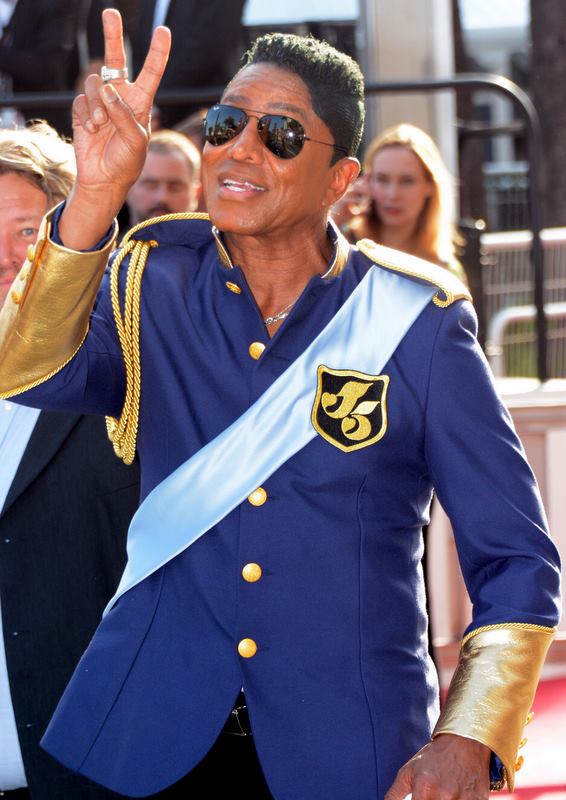
How did Jermaine Jackson build this fortune?
The answer unfolds through the career, earnings, deals and assets behind the headline estimate.
Before the fame
The background and early turning points that shaped Jermaine Jackson’s route to prominence.
Jermaine La Jaune Jackson was born on 11 December 1954 in Gary, Indiana, one of ten children of Joseph and Katherine Jackson. He grew up in a small house in a steel town where music was the family’s route out, and by his early teens he was singing and playing bass with his brothers.
He became one of the five members of the Jackson 5 alongside Jackie, Tito, Marlon and Michael, the line-up recognised by the Rock & Roll Hall of Fame. His voice was the group’s second lead, often trading lines with Michael, and his bass anchored their live sound.
The Jackson 5 played talent contests and clubs across the Midwest before signing with Motown in 1969. Their first four Motown singles, I Want You Back, ABC, The Love You Save and I’ll Be There, all reached number one in the United States, a run that made them one of the biggest acts of the era.
Jermaine shared in the group’s recognition: the Recording Academy lists Grammy nominations for ABC and for Dancing Machine among his credits. The group’s commercial peak was enormous, but the standard Motown contracts of the time left the members with a modest share of record income, one of the factors behind the brothers’ move to Epic Records in 1975.
The breakthrough years
The career decisions and defining moments that turned recognition into sustained earning power.
Jermaine launched a parallel solo career at Motown in 1972 and scored a top-ten US hit with a cover of Daddy’s Home. In 1973 he married Hazel Gordy, daughter of Motown founder Berry Gordy, and when his brothers left for Epic Records in 1975 he stayed with Motown, a decision that separated him from the group for almost a decade. His biggest solo success came in 1980 with Let’s Get Serious, written and produced by Stevie Wonder. It reached number eight in the UK, according to Official Charts, topped the US R&B chart and earned a Grammy nomination for best male R&B vocal performance, as recorded by the Recording Academy.
Our estimate: Jermaine’s music has grossed him roughly $20 million to $35 million across fifty years. The Motown deal is why it is not larger – a royalty of a few per cent of wholesale, split between five brothers and administered through their father, on a catalogue that has sold in the tens of millions. His own records paid better per copy but sold far less: set gold-level certifications against period royalty rates and the recording side comes to $6 million to $12 million gross across Motown and Arista.

What the work can earn
Reported pay, contracts, royalties and performance income reveal how the fortune was funded.
After leaving Motown he signed with Arista Records, where his 1984 album brought further hits, including Do What You Do, which reached number six in the UK, while his 1984 duet with Pia Zadora, When the Rain Begins to Fall, also charted, according to Official Charts. A 1985 Grammy nomination came for Tell Me I’m Not Dreamin’, recorded with Michael.
In 1984 he rejoined his brothers for the Victory album and the Victory Tour, which opened in Kansas City that July, as reported by UPI, and played 55 concerts in 23 cities to about 2.5 million people, beating the Rolling Stones’ attendance record by 500,000. It is also the largest single payment of his career: the promoter Chuck Sullivan guaranteed the Jacksons $38 million, with $12.5 million paid up front, according to UPI. That guarantee was to six brothers collectively, and an even split puts Jermaine’s gross share near $6.3 million before costs.
Jermaine was inducted into the Rock & Roll Hall of Fame as a member of the Jackson 5 in 1997, presented by Diana Ross, according to the Rock & Roll Hall of Fame. The group’s chart record and its influence on pop and soul are the core of his public standing.
Across his career he received several Grammy nominations but no wins, according to the Recording Academy, which also lists the group’s own nominations. In Britain he became familiar to a new audience in 2007 when he finished as runner-up on Celebrity Big Brother.

The business beyond the main career
Endorsements, ownership interests and investments can keep compounding long after the initial breakthrough.
Jermaine has not held major individual endorsement contracts. The Jacksons’ commercial tie-ins in the 1980s, including the sponsorship that surrounded the Victory Tour, were negotiated at group level, and the tour’s economics were dominated by promoter guarantees rather than brand deals. Ticket prices of about $30 were criticised as steep at the time, as The Washington Post reported.
Jermaine’s business ventures have been less successful than his music. He worked as a producer and executive, helping to develop artists at Arista, and he was involved in several family business projects in the 1990s.
The most significant, Jackson Communications, failed, and the family filed for Chapter 11 protection in 1997, listing debts of more than $45 million, according to ABC News. Later ventures included reunion touring with his brothers as the Jacksons and a 2011 book about his family.

Notable luxury item
A reported property or major asset offers a tangible glimpse of the wealth behind the public estimate.
Jermaine’s main lasting asset is his share of royalties from the Jackson 5 and his own recordings. The master recordings of the Motown years are owned by the label, so his income from them is an artist royalty rather than ownership of the catalogue.
His property holdings in recent decades have been modest. In 2008, ABC News reported that he had more than $5 million in federal, state and other liens against him and that he had filed for bankruptcy in 1995.
Jermaine Jackson’s estimated net worth
Public estimates vary because private contracts, investments, taxes and liabilities are not fully disclosed.
How this estimate is calculated
Almost every figure published about Jermaine Jackson’s finances is a liability. ABC News reported in 2008 that he had more than $5 million in federal, state and other liens against him, that he had filed for bankruptcy in 1995, and that after Jackson Communications collapsed the family filed for Chapter 11 protection in 1997 listing debts of more than $45 million. The same report states that he was not then working or drawing a regular income.
The credit side is the estimate above. Recording and songwriting royalties across the Jackson 5 catalogue and his own Motown and Arista records give $6 million to $12 million gross; an even share of the 1984 Victory Tour guarantee gives about $6.3 million (UPI); and the rest is touring, from the 1970s dates and the 1981 Triumph tour through the reunion shows as the Jacksons since 2012 – $20 million to $35 million gross across fifty years. Fifty years of American tax, management commission and a family payroll take most of that, and the liens take a further bite, which leaves a net position of about $1 million to $5 million. The main assumption is the even split of the tour guarantee, which is how the brothers presented it rather than necessarily how it was paid.
Both halves of that subtraction are modelled and the direction of the error is not obvious: the 2008 report describes a man without regular income, while the liens may since have been cleared. That is why this is the widest range in the group relative to its size.
Confidence: Indicative – the documented figures about his finances are debts, and the credit side is modelled from chart certifications and an even share of the Victory Tour guarantee.
Jermaine has no named foundation, and his giving has run through the family’s group efforts: as a group, the Jacksons gave away nearly $1 million worth of Victory Tour tickets to disadvantaged and disabled fans, according to UPI.
His public image is closely bound to the family story: a gifted singer and bassist whose solo career, although successful, was overshadowed by that of his younger brother. In 2014 he petitioned to change his surname to Jacksun for what he described as artistic reasons, according to GRAMMY.com.
Jermaine’s finances have drawn repeated scrutiny. The 1995 bankruptcy filing, the collapse of Jackson Communications and the liens reported in 2008 were all covered by ABC News, which described him as having no regular income at the time. He has also been the subject of family disputes and legal proceedings reported in the press over the years, matters of public record that are not material to his career.