
 How Much Are They Worth?
Celebrity fortunes, explained
How Much Are They Worth?
Celebrity fortunes, explained





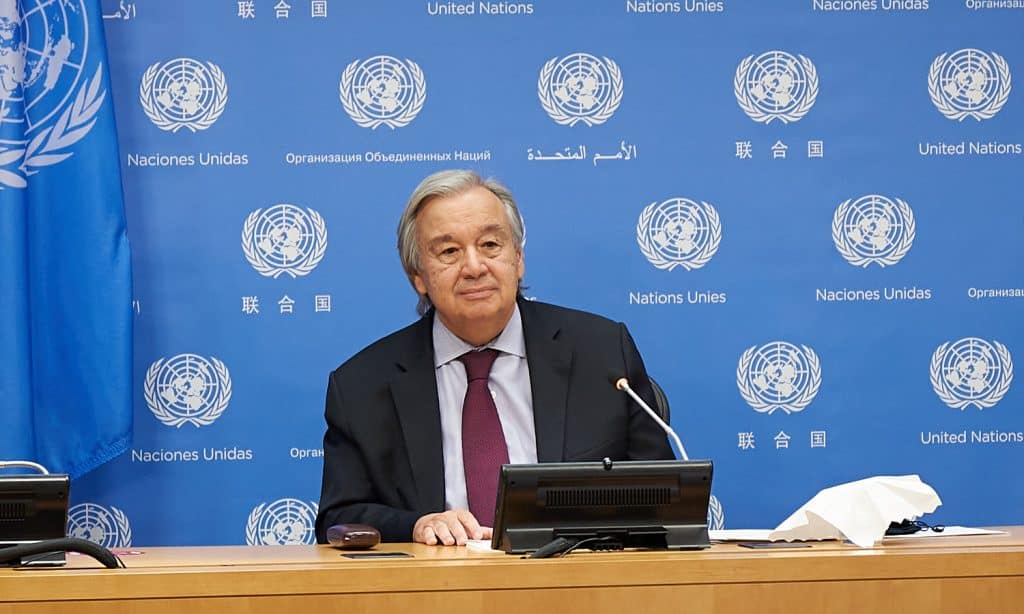
How did António Guterres build this fortune?
The answer unfolds through the career, earnings, deals and assets behind the headline estimate.
António Guterres before the fame
The background and early turning points that shaped António Guterres’s route to prominence.
António Guterres was born in Lisbon in 1949 and trained as an electrical engineer at the Instituto Superior Técnico. The United Nations’ official biography records that he speaks Portuguese, English, French and Spanish and entered elected politics after Portugal’s democratic revolution. His education matters to his public persona: unlike a lawyer or career diplomat, he built an early reputation for analytical detail before moving into social policy and politics. He married Catarina de Almeida Vaz Pinto after the death of his first wife and has kept his family largely outside the publicity surrounding his international roles.
Guterres is best understood as a lifelong public servant rather than a commercial executive. His career has run through parliament, party leadership, Portugal’s premiership, refugee protection and the UN’s top administrative office. That distinction is essential in assessing his finances: the buildings, aircraft, residences and staff used in those jobs belong to governments or international institutions, not to him personally.
After graduating, Guterres worked in academia before winning election to Portugal’s Assembly of the Republic in 1976. He remained a parliamentarian for 17 years, chairing committees concerned with economics, finance, planning, local government and the environment. He also served in the Council of Europe’s Parliamentary Assembly, where migration and refugee questions became a durable strand of his career. The Council of Europe’s account of his later institutional ties reflects that long engagement with European multilateralism.
Within Portugal’s Socialist Party he advanced from parliamentary leadership to secretary-general. His organizational work extended beyond electoral politics: he helped found the Portuguese Refugee Council and the consumer association DECO, and earlier led a university social-action group working in disadvantaged Lisbon neighbourhoods. These were civic initiatives, not private businesses, and there is no sound basis for treating their resources as personal assets.
António Guterres’s breakthrough years
The career decisions and defining moments that turned recognition into sustained earning power.
Guterres’s national breakthrough came when the Socialists won the 1995 election and he became prime minister. He served until 2002, leading minority and then larger parliamentary administrations. His term included Portugal’s successful preparations for joining the euro, social-policy reforms and a visible diplomatic role concerning East Timor. During Portugal’s presidency of the European Council in 2000, he helped steer adoption of the Lisbon Strategy and co-chaired the first European Union–Africa summit.
The international profile gained in office opened the next phase of his career. In 2005 the UN General Assembly elected him High Commissioner for Refugees. That was not merely a ceremonial appointment: it put him in charge of a large humanitarian agency operating amid expanding displacement crises. The progression from domestic politics to humanitarian administration ultimately made him a credible consensus candidate for secretary-general.

What António Guterres’s work can earn
Reported pay, contracts, royalties and performance income reveal how the fortune was funded.
At UNHCR, Guterres oversaw a decade in which displacement caused by conflict and persecution rose dramatically. The UNHCR profile of his tenure credits him with structural reforms, reducing Geneva-based staffing while increasing emergency responsiveness and introducing a needs-based budget. He also pushed attention toward statelessness and broadened dialogue among governments, agencies and civil society.
As secretary-general from 2017, Guterres has emphasized conflict prevention, climate action, gender equality, sustainable development and organizational reform. The UN overview of his priorities describes his efforts during the pandemic and climate emergency. His achievement is less a single treaty than maintaining diplomacy and humanitarian coordination across rival powers during an unusually fractured period.
Guterres’s public recognition derives from offices rather than celebrity promotion. He is the ninth UN secretary-general and was appointed to a second term beginning in 2022. The UN announcement of his reappointment documents the General Assembly’s decision. His multilingual fluency and experience with both national government and refugee operations have made him a regular figure at summits and crisis negotiations.
Recognition has also come through honorary degrees and civic awards, although these should not be confused with income. His public image is that of a persistent institutional advocate who often speaks more bluntly about humanitarian suffering and climate risk than the member states that employ him.

António Guterres’s business beyond the main career
Endorsements, ownership interests and investments can keep compounding long after the initial breakthrough.
Guterres does not operate as a paid product endorser. Statements delivered under his name promote UN causes, appeals and campaigns rather than consumer brands. The distinction is particularly important because a secretary-general’s visibility may resemble that of a global celebrity while being governed by public-service ethics and institutional rules.
He may appear alongside companies at climate, development or humanitarian events, but such participation is not evidence of a personal sponsorship contract. Partnerships publicized by UN bodies belong to those bodies. Without a contract, payment disclosure or credible report, assigning endorsement income to him would be unsupported.
No substantial private business empire is publicly associated with Guterres. His professional life has been dominated by salaried public office and international service. He has belonged to organizations such as the Club of Madrid, whose member profile for Guterres summarizes his democratic leadership record, but membership does not imply ownership of the organization or its assets.
There is likewise no reliable evidence that he owns consultancies, investment companies or commercial property ventures. Any estimate that assumes lucrative corporate holdings would therefore be speculative. His engineering background and senior administrative experience could have supported a private-sector career, but the public record shows that he chose politics and humanitarian leadership instead.

António Guterres’s notable luxury item
A reported property or major asset offers a tangible glimpse of the wealth behind the public estimate.
Public reporting does not provide a comprehensive, current inventory of Guterres’s privately owned property. The official accommodation and facilities connected to the secretary-general’s role are institutional. In particular, the Secretary-General’s residence in New York is not a personal real-estate holding simply because he occupies it while in office.
The UN explanation of the secretary-general’s role describes the office as a combination of diplomat, advocate and chief administrative officer. That institutional scope helps explain access to substantial resources without implying personal ownership. A responsible estimate should count only documented private savings, investments and property, not the operational assets placed at his disposal.
António Guterres’s estimated net worth
Public estimates vary because private contracts, investments, taxes and liabilities are not fully disclosed.
How this estimate is calculated
The calculation begins with the observable career: decades of parliamentary and executive public service, followed by senior salaried UN appointments. It allows for accumulated savings, pension rights and conventional investments while applying a substantial uncertainty discount because there is no detailed public asset declaration covering all private holdings. It excludes UN residences, vehicles, security, travel budgets and programme funds.
It also excludes the assets of his spouse, civic associations and institutions unless personal ownership is independently documented. Online celebrity-finance claims are not used as primary evidence. The International Civil Service Commission’s salary-scale resources provide institutional context for UN compensation, but gross remuneration is not the same as retained wealth after tax, living costs and family obligations.
Based on his long public-service career, senior international compensation and likely pension and savings accumulation—but without evidence of a large private business portfolio—António Guterres’s estimated net worth is approximately $2 million to $5 million. This is a cautious analytical range rather than a verified disclosure. The lack of a comprehensive public asset statement means the true figure could fall outside it, and none of the UN’s operational property or humanitarian resources is included.
Humanitarian advocacy is central to Guterres’s career, but it should not automatically be labelled personal philanthropy. His refugee work, fundraising appeals and visits to crisis zones are official duties carried out through UN institutions. He did, however, participate in civic organizations before reaching national office, indicating that social engagement preceded his international career.
His public messaging consistently centres vulnerable populations. The UN collection of articles and statements by Guterres covers health, education, corruption, climate and conflict prevention. The reputational benefit is real, yet the funds mobilized through those appeals belong to humanitarian programmes rather than to him or a family foundation.
As the UN’s most visible official, Guterres has faced criticism from opposing directions. Some governments accuse him of exceeding diplomatic neutrality, while activists argue that his warnings are not matched by sufficient institutional action. The secretary-general cannot command member states, and the formal description of the office’s powers makes clear that influence depends heavily on persuasion and mandates from UN organs.
Debates over the UN response to wars, humanitarian access and great-power rivalry have placed his language and travel under continual scrutiny. Those disputes affect his legacy but do not, by themselves, demonstrate financial misconduct. No reliable evidence located for this profile establishes hidden commercial interests or misuse of UN property as personal wealth.