 How Much Are They Worth?
Celebrity fortunes, explained






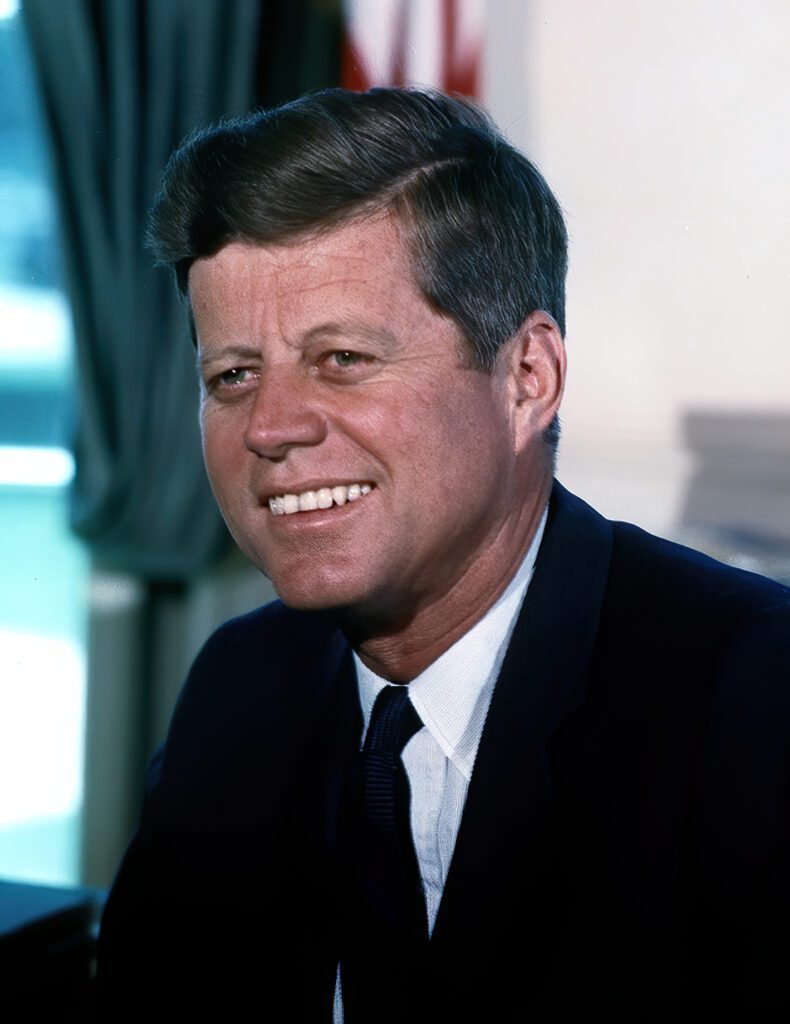
How did John F. Kennedy build this fortune?
The answer unfolds through the career, earnings, deals and assets behind the headline estimate.
John F. Kennedy before the fame
The background and early turning points that shaped John F. Kennedy’s route to prominence.
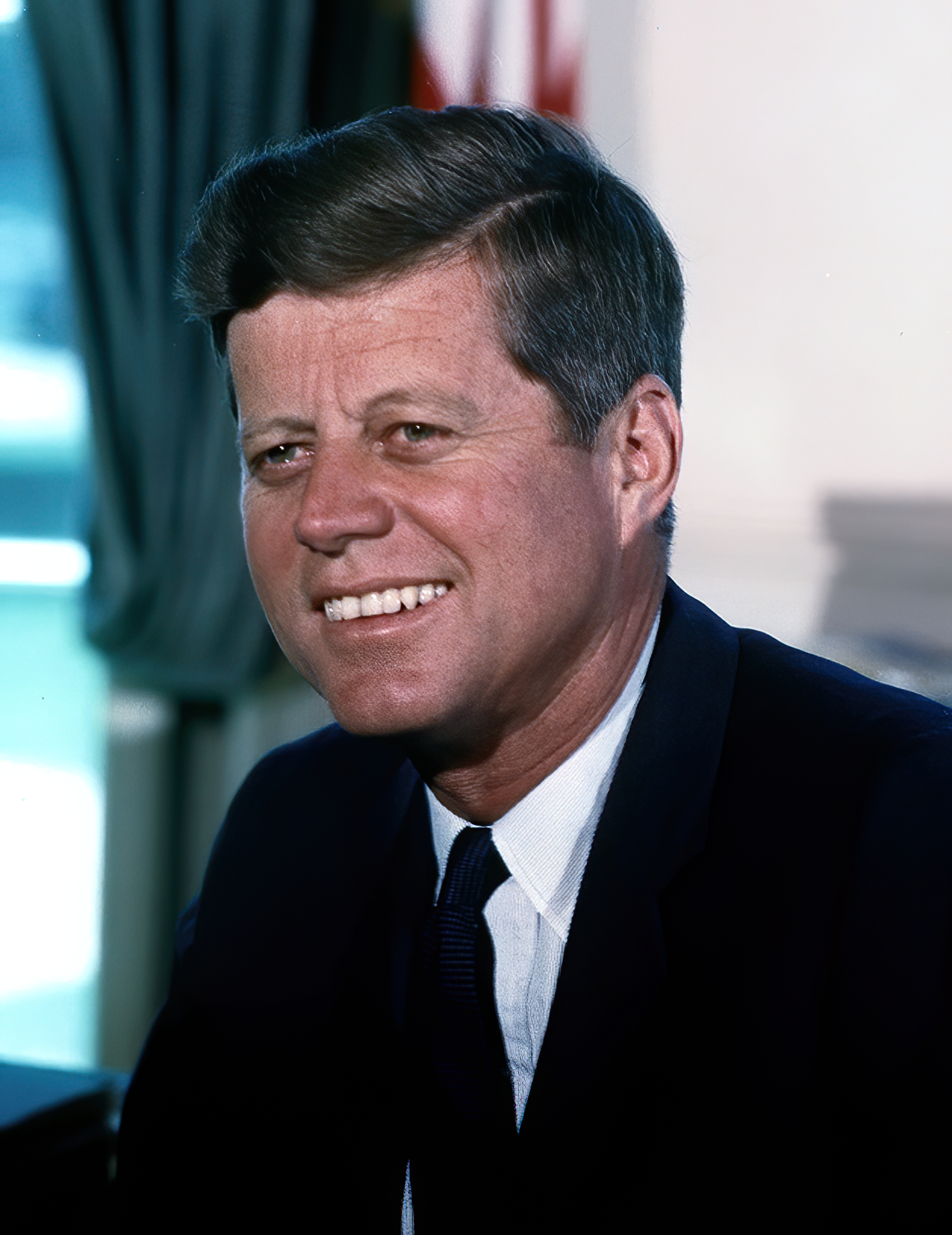
John Fitzgerald Kennedy was born on 29 May 1917 in Brookline, Massachusetts, the second of nine children of Joseph P. Kennedy Sr and Rose Fitzgerald. The crucial financial fact of his life precedes him: his father made an enormous fortune in banking, film distribution, spirits importing and stock market operations, and from 1926 established trusts for his children. Kennedy never had to earn a living (the John F. Kennedy Presidential Library).
Those trusts are the whole architecture of his money. Joseph Kennedy set up the first in 1926, a second in 1936 and a third in 1949, and by the early 1960s they were reckoned to hold about half the family fortune (Fortune). Kennedy drew income from his share; he never held the capital outright, and that distinction is what most published figures for him miss.
He studied at Harvard, where his thesis was published in 1940 as Why England Slept. It sold about 80,000 copies in Britain and America, and the royalties – on our estimate 30,000 to 40,000 dollars, a standard author’s share on that print run – were the first money he earned himself; he gave the British proceeds to bombed Plymouth and spent the American ones on a Buick convertible.
He served in the Navy in the Pacific, commanding the patrol torpedo boat PT-109. Its sinking in 1943, and his conduct in leading survivors to safety, produced the war record that underpinned his political career. He entered the House of Representatives in 1947 on a congressional salary of 15,000 dollars, and from that first year gave the whole of it to charity (UPI).
John F. Kennedy’s breakthrough years
The career decisions and defining moments that turned recognition into sustained earning power.
He moved to the Senate in 1952, where the salary had risen to 22,500 dollars, and won the Pulitzer Prize in 1957 for Profiles in Courage, a bestseller whose royalties he also directed to charity. What public office paid him, in total, is on the record: six years in the House, eight in the Senate and nearly three as President came to roughly 500,000 dollars in salary, and he gave every dollar of it away (UPI, the Miller Center at the University of Virginia).
The income he actually lived on came from the trust. When he became President it was disclosed that his personal holdings under the family trusts stood at 10 million dollars, producing about 100,000 dollars a year after tax (TIME). That, not the presidential salary, was the money behind the Georgetown house, the sailing and the campaigns.

What John F. Kennedy’s work can earn
Reported pay, contracts, royalties and performance income reveal how the fortune was funded.
As the 35th President from January 1961 he established the Peace Corps, committed the United States to a crewed lunar landing before the decade’s end, navigated the Cuban Missile Crisis and signed the Partial Nuclear Test Ban Treaty (the John F. Kennedy Presidential Library). His civil rights legislation passed after his death as the Civil Rights Act of 1964.
The presidency paid 100,000 dollars a year, 94,600 for the partial first year, and in 1962 the whole of it went to six charities including the United Negro College Fund, the Boy Scouts and the Girl Scouts (Snopes). He was assassinated in Dallas on 22 November 1963.
The Pulitzer, the Navy and Marine Corps Medal for PT-109 and the Purple Heart came in his lifetime; the presidential library in Boston, the Kennedy Center in Washington, the space centre at Cape Canaveral and an airport in New York followed his death. He remains, in every survey of public esteem taken since, among the two or three most admired Presidents of the twentieth century.

John F. Kennedy’s business beyond the main career
Endorsements, ownership interests and investments can keep compounding long after the initial breakthrough.
None, then or now. A sitting senator or President could not take commercial money, and the family’s fortune made the question moot. The Kennedy name has since been licensed for nothing; the estate’s value today sits in archives, not endorsements.
He ran none. The family’s businesses were his father’s: the Merchandise Mart in Chicago, bought in 1945 for about 13 million dollars with roughly a million in cash and valued by 1963 at 75 million with annual rents of 13 million; New York property; oil interests; and Somerset Importers, sold in 1946 for 8 million dollars on an original outlay of 100,000 (Fortune). Kennedy’s connection to all of it was as a beneficiary of trusts that held it, and the profile keeps that money on his father’s side of the line.

John F. Kennedy’s notable luxury item
A reported property or major asset offers a tangible glimpse of the wealth behind the public estimate.
The houses were family houses. The Hyannis Port compound on Cape Cod, the Palm Beach house and the summer places were held within the wider family rather than by him individually, and passed down the family rather than through his estate. He and Jacqueline Kennedy owned a house on N Street in Georgetown, sold when they moved to the White House, and later a country property in Virginia.
His own asset, then, was the trust interest: 10 million dollars disclosed in 1961, invested by the family office his father ran from New York, and never his to sell (TIME).
John F. Kennedy’s estimated net worth
Public estimates vary because private contracts, investments, taxes and liabilities are not fully disclosed.
How this estimate is calculated
Two documented figures anchor this. His personal holdings under the family trusts were disclosed at 10 million dollars when he became President, yielding about 100,000 dollars a year after tax (TIME). And the family fortune as a whole stood at roughly 300 million dollars in 1963, with informed guesses as high as 500 million, according to the magazine that first ranked his father among the richest Americans in 1957 (Fortune).
The range below is the inflation-adjusted value of the 10 million dollar trust interest, not the family fortune: a dollar of 1961 buys what roughly 10.5 dollars buy today, which puts his own share at about 105 million in current money, and the range allows for the interest having been valued conservatively when disclosed. It assumes the trust was worth what the family said it was and that his own salaries, all given away, added nothing. Any figure attributing the whole Kennedy fortune to him individually is measuring the wrong thing.
He was the first President whose pay was a rounding error on his own income, and the one whose family kept the ledger so private that even his ten million had to be prised out by a magazine the year he took office.
The working supports a range of $90 million to $120 million. The figure we publish is its midpoint.
Confidence: Partly documented — anchored to the 10 million dollar trust interest disclosed in 1961 and converted to current money, with the trust’s exact terms private to the family.
Think you know John F. Kennedy? Take the quiz: Easy · Medium · Legendary
Giving away every government salary for sixteen years is the documented core of his philanthropy, and it was done quietly; the practice became public only when reporters asked in 1962 (UPI). The family’s institutional giving ran through the Joseph P. Kennedy Jr. Foundation, established in 1946 in memory of his elder brother, which had distributed about 16.5 million dollars by 1961, much of it to intellectual disability causes (Fortune). His public image, in life and after it, has rested on youth, wit and the sense of a country’s possibilities, and the money was deliberately kept out of view.
Contemporary scrutiny centred on the Bay of Pigs failure in 1961, and on the persistent question of whether his father’s money bought his elections, a charge he answered with a joke about a telegram from his father refusing to pay for a landslide. Later scholarship has examined his private life and his health in detail; neither is a financial matter and neither belongs here. On the money itself there was no scandal: the trusts were lawful, the salaries were given away, and the family fortune was his father’s to make.