
 How Much Are They Worth?
Celebrity fortunes, explained
How Much Are They Worth?
Celebrity fortunes, explained








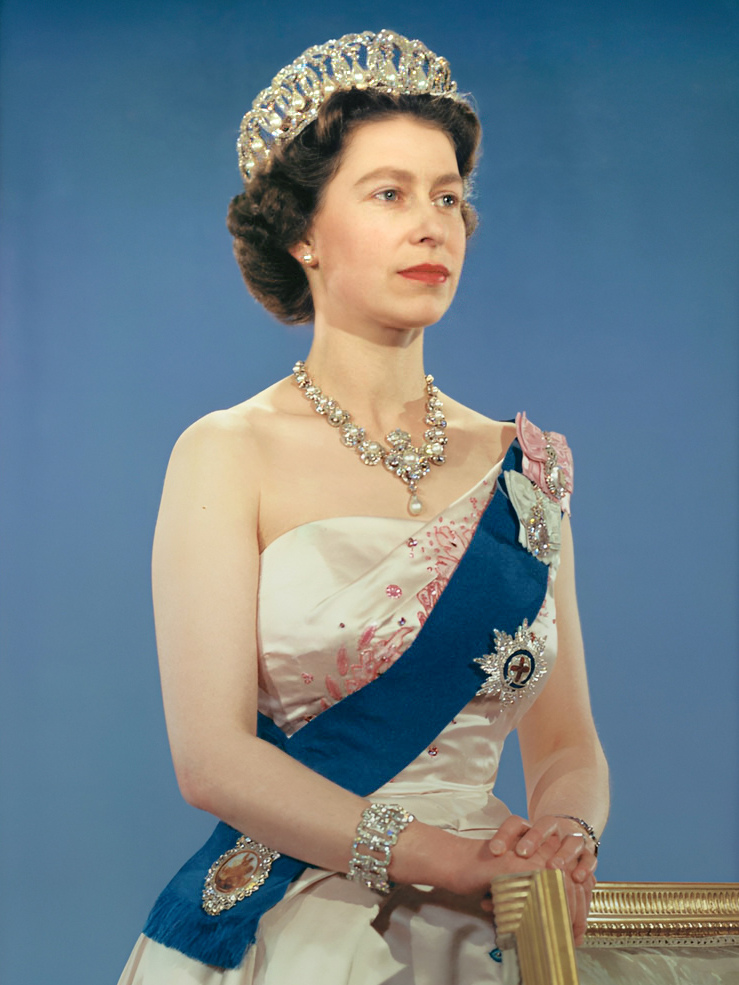
How did Queen Elizabeth II build this fortune?
The answer unfolds through the career, earnings, deals and assets behind the headline estimate.
Before the fame
The background and early turning points that shaped Queen Elizabeth II’s route to prominence.
Elizabeth Alexandra Mary was born on 21 April 1926 at 17 Bruton Street in Mayfair, the London home of her maternal grandparents, the eldest daughter of the Duke and Duchess of York. She was third in line to the throne and not expected to inherit it. That changed in December 1936 when her uncle Edward VIII abdicated and her father became George VI, making the ten-year-old princess heir presumptive, according to Wikipedia.
Educated privately, Elizabeth studied constitutional history with the vice-provost of Eton and learned French from a succession of governesses. In 1945, aged eighteen, she joined the Auxiliary Territorial Service and trained as a driver and mechanic, the only female member of the royal family to have served in the armed forces. She married Lieutenant Philip Mountbatten at Westminster Abbey in November 1947, and their first child, Charles, was born the following year.
The breakthrough years
The career decisions and defining moments that turned recognition into sustained earning power.
She was in Kenya, staying at the Treetops lodge on a royal tour, when George VI died on 6 February 1952. She acceded to the throne at twenty-five. The coronation followed on 2 June 1953 at Westminster Abbey and was the first to be televised, a decision she is said to have supported against the advice of her prime minister, and one that set the terms of the modern monarchy’s relationship with broadcasting.

What the work can earn
Reported pay, contracts, royalties and performance income reveal how the fortune was funded.
Elizabeth II reigned for 70 years and 214 days, longer than any other British monarch, surpassing Queen Victoria’s record in 2015 and marking a Platinum Jubilee in 2022 that no British sovereign had reached before. She worked with fifteen British prime ministers, from Winston Churchill to Liz Truss, whom she appointed at Balmoral two days before her death, and served as Head of the Commonwealth across its expansion from eight members to more than fifty.
Her image appeared on the currency and stamps of dozens of countries and she was, by any reasonable measure, among the most recognised people who has ever lived. Her Christmas broadcast, first televised in 1957, became a fixture of the British year. She also displayed an unexpected comic instinct, appearing with James Bond in the 2012 Olympic opening ceremony film and with Paddington Bear for her Platinum Jubilee.

The business beyond the main career
Endorsements, ownership interests and investments can keep compounding long after the initial breakthrough.
The Queen endorsed nothing commercially, but the royal warrant system she presided over remains one of the most valuable brand associations in Britain, granted to suppliers to the royal household and worth a great deal to the firms that hold it. Her horses won well over a thousand races, and the bloodstock operation at Sandringham was a genuine commercial concern rather than a hobby.
The sovereign does not run businesses in the ordinary sense, but the Crown’s landed interests are substantial and were managed throughout her reign as commercial enterprises. The Duchy of Lancaster provided her private income, and the Crown Estate, though not personally owned, generated surpluses that funded the monarchy through the Sovereign Grant. Her personal investments, in shares and in a celebrated racing and breeding operation, were managed privately.

Notable luxury item
A reported property or major asset offers a tangible glimpse of the wealth behind the public estimate.
A crucial distinction applies to royal wealth, and it is set out in public record rather than left to estimation. Buckingham Palace, Windsor Castle, the Crown Jewels and the Royal Collection are held by the sovereign in trust for the nation and cannot be sold, so they form no part of any personal fortune. The Crown Estate is not the monarch’s personal property either: its profits go to the Treasury, which returns a proportion as the Sovereign Grant, per the House of Commons Library and the Royal Household’s own published accounts. The Duchy of Lancaster is likewise held in trust for the sovereign in that role rather than owned outright (the Institute for Government). What she did own personally were Balmoral and Sandringham, both inherited from her father, along with a private art and jewellery collection, a share portfolio and the racing bloodstock.
Queen Elizabeth II’s estimated net worth
Public estimates vary because private contracts, investments, taxes and liabilities are not fully disclosed.
How this estimate is calculated
Estimating a monarch’s wealth means separating the personal from the institutional, and the two are routinely conflated.
Documented. The institutional position is a matter of public record. The Crown Estate is not the monarch’s personal property: its profits go to the Treasury, which returns a proportion as the Sovereign Grant, and the Duchy of Lancaster is held in trust for the sovereign in that role rather than owned outright (the House of Commons Library, the Royal Household’s published accounts).
Estimated. The Sunday Times Rich List, the longest-running British assessment, placed her personal fortune at roughly 365 to 370 million pounds in 2022, the last edition published in her lifetime, having assessed her at 340 million as recently as 2015. That measure counts only what she personally owned and could have sold: Balmoral and Sandringham, both inherited from her father, her private art and jewellery, her investment portfolio and the racing bloodstock.
Excluded. The Crown Estate, the Duchy of Lancaster, the Crown Jewels and the Royal Collection. None was hers to sell; all pass automatically to the next monarch. Estimates running into the billions are measuring that institutional wealth, which is a legitimate thing to count but is not the same question.
Why this range. Her will was sealed after her death, as is customary for the sovereign, so no figure can ever be confirmed and every number here is an external assessment. The range converts the sterling assessment and allows for the uncertainty that sealing creates.
The working supports a range of $440 million to $500 million. The figure we publish is its midpoint.
Related on How Much Are They Worth: King Charles III · Donald Trump · 10 of the Most Expensive Celebrity Homes and Estates
Think you know Queen Elizabeth II? Take the quiz: Easy · Medium · Legendary
She was patron of more than 600 organisations, and analysis by charity researchers has estimated that her patronages collectively raised well over a billion pounds. Her public image rested on an almost complete refusal to express personal opinion, sustained for seventy years, which is why the rare moments of visible emotion, such as her solitary figure at Prince Philip’s funeral in 2021, carried such weight.
The reign contained serious crises. She described 1992 as her annus horribilis, the year Windsor Castle burned and three of her children’s marriages collapsed, and the ensuing argument over who should pay for the restoration led to the palace opening to the public and to the Queen agreeing to pay income tax. The monarchy’s initial silence after the death of Diana, Princess of Wales in 1997 produced the sharpest public criticism of her reign, and the settlement of the civil case against her son Andrew in 2022 drew scrutiny of where the money had come from.