
 How Much Are They Worth?
Celebrity fortunes, explained
How Much Are They Worth?
Celebrity fortunes, explained




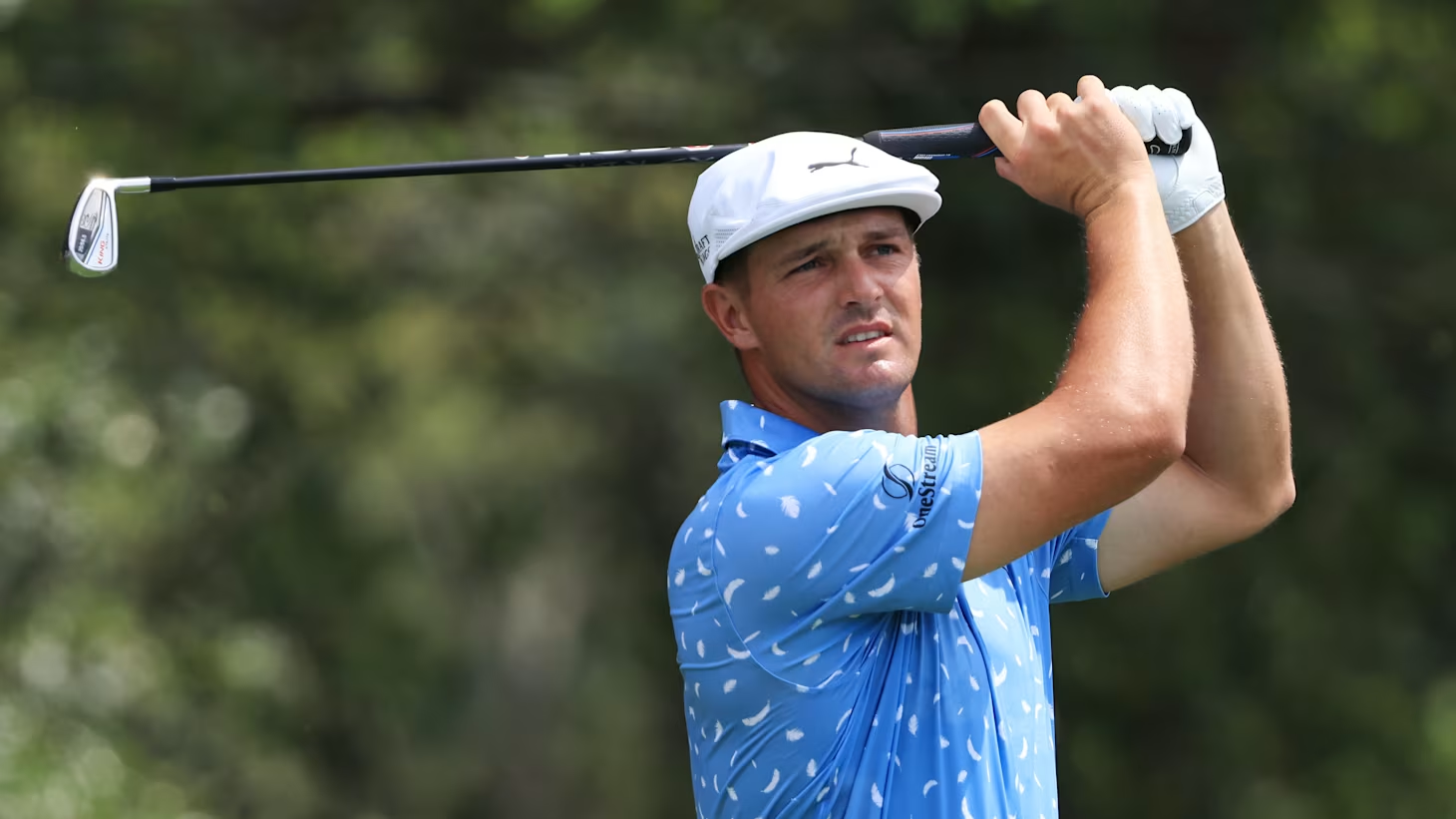
How did Bryson DeChambeau build this fortune?
The answer unfolds through the career, earnings, deals and assets behind the headline estimate.
Before the fame
The background and early turning points that shaped Bryson DeChambeau’s route to prominence.
Bryson DeChambeau is a U.S. Open champion known for an analytical approach and exceptional driving distance. That distinction matters financially because the subject’s earning history is tied to identifiable events, rights and businesses rather than a generic assumption about what a successful golf figure should be worth. This profile treats reported compensation as evidence, not as cash automatically retained.
DeChambeau won the NCAA individual title and U.S. Amateur in 2015 before building a professional identity around single-length irons and speed training.
DeChambeau’s early leverage came from a rare 2015 double: the NCAA individual championship and U.S. Amateur. He turned professional in 2016 with a marketable single-length-club and physics-driven identity, but HMW assigns no earnings to the amateur titles themselves. The USGA’s account of his 2024 Pinehurst victory connects that experimental approach to a second U.S. Open, following Winged Foot in 2020. Those two majors anchor sponsor and appearance periods; they are not converted into a generic fame premium.
The breakthrough years
The career decisions and defining moments that turned recognition into sustained earning power.
The decisive professional breakthrough was his early PGA Tour wins and physical transformation. It expanded audience, negotiating leverage and access to premium events. A breakthrough can create future earning capacity, but the estimate does not capitalize fame by itself; only documented compensation, durable rights and identifiable commercial activity are given financial weight.
The PGA Tour table preserves his pre-LIV official earnings, but it cannot capture LIV prizes, signing installments or media revenue.

What the work can earn
Reported pay, contracts, royalties and performance income reveal how the fortune was funded.
Major milestones include two U.S. Open titles and high-profile LIV and YouTube activity. The sequence is important because title bouts, major wins and headline events typically carry higher direct compensation and stronger sponsorship value. Career records also prevent double-counting widely repeated purse or prize reports that refer to the same event. Not every milestone receives a separate dollar value: several are used only to confirm the period in which income and commercial leverage peaked.
Forbes reported a $125 million LIV guarantee and about $56 million of LIV prize money by mid-2024; these are distinct categories, and the guarantee may be paid over time.
The principal income channels were prize money, LIV compensation, sponsorship, YouTube and merchandise. Public prize, purse or compensation reports are gross figures. They precede promoter or tour deductions, management, coaching and training costs, travel, taxes and personal spending, so the calculation applies substantial retention discounts rather than simply adding headlines.
Golf Monthly’s 2026 money list recorded roughly $14.4 million of season prize money by late July, a current but still gross competition figure.

The business beyond the main career
Endorsements, ownership interests and investments can keep compounding long after the initial breakthrough.
DeChambeau combines equipment and sponsor arrangements with a creator business built around YouTube golf. His media channel has production costs and platform revenue distinct from Crushers GC and LIV prize money. The 2026 LIV money list is used to verify competition receipts, while reported annual earnings are checked for guarantee overlap. HMW models YouTube from conservative advertising and sponsor yields after crew and editing expense; it does not multiply subscribers by a wealth rate or assume every branded video is a paid integration.
Business interests include reported LIV numbers are not equivalent to cash retained and contract detail is private. Where a private company has no audited accounts or transaction price, this profile does not assign it an aggressive speculative valuation. It recognizes only a restrained contribution consistent with the public evidence and separates operating-brand visibility from money owned personally.
His equipment and content partnerships carry value, but contract terms, production expenses and platform revenue splits are private.

Notable luxury item
A reported property or major asset offers a tangible glimpse of the wealth behind the public estimate.
Neither the payment calendar for DeChambeau’s reported $125 million LIV agreement nor his ownership percentage in Crushers GC is public. His content company also has staff, cameras, travel and revenue-sharing costs that are invisible in view counts. HMW includes after-tax cash accumulated from golf and media but no standalone team valuation, subscriber asset or named property value. Future league installments remain contractual prospects rather than August 2026 assets.
Bryson DeChambeau’s estimated net worth
Public estimates vary because private contracts, investments, taxes and liabilities are not fully disclosed.
How this estimate is calculated
The calculation totals DeChambeau’s pre-LIV PGA prize money, itemized LIV purses and bonuses, and only the elapsed installments of the reported $125 million guarantee. Forbes annual totals act as a ceiling where those categories overlap. HMW deducts caddie, coaching, travel and representation costs from playing income, a larger production-cost percentage from YouTube revenue, and a blended tax reserve near 40%. It adds modest returns on retained cash and ordinary spending through his relatively short high-income period. Crushers GC equity, unpaid league years and unsupported property are excluded, leaving the reveal grounded in received compensation rather than the maximum contract announcement.
Bryson DeChambeau developed a public profile extending beyond results. Major media and governing-body coverage shows sustained audience interest and a recognisable international brand. Reach can support licensing, appearances and sponsorship, although follower counts and publicity are not treated as personal assets without evidence of monetisation.
Forbes estimated $45 million of 2025 earnings, a period after the initial signing, which helps prevent treating the entire contract headline as recurring annual income.
USGA pages establish DeChambeau’s two majors, published LIV lists provide event receipts, and Forbes estimates help separate golf and off-course years. Contract headlines remain weaker because they omit timing, conditions and equity. Creator revenue is also private, so HMW uses the channel only as evidence of an operating media line and gives priority to reported consolidated earnings. The largest error risks are double-counting a LIV installment inside an annual total and assigning profit to gross video views.