

 How Much Are They Worth?
Celebrity fortunes, explained
How Much Are They Worth?
Celebrity fortunes, explained








How did David Benavidez build this fortune?
The answer unfolds through the career, earnings, deals and assets behind the headline estimate.
Before the fame
The background and early turning points that shaped David Benavidez’s route to prominence.
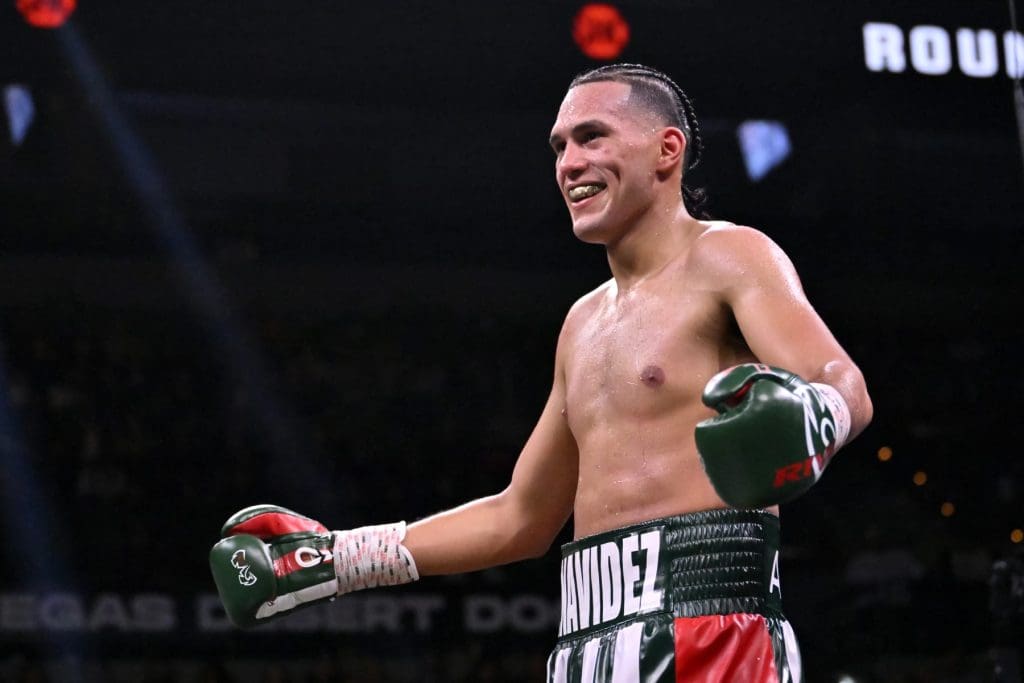
Anthony David Benavidez was born on December 17, 1996, in Phoenix, Arizona, to a Mexican father and an Ecuadorian mother. He grew up in a boxing family: his father, Jose Benavidez Sr., is his trainer, and his older brother, Jose Benavidez Jr., is also a professional boxer who held the WBA interim welterweight title. As a young teenager Benavidez struggled with his weight, reaching around 250 pounds before disciplining himself for the sport that would define his career. He is widely known by two nicknames, “The Mexican Monster,” reportedly coined by Mike Tyson, and “El Bandera Roja” (“The Red Flag”). (Wikipedia)
Benavidez began boxing as a small child and compiled a 15-0 amateur record before turning professional at just 16 years old. He made his professional debut on August 17, 2013, stopping Erasmo Mendoza by first-round knockout in Puerto Peñasco, Sonora, Mexico. He built his early record quickly, picking up the NABF Junior light heavyweight title in April 2015 against Rollin Williams and signing with Sampson Boxing later that year. By late 2015 he was 12-0 with 11 stoppages, and he continued racking up knockout wins over the following two years, including victories over Kevin Cobbs, Francy Ntetu, Denis Douglin, and Rogelio Medina. (Wikipedia)
The breakthrough years
The career decisions and defining moments that turned recognition into sustained earning power.
Benavidez’s breakthrough came on September 8, 2017, when he defeated Ronald Gavril by split decision at the Hard Rock Hotel & Casino, surviving a final-round knockdown to become WBC super middleweight champion at 20 years, 8 months old, the youngest champion in the division’s history. He beat Gavril again in a February 2018 rematch by lopsided unanimous decision, a fight in which he reportedly earned around $400,000 to Gavril’s $125,000. That momentum was interrupted later in 2018 when a random Voluntary Anti-Doping Association test returned positive for cocaine, costing him his title (covered in full below). He rebuilt his career with wins over J’Leon Love and, in September 2019, a ninth-round stoppage of Anthony Dirrell that reclaimed the WBC title he had lost the year before. (WBC, Wikipedia)

What the work can earn
Reported pay, contracts, royalties and performance income reveal how the fortune was funded.
Benavidez has gone on to become one of boxing’s most avoided, and most accomplished, fighters. Key wins include a third-round stoppage of former IBF middleweight champion David Lemieux in 2022, a unanimous decision over former IBF super middleweight champion Caleb Plant on Showtime pay-per-view in March 2023, and a sixth-round corner stoppage of previously undefeated two-weight champion Demetrius Andrade in November 2023. He then moved up to light heavyweight, winning the interim WBC title against Oleksandr Gvozdyk in June 2024, outpointing David Morrell Jr. for the WBA (Regular) and WBC interim titles in February 2025, and stopping Anthony Yarde in the seventh round in November 2025 to earn the WBC’s Performance of the Year award. In May 2026 he moved up again and knocked out unified WBA/WBO cruiserweight champion Gilberto “Zurdo” Ramirez in the sixth round, becoming the first boxer in history to win world titles at super middleweight, light heavyweight, and cruiserweight. As of that win, his professional record stood at 32-0 with 26 knockouts. (Wikipedia)
Benavidez’s run through three weight classes has pushed him into the sport’s pound-for-pound conversation. He made his top-10 debut in ESPN’s men’s pound-for-pound rankings in early 2025 following his win over David Morrell Jr., and after demolishing Gilberto Ramirez in May 2026 he surged to as high as No. 3 to No. 4 pound-for-pound across major outlets, leapfrogging established names in the sport. He is regularly discussed by ESPN, The Ring, and DAZN as one of boxing’s biggest attractions and is frequently referred to in coverage as boxing’s “most avoided” fighter, a nod to the number of top opponents who have ducked him over the years. (ESPN, Yahoo Sports)

The business beyond the main career
Endorsements, ownership interests and investments can keep compounding long after the initial breakthrough.
In April 2024, alkaline water and functional beverage company Plus Brand announced a long-term, multi-year brand ambassador partnership with Benavidez, making Agua Plus his official water and beverage sponsor heading into his light heavyweight run. The deal built on a prior working relationship around his November 2023 win over Demetrius Andrade and was structured to extend well beyond its initial term. Benavidez has also carried nutrition and apparel sponsorships tied to his training camp over the course of his career, reflecting his growing profile as a pay-per-view draw. (Agua Plus / Plus Brand)
Outside the ring, Benavidez and his team operate the Team Benavidez Store, an online merchandise business selling apparel, boxing equipment, and lifestyle goods built around his “El Bandera Roja” persona, with items ranging from t-shirts and snapback caps to premium travel bags. The Benavidez family has also built out a training-camp business under Jose Benavidez Sr., a large private facility used to house and prepare fighters for major bouts. These ventures sit alongside his primary income stream as an active fighter. (Team Benavidez Store)

Notable luxury item
A reported property or major asset offers a tangible glimpse of the wealth behind the public estimate.
Benavidez has been open about spending on cars as his purses have grown. He unveiled a heavily customized 2023 Lamborghini Urus, finished in a gold wrap with black accents, whose base model retails for roughly $233,995 before his personalization; he showed it off publicly while waiting on a potential Canelo Alvarez fight that ultimately never materialized. He has also invested in an Arizona property built out for training purposes, giving him a private base near his home city of Phoenix rather than relying solely on commercial gyms. (EssentiallySports)
David Benavidez’s estimated net worth
Public estimates vary because private contracts, investments, taxes and liabilities are not fully disclosed.
How this estimate is calculated
David Benavidez’s net worth is built almost entirely from fight purses rather than endorsements, which industry trackers note make up only a small share of his income. Reported purses have grown steadily with his profile: roughly $400,000 for his 2018 rematch with Ronald Gavril, around $1 million for reclaiming the title against Anthony Dirrell in 2019, approximately $3 million including a pay-per-view share for headlining against Caleb Plant in 2023, and a reported $7 million for his November 2023 win over Demetrius Andrade. Layered on top of those purses are his Agua Plus brand ambassador income, merchandise revenue from the Team Benavidez Store, and further step-ups in pay for his 2024-2026 light heavyweight and cruiserweight title fights. Because purse figures for private bouts are not always fully disclosed and vary between reporting outlets, net worth trackers publish a range rather than a single precise figure. (EssentiallySports, Sportskeeda, secondary estimate)
Benavidez has used his platform for charitable moments alongside his fights. Ahead of his bout with Demetrius Andrade, he invited a teenage fan battling cancer, Joshua, to the event and covered travel and expenses for his family, a gesture widely covered in boxing media. He has also taken part in charity fundraising tied to his fights and public appearances, including donating winnings from promotional activities to causes supporting children and families in need. Publicly, he is known for blunt, outspoken interviews in which he has repeatedly called out top fighters, most notably Canelo Alvarez, for avoiding him. (Wikipedia)
The biggest controversy of Benavidez’s career came in September 2018, when a random out-of-competition test administered under the WBC’s Clean Boxing Program, run by the Voluntary Anti-Doping Association, returned a positive result for benzoylecgonine, a metabolite of cocaine, from a sample collected on August 27 in Las Vegas. He was not training for a fight at the time. The WBC stripped him of his super middleweight title and suspended him, sidelining him for roughly a year during what should have been the prime momentum period after becoming champion. Benavidez publicly apologized, took responsibility for the failure, and served his suspension before working his way back to a title shot, ultimately reclaiming the WBC belt from Anthony Dirrell in September 2019. He has spoken candidly about the episode in interviews since, describing it as a low point he used as motivation, and it remains a frequently referenced chapter in coverage of his career alongside comparisons to other fighters’ doping cases. (ESPN, ESPN)