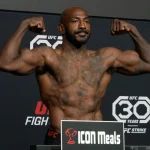
How did Dustin Poirier build this fortune?
The answer unfolds through the career, earnings, deals and assets behind the headline estimate.
Before the fame
The background and early turning points that shaped Dustin Poirier’s route to prominence.
Dustin Poirier developed from a Louisiana regional fighter into an interim UFC lightweight champion and repeated PPV headliner. His official UFC profile records his title bouts and finishing history. HMW uses specific McGregor event estimates, bonus history, commercial products and conservative early-career pay. His charitable foundation is kept separate from personal assets, and no figure is guessed from rank or fame.
Poirier turned professional in 2009, joined WEC and entered UFC after the merger. His UFCStats ledger documents the move from featherweight to lightweight and a long sequence of leading contenders. Early guarantees were modest and many camps required travel from Louisiana. Those fights receive conservative show-and-win values rather than later PPV-level estimates.
The breakthrough years
The career decisions and defining moments that turned recognition into sustained earning power.
At lightweight Poirier defeated champions and contenders including Anthony Pettis, Justin Gaethje, Eddie Alvarez and Max Holloway, beating Holloway for the interim title in 2019. UFC’s UFC 236 report confirms the breakthrough. The interim title led to a PPV bout with Khabib Nurmagomedov and improved Poirier’s contract leverage.
What the work can earn
Reported pay, contracts, royalties and performance income reveal how the fortune was funded.
Poirier defeated Conor McGregor twice in 2021 and later challenged Charles Oliveira and Islam Makhachev for the title. MMA Fighting reported roughly 1.8 million buys for UFC 264. Public estimates place Poirier’s total near $10 million, but HMW discounts the figure because the contract and PPV settlement were not released.
UFC guarantees, PPV participation, win and performance bonuses and compliance pay supply most income. The McGregor rematch and trilogy dominate the ledger, followed by championship events. MMA Fighting documented a UFC 257 performance bonus. HMW builds component ranges and never adds projected PPV to a total already including backend.
The business beyond the main career
Endorsements, ownership interests and investments can keep compounding long after the initial breakthrough.
Poirier partnered with Heartbeat Hot Sauce for Poirier’s Louisiana Style. MMA Fighting’s business feature documents the launch. He also worked with apparel, betting and nutrition brands. No sales or margin accounts are public, so HMW assigns a small owner-brand value rather than comparing sauce to celebrity alcohol exits.
The Good Fight Foundation auctions fight memorabilia and funds community projects, but charitable assets are not Poirier’s wealth. The foundation’s official site establishes its separate mission. Hot sauce, merchandise and digital work are the relevant commercial interests. Their value depends on Poirier’s continuing involvement and receives a conservative multiple.
Notable luxury item
A reported property or major asset offers a tangible glimpse of the wealth behind the public estimate.
Federal and state tax, American Top Team camps, management and long-career consumption reduce gross pay. Poirier has emphasized property and family security, but mortgages and investment accounts are private. Some earnings were donated or raised for charity. The calculation distinguishes personal donations from foundation funds and treats property only as estimated net equity.
Dustin Poirier’s estimated net worth
Public estimates vary because private contracts, investments, taxes and liabilities are not fully disclosed.
How this estimate is calculated
HMW assigns conservative early-career purses, higher ranges from the interim-title period, discounted PPV estimates for the McGregor fights and championship ranges for Nurmagomedov, Oliveira and Makhachev. Bonuses and sponsor income are added only when not embedded. UFC’s career review confirms which events were title fights and headliners before ranges are attached. Deductions cover federal and state tax, management, American Top Team camps, travel, philanthropy and household consumption. The model does not assume every PPV buyer generated the same contractual share, nor does it carry McGregor-level pay into later fights. Hot-sauce value is derived from plausible owner income, not the retail sales of unrelated celebrity beverage companies. Restrained property, investments, merchandise and brand goodwill complete the estimate.
Retirement ends the assumption of future UFC purses, while permitting modest continuing income from merchandise, appearances and products established during the active career. This distinction prevents future-fight speculation from inflating present assets.
Poirier’s durability, Louisiana identity and respectful rivalry with McGregor broadened his audience. He became a regular main-event figure and later completed his career in a high-profile farewell. Reach supports merchandise, appearances and product sales, but it is not itself an asset. HMW recognizes revenue only where tied to fights, named products or documented campaigns.
The 1.8 million-buy UFC 264 report supports strong backend potential, but the $10 million payday remains an estimate. Other guarantees and discretionary bonuses are incomplete. HMW uses the McGregor events as upper anchors, applies lower ranges to ordinary headliners, and cross-checks cumulative bonuses. It excludes charitable funds, rumored business values and online celebrity totals. The injury ending the trilogy affects the result, not necessarily the contracted guarantee, so HMW does not cut the event estimate simply because it ended after one round. Conversely, it does not assume Poirier received McGregor’s larger share of PPV economics.

JavaScript is off, so all sections are displayed together.