
 How Much Are They Worth?
Celebrity fortunes, explained
How Much Are They Worth?
Celebrity fortunes, explained




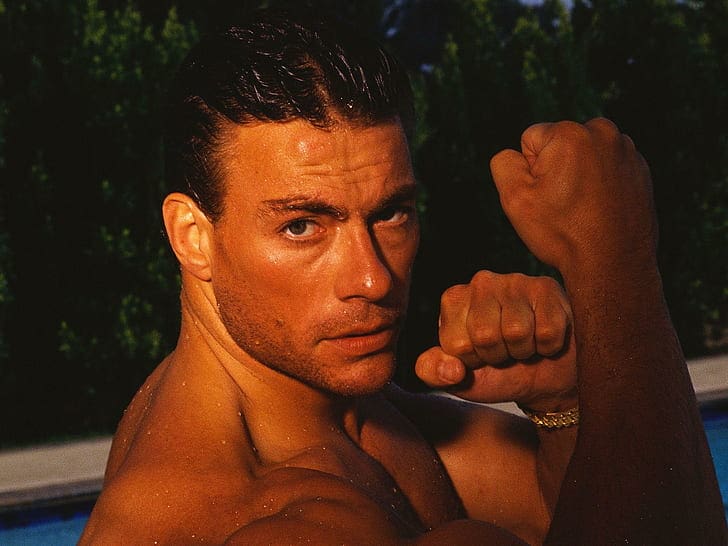
How did Jean-Claude Van Damme build this fortune?
The answer unfolds through the career, earnings, deals and assets behind the headline estimate.
Before the fame
The background and early turning points that shaped Jean-Claude Van Damme’s route to prominence.
Jean-Claude Van Damme was born Jean-Claude Camille François Van Varenberg on October 18, 1960, in Berchem-Sainte-Agathe, a municipality of Brussels, Belgium, to a father who worked as an accountant and florist and a Flemish Dutch-speaking mother. He began training at a Shotokan karate school at age ten and earned his black belt and second-dan rank by eighteen, later competing in kickboxing, Muay Thai, and Taekwondo as well. At sixteen he also took up ballet, training for five years and later calling it one of the most physically demanding disciplines he ever pursued. He won the Mr. Belgium bodybuilding title in 1978 and the European Professional Karate Association middleweight championship in 1979, according to Wikipedia.
Before leaving Belgium, Van Damme opened California Gym in Brussels in 1979, a fitness club he later said generated about 15,000 dollars a month. He relocated to Los Angeles in the early 1980s, after a brief attempt to break into Hong Kong’s martial arts film industry, and supported himself working as a cab driver, waiter, aerobics instructor, and nightclub bouncer while chasing small acting roles. His first notable screen credit was a bit part in “No Retreat, No Surrender” (1986), according to Biography.com.
The breakthrough years
The career decisions and defining moments that turned recognition into sustained earning power.
Van Damme’s break came when he demonstrated his signature helicopter kick directly to producer Menahem Golan, who cast him in “Bloodsport” (1988), a low-budget martial arts drama loosely inspired by Frank Dux’s claims about an underground Kumite tournament. The film outperformed expectations, grossing roughly 35 million dollars, and established Van Damme as a leading action star, a status he cemented the following year with “Kickboxer” (1989) and the persona, dubbed “Muscles from Brussels,” that would define his career through the early 1990s, according to Biography.com.
What the work can earn
Reported pay, contracts, royalties and performance income reveal how the fortune was funded.
Through the early-to-mid 1990s, Van Damme became one of the highest-paid action stars in Hollywood, headlining “Universal Soldier” (1992), “Double Impact” (1991), “Street Fighter” (1994), and “Timecop” (1994), the last of which grossed more than 100 million dollars worldwide and remains his highest-grossing lead role. Across his filmography, his movies have grossed over 3.3 billion dollars globally, and the original “Mortal Kombat” video game character Johnny Cage was reportedly conceived around his on-screen persona, according to Wikipedia.
After a run of poorly received, mostly direct-to-video films in the early 2000s, Van Damme’s career was reassessed following “JCVD” (2008), a satirical drama in which he played a fictionalized, down-on-his-luck version of himself caught up in a post office heist in Brussels. The film marked his first wide theatrical release since 1999 and drew strong reviews for his dramatic performance, which Time magazine ranked as the second-best film performance of 2008, behind only Heath Ledger’s Joker in “The Dark Knight,” according to Wikipedia. Van Damme received a Best Actor nomination at the 2009 Chlotrudis Awards for the role, part of an awards history that also includes his 2020 induction into the Martial Arts History Museum’s Hall of Fame, according to IMDb.
The business beyond the main career
Endorsements, ownership interests and investments can keep compounding long after the initial breakthrough.
Van Damme’s best-known endorsement is Volvo Trucks’ “The Epic Split,” a 2013 commercial in which, then in his early fifties, he performed a full split balanced between the side mirrors of two Volvo FM trucks reversing beneath him, set to Enya’s “Only Time.” Filmed in a single take at a disused airport in Spain on an estimated budget of 3 to 5 million dollars, the ad drew more than 43 million YouTube views within days, was widely shared on social media, and is regarded as one of the most successful viral advertising campaigns of the decade, according to Wikipedia.
Van Damme has built business interests outside acting around his martial arts background. In 2010 he launched a line of martial arts training equipment that reportedly generated 1.5 million dollars in sales in its first year. More recently, he became majority shareholder and brand ambassador of Old Oak, an Irish whiskey brand, in October 2023, lending his name and public profile to its marketing as the label expanded distribution, according to The Spirits Business.
Notable luxury item
A reported property or major asset offers a tangible glimpse of the wealth behind the public estimate.
Van Damme purchased a custom-built, three-story home on the Marina Del Rey canals in Los Angeles in 2012 for approximately 6 million dollars. The 7,574-square-foot property, designed by architect Wallace Cunningham, included six bedrooms, eleven bathrooms, a home theater, a wine cellar, and a rooftop pool with dock access; he listed it in 2015 and sold it to rapper and actor Ice Cube in early 2016 for about 7.25 million dollars, according to Gigwise. He has also maintained a residence in Hong Kong and in 2004 was reported to be in negotiations for a 2,700-square-foot duplex penthouse at the Sorrento development near Kowloon station, a deal valued at roughly 40.7 million dollars, according to South China Morning Post.
Jean-Claude Van Damme’s estimated net worth
Public estimates vary because private contracts, investments, taxes and liabilities are not fully disclosed.
How this estimate is calculated
This estimate draws on Van Damme’s decades of film income, including back-end participation on franchise titles such as the “Universal Soldier” and “Kickboxer” series that have continued to generate royalties long after their theatrical runs, plus his equity stake and ambassador earnings from the Old Oak whiskey brand, proceeds from his martial arts equipment line, and the value of real estate transactions including the 7.25 million dollar Marina Del Rey sale. It also weighs the career disruption of his early-2000s direct-to-video period and the legal exposure from the Frank Dux lawsuit against the recovery in his earning power following “JCVD” and later franchise work such as “The Expendables 2.” Because Van Damme’s contracts, whiskey brand equity, and property portfolio are not fully disclosed, any total is necessarily an estimate. Celebrity Net Worth, used here only as a secondary reference point, lists his fortune at approximately 30 million dollars, while other trackers place more recent estimates as high as 40 million dollars.
In April 2022, the Democratic Republic of the Congo appointed Van Damme as its ambassador for the environment, alongside additional honorary titles covering youth, sport, and culture, a role he said he accepted on a voluntary basis to help promote conservation of the country’s forests and wildlife and to encourage outside investment. The appointment came with a diplomatic passport and formalized an advocacy role he had already taken on around animal rights and environmental causes, according to VRT NWS.
Van Damme has spoken publicly and at length about a cocaine addiction that consumed him from 1993 to 1996, a period in which he has said he was spending as much as 10,000 dollars a week on the drug and, at its worst, using up to 10 grams a day just to function. He briefly entered a treatment program in 1996 but left after about a week, and a 1999 DUI arrest became a turning point that pushed him to quit using the drug outright, according to Grunge. He has also discussed being diagnosed with bipolar disorder in 1998 and has spoken openly since 2011 about managing it with medication, and he has married five times across four relationships, including two marriages to Gladys Portugues, with the personal upheaval coinciding with the box-office decline that pushed much of his 2000s work straight to video. Separately, a lawsuit brought by Frank Dux over profit-sharing on “The Quest” reportedly threatened to cost Van Damme a substantial portion of his fortune before being resolved in his favor, according to FandomWire, around the same period that titles like “The Order” (2001) and “In Hell” (2003) marked his fall from theatrical leading man to direct-to-video regular, according to Screen Rant.