
 How Much Are They Worth?
Celebrity fortunes, explained
How Much Are They Worth?
Celebrity fortunes, explained








How did Joe Louis build this fortune?
The answer unfolds through the career, earnings, deals and assets behind the headline estimate.
Before the fame
The background and early turning points that shaped Joe Louis’s route to prominence.
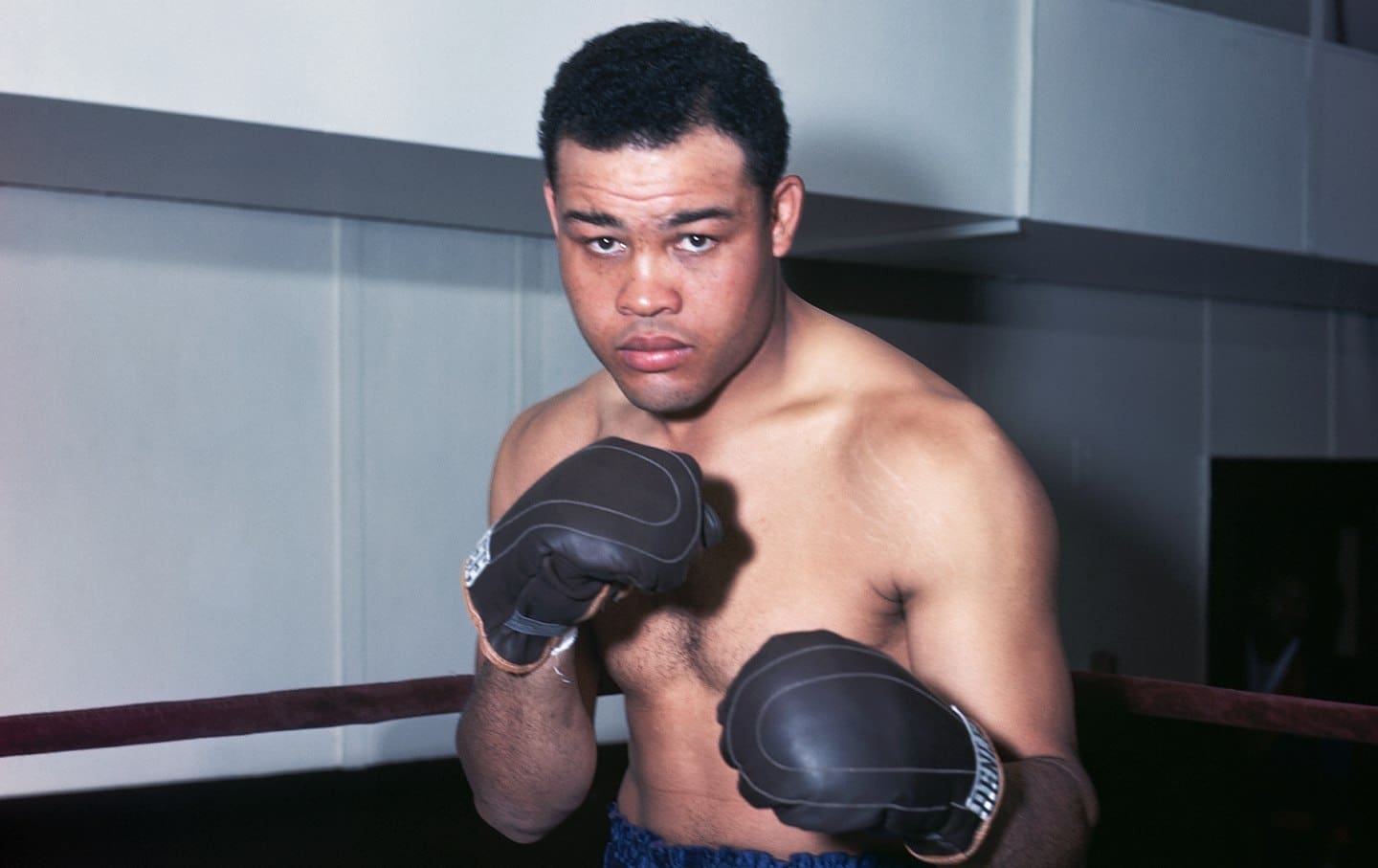
Louis was born on May 13, 1914, near Lafayette, Alabama, the seventh of eight children of sharecropper Munroe Barrow and his wife Lillie, according to his Wikipedia biography. His father was committed to a psychiatric institution when Louis was a toddler, and his mother remarried and moved the family to Detroit in 1926, where Louis briefly worked at the Ford Motor Company’s River Rouge plant. He began boxing at Detroit’s Brewster Recreation Center as a teenager, adopting the ring name Joe Louis to keep his amateur fighting secret from his mother, and won the national Amateur Athletic Union light heavyweight title in 1934.
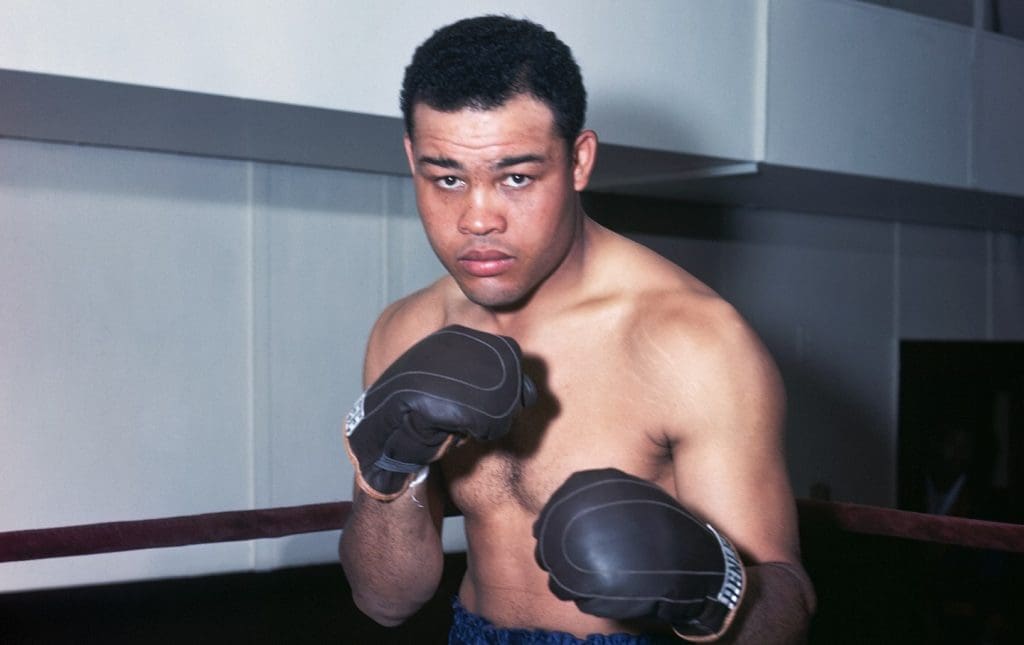
Louis turned professional in July 1934 under managers John Roxborough and Julian Black and trainer Jack Blackburn, a team that deliberately built his public image to avoid the backlash that had followed Jack Johnson a generation earlier, according to Britannica. He won his first 27 professional fights, 23 by knockout, and had earned $371,645 in purses by the end of 1935, roughly 300 times an average American’s annual salary during the Depression, according to the Encyclopedia of Alabama. That early income established the pattern that would define his finances for the rest of his life: enormous sums earned quickly, and an enormous tax bill accumulating just as fast behind them.
The breakthrough years
The career decisions and defining moments that turned recognition into sustained earning power.
Louis suffered his first professional loss to German fighter Max Schmeling in June 1936, then won the world heavyweight title by knocking out James Braddock in Chicago on June 22, 1937. His rematch with Schmeling exactly one year later, staged as the two men became symbols of opposing political systems on the eve of the Second World War, ended in a first round knockout in 124 seconds in front of 70,000 fans at Yankee Stadium, a result celebrated across Black communities nationwide, as detailed by PBS American Experience. The win cemented Louis as a national hero years before the organized civil rights movement took shape.

What the work can earn
Reported pay, contracts, royalties and performance income reveal how the fortune was funded.
Louis held the world heavyweight title from 1937 to 1949, a reign of nearly twelve years that remains the longest of any heavyweight champion, and he made 25 successful title defenses, both records that still stand today. During the Second World War he enlisted in the US Army, rose to the rank of staff sergeant, and fought roughly 100 exhibition bouts for American troops at home and abroad before his 1945 discharge, service documented by the National WWII Museum. His final professional record stood at 66 wins, 52 by knockout, against three losses, a career widely ranked among the greatest in heavyweight history.
Louis’s standing has only grown since his final fight. He was inducted into the International Boxing Hall of Fame in 1990, and the US Postal Service issued a 29 cent commemorative stamp in his honor in 1993, the first American postage stamp to depict a boxer, according to the Mystic Stamp Company. In 1986 the city of Detroit unveiled a 24 foot bronze forearm and fist sculpture in his honor at the corner of Jefferson and Woodward Avenues downtown, commissioned by Time magazine and sculpted by Robert Graham, a monument that remains one of the city’s most recognized public artworks, according to the Detroit Institute of Arts.

The business beyond the main career
Endorsements, ownership interests and investments can keep compounding long after the initial breakthrough.
Louis fought before the modern athlete endorsement era, when most national advertisers avoided Black spokesmen entirely, but he was one of the very few exceptions of his generation. A surviving print advertisement from the 1940s promoting Murray’s hair pomade, now preserved and sold as a collectible by the auction house Goldin, shows Louis’s image used to sell consumer products to Black newspaper readers at a time when white champions had access to far more lucrative, mainstream campaigns. Deals like this supplemented his income but were never a meaningful offset against his boxing purses or his tax bill.
After boxing, Louis lent his name and celebrity to a series of consumer businesses aimed at Black communities. He launched the Joe Louis Milk Company on Chicago’s South Side in 1954, which distributed dairy products to grocery stores and briefly to city schools until it closed in 1977, and he separately formed the Joe Louis Distillery Company to sell Joe Louis Kentucky Straight Bourbon Whiskey, according to the Obsidian Collection’s archive published by Google Arts and Culture. None of these ventures generated income close to what his boxing purses once had, and none reversed the trajectory of his tax debt.

Notable luxury item
A reported property or major asset offers a tangible glimpse of the wealth behind the public estimate.
There is no reliable public record of Louis owning a significant private residence at the peak of his career comparable to the fortune he was earning in the ring. The house most often associated with his name, an early 20th century home in Detroit’s Boston-Edison district where his family lived after relocating from Alabama in the 1920s, was sold on the open market in 2016 for roughly $217,000, long after it had passed out of any Louis family ownership, according to ClickOnDetroit. Unlike some champions of his era, Louis left behind no well documented estate of real property, a gap consistent with a fortune that was consumed by taxes rather than converted into lasting assets.
Joe Louis’s estimated net worth
Public estimates vary because private contracts, investments, taxes and liabilities are not fully disclosed.
How this estimate is calculated
Louis earned an estimated $4.6 million to $5 million across his career in ring purses, according to accounts including the FEE retrospective on his finances, but almost none of that money survived contact with his tax bill. After a 90 percent top tax rate, a brief 1956 stint as a professional wrestler, guest appearances on television quiz shows, and a job from 1970 until his death as a greeter at Caesars Palace in Las Vegas, Louis was never able to close the gap with the IRS; the agency eventually settled his account informally rather than continue pursuing a debt he could no longer realistically pay. Mobster Frank Lucas is documented as having paid off a $50,000 tax lien against Louis at one point, and Max Schmeling, his old rival turned friend, paid Louis’s funeral expenses when he died on April 12, 1981, with President Reagan granting a waiver so Louis could be buried with military honors at Arlington National Cemetery, according to Funeral Director Daily. Taken together, the well documented record shows a champion who earned a fortune in the ring and owed one right back to the government, leaving essentially nothing behind.
$0 – $50 Thousand (net worth at death, 1981)
Louis’s most significant act of philanthropy came during the Second World War: the day after enlisting in the US Army in January 1942, he donated $89,092, his full purse from defending his title against Buddy Baer, to the Navy Relief Society, and he gave the proceeds of another title defense two months later to the Army Emergency Relief Fund, according to the National WWII Museum. In January 1952 he further used his public standing to challenge segregation directly, becoming the first Black golfer to compete in a PGA sanctioned event when he received a sponsor’s exemption into the San Diego Open and publicly pressed the PGA to drop its whites only membership rule, a moment recounted by Andscape. Louis was also widely known among friends and associates for giving money away freely throughout his career, a generosity that left him with little cushion once his tax bill came due.
The defining controversy of Louis’s later life was his decades long fight with the Internal Revenue Service. Louis retired from boxing undefeated as champion in 1949 already carrying an approaching tax debt of roughly $500,000, and because the IRS refused to treat his wartime charity donations as deductible gifts, it counted those donated purses as taxable income anyway, a decision the Mackinac Center credits as the true origin of his debt. Interest compounded annually through years when the top marginal tax rate exceeded 90 percent, and by 1960 his balance had grown to more than $1 million; the IRS even seized the $667 his mother left him in her will after her death in 1953, according to FEE. Louis was forced out of retirement to fight Ezzard Charles in 1950 and Rocky Marciano in 1951, losing both, purely to try to generate income against a debt that kept growing faster than he could pay it down.