 How Much Are They Worth?
Celebrity fortunes, explained
How Much Are They Worth?
Celebrity fortunes, explained
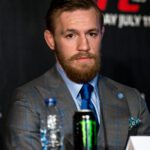
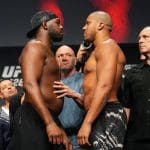

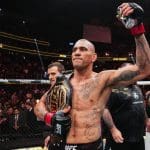



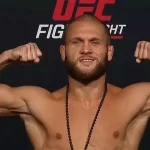

How did Michael Page build this fortune?
The answer unfolds through the career, earnings, deals and assets behind the headline estimate.
Before the fame
The background and early turning points that shaped Michael Page’s route to prominence.
Michael Jerome Reece-Page, known worldwide as “Venom” or simply MVP, was born on April 7, 1987, in Westminster, London. His father, Curtis Page Sr., was a Trinidad-born British Telecom employee, and his mother, Pauline Reece, a Jamaican-born nurse. According to his Wikipedia biography, both parents were practitioners of Lau Gar kung fu, and Page is one of ten children, three of whom were adopted into the family.
Martial arts were not a hobby in the Page household, they were the family business. Several of Michael’s siblings, including Sefena, Curtis Jr., Jamie and Kalon, also became kickboxing champions in their own right, trained by their father from early childhood. That environment put Page on a competition mat before most children start school, and it shaped both his fighting style and the showman’s instinct that would later define his combat sports career.
Page began training in Lau Gar at around age three and competed in his first kickboxing tournament at five. By eight he was already travelling to Germany for international competition, and by his early teens he was collecting major titles, including the 1998 US Open ISKA World Martial Arts Championship at just 12 years old. Over the course of his kickboxing career he won roughly ten world championships and was crowned British champion more than 25 times, training up to five hours a day, five days a week.
That point-fighting foundation, built on karate, taekwondo and kickboxing rather than traditional boxing or wrestling, is the source of the unorthodox, hands-down striking style Page later brought into mixed martial arts. He made his professional MMA debut on February 4, 2012, at UCMMA 26, finishing Ben Dishman in the first round with a spinning tornado kick. The clip travelled widely online, with fans and commentators drawing comparisons to Anderson Silva’s highlight-reel finishes.
The breakthrough years
The career decisions and defining moments that turned recognition into sustained earning power.
Page fought briefly for Super Fight League before signing with Bellator MMA in 2013, the promotion where he would spend the next decade building his reputation. He ran off a long, largely undefeated stretch of highlight-reel finishes that made him one of Bellator’s biggest attractions and earned him a run to the semifinals of the Bellator Welterweight Grand Prix, a tournament designed to identify the promotion’s next title challenger.
His two career losses in Bellator both came in high-stakes fights: a knockout defeat to Douglas Lima in 2019, and a split-decision loss to Logan Storley for the interim welterweight championship at Bellator 281 in London in 2022. Despite never claiming Bellator gold, Page’s box-office appeal and highlight-reel style made him arguably the promotion’s signature star heading into free agency, a run BBC Sport covered closely as speculation grew about a UFC move.

What the work can earn
Reported pay, contracts, royalties and performance income reveal how the fortune was funded.
Page’s achievement list starts on the kickboxing mat, with roughly ten world titles and more than 25 British championships won before he ever competed in MMA. In Bellator he racked up a wave of highlight-reel finishes and was named the promotion’s 2016 Knockout of the Year winner for his finish of Evangelista “Cyborg” Santos, a rare honor that reflected both the damage and the showmanship of the win.
After signing with the UFC in December 2023, Page made his octagon debut at UFC 299 in Miami on March 9, 2024, defeating Kevin Holland by unanimous decision. He went on to score notable UFC wins over previously unbeaten prospect Sharabutdin Magomedov in Saudi Arabia in February 2025, and over former middleweight title challenger Jared Cannonier at UFC 319 in Chicago in August 2025, a result MMA Weekly reported lifted him into the middleweight top ten.
Page’s public profile has always outpaced his title count. His flashy, karate-based striking, constant showboating, and evident comfort performing for a crowd made him a crossover attraction well before he reached the UFC, the biggest stage in the sport. British MMA media routinely referred to him as Bellator’s “poster boy,” and his UFC debut against Kevin Holland was treated as a marquee attraction on a stacked UFC 299 card headlined by a bantamweight title fight.
That debut lived up to the billing. Page, a slight underdog on paper, used elusive footwork and constant feints to frustrate Holland so badly that Holland was overheard between rounds telling his corner “he’s faster than we thought,” a moment BBC Sport highlighted in its coverage of the win. Since then, Page has remained one of the UFC’s most talked-about personalities, as much for his interviews and matchmaking commentary as for his fights themselves.

The business beyond the main career
Endorsements, ownership interests and investments can keep compounding long after the initial breakthrough.
Page’s standout endorsement is a partnership with Nike, a rarity in MMA given how few global sportswear brands sign combat sports athletes to ongoing deals. EssentiallySports described the deal as the “crown jewel” of his endorsement portfolio, noting Page has been seen wearing Nike Dunk and Air Jordan releases as part of the arrangement. He also holds sponsorship ties with combat sports apparel brand ShopRoundFive and has promoted the supplement company KLK MNU Certified Nutrition.
Fight purses have grown alongside his sponsorship income since the UFC move. Page reportedly earned around $250,000 for his UFC 299 debut against Kevin Holland and roughly $160,000 for his UFC 303 fight against Ian Machado Garry, both figures cited by FirstSportz, a clear step up from the $100,000 and $70,000 purses he drew for his final two Bellator bouts against Goiti Yamauchi and Douglas Lima.
Page has not been reported as the owner or founder of any personal company. The closest thing to a family business is Hands Down Athletics, a British martial arts apparel and equipment brand founded by his brother, Curtis Page Jr. According to the brand’s own about page, Michael features prominently across its “Michael Venom Page” product line and marketing, but the company is presented as Curtis’s venture rather than one Michael personally owns or operates.
Beyond that family connection, Page’s income outside the cage comes primarily from sponsorships, appearance fees, and social media promotion rather than any independent business he controls. That puts him in a similar position to most active fighters, whose non-fight income tends to come from endorsement deals rather than founded companies, at least until they retire from active competition.

Notable luxury item
A reported property or major asset offers a tangible glimpse of the wealth behind the public estimate.
Page has not publicly disclosed ownership of any specific home, vehicle collection, or investment property, and no property records tied to him have surfaced in mainstream coverage, despite frequent fan speculation about his personal wealth given his UFC and Nike profile.
What is publicly documented is where he works rather than where he lives. Page trains and fights out of London Shootfighters, a well-known MMA gym in his home city, a detail EssentiallySports has reported on in profiling his training setup, having chosen to stay based in London for the bulk of his professional career rather than relocate to an American fight camp, as many UFC athletes do.
Michael Page’s estimated net worth
Public estimates vary because private contracts, investments, taxes and liabilities are not fully disclosed.
How this estimate is calculated
Page’s net worth estimate is built primarily from his disclosed fight purses across roughly a decade in Bellator followed by his 2024 move to the UFC, layered with his Nike endorsement and secondary sponsorships from brands including ShopRoundFive and KLK MNU Certified Nutrition. Individual disclosed purses have ranged from around $70,000 to $100,000 for his final Bellator bouts, a combined $170,000 across those two fights according to The SportsRush, up to roughly $250,000 for his UFC 299 debut and $160,000 for his UFC 303 fight, both reported by FirstSportz.
Those gross purse figures are not the same as take-home pay. Coaching splits, management commissions, training camp costs and taxes all reduce what a fighter keeps from a disclosed purse, and Page has fought only a handful of times per year for most of his career, limiting the total number of paydays available to him compared with fighters who compete more frequently. As with any active athlete, this figure is a reported estimate compiled from public sources rather than a confirmed personal balance sheet, and nobody outside Page’s own representatives knows his exact net worth.
This range reflects the estimate most consistently reported by sports and MMA-focused outlets tracking Page’s career earnings, including FirstSportz, The SportsRush and EssentiallySports, all of which point to a working figure of roughly $1.5 million once his UFC purses, longtime Bellator earnings and Nike-led sponsorship income are combined. Secondary aggregator sites such as Celebrity Net Worth have circulated similar figures, though those should be read as rough public estimates rather than confirmed accounting.
Given that Page is still an active, ranked UFC middleweight with his highest-value fights potentially still ahead of him following wins over Magomedov and Cannonier, this figure is best read as a snapshot of his career to date in mid-2026 rather than a ceiling on what he stands to earn over the remainder of his UFC run.
Page has not been tied to a dedicated charitable foundation or a single, headline-grabbing philanthropic cause in the way some higher-profile UFC champions have been. His public image instead rests on his family’s martial arts legacy, competing and representing a household where his father, several siblings, and now Michael himself have all held national or world titles, and on a general reputation as an approachable, fan-friendly personality relative to many of his more combative UFC peers.
That reputation extends to how Page talks about the sport itself. He has been outspoken in interviews about wanting less personal trash talk in MMA, specifically objecting to fighters targeting opponents’ parents, spouses or children in pre-fight promotion, a stance that has positioned him as one of the sport’s more measured voices even as his own in-cage persona remains flamboyant and confrontational.
Page has avoided the legal and personal scandals that have followed some UFC contemporaries, but he has generated real friction through his outspoken commentary. He has openly criticized the UFC’s matchmaking decisions for the welterweight and middleweight divisions, telling reporters he had suggested numerous opponents only to receive “excuse after excuse,” criticism that Bloody Elbow reported risked friction with UFC leadership as he approached the final fight on his contract.
He has also drawn scrutiny for pointed rivalries with fellow fighters, calling Colby Covington’s comments about opponents’ families “fake” and dismissing him as an unlikeable personality, and labeling Ian Garry a “fake Conor McGregor” during a heated build-up to their UFC 303 fight, which Page went on to lose by decision. Some fans reacted negatively to a subdued performance during a UFC London card, with a portion of the crowd calling for him to be cut from the roster, criticism Page has pushed back on publicly.