 How Much Are They Worth?
Celebrity fortunes, explained
How Much Are They Worth?
Celebrity fortunes, explained







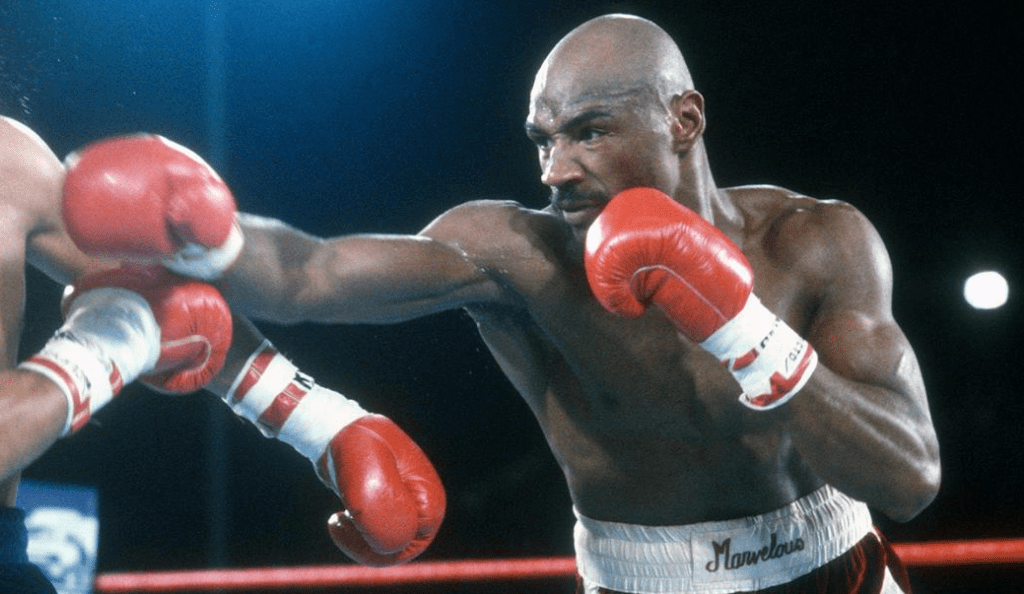
How did Marvin Hagler build this fortune?
The answer unfolds through the career, earnings, deals and assets behind the headline estimate.
Before the fame
The background and early turning points that shaped Marvin Hagler’s route to prominence.
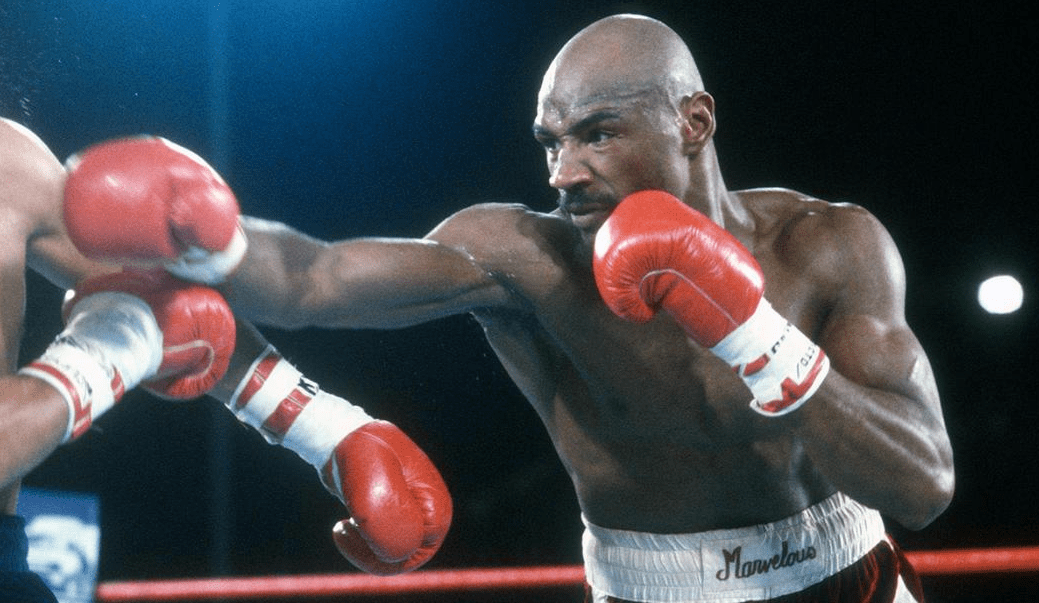
Marvin Nathaniel Hagler was born on May 23, 1954, in Newark, New Jersey, the eldest of six children raised by his mother, Ida Mae. After the 1967 Newark riots devastated the family’s neighborhood, they relocated to Brockton, Massachusetts, the same working-class city that had produced heavyweight great Rocky Marciano. According to Wikipedia’s biography of Hagler, he began boxing at age ten and left school at fourteen to work in a toy factory, experiences that shaped the relentless, blue-collar persona he carried into the ring as “Marvelous Marvin Hagler.” His early life is central to any assessment of his finances, since he entered adulthood with no family wealth and built everything that followed from boxing.
Hagler trained under brothers Pat and Goody Petronelli in Brockton, compiling a 55-1 amateur record and winning the 1973 National AAU 165-pound championship, according to the same Wikipedia account. He turned professional in 1973 but spent roughly seven years fighting his way up the middleweight rankings before getting a title opportunity, a period during which purses were modest and often shared with his management team. His first shot at the undisputed middleweight championship came against Vito Antuofermo in November 1979 and ended in a widely disputed draw, a result Britannica’s profile of Hagler notes delayed his championship breakthrough by nearly a year.
The breakthrough years
The career decisions and defining moments that turned recognition into sustained earning power.
Hagler finally won the undisputed middleweight title in September 1980, stopping Alan Minter in London. The victory was overshadowed by ugly scenes at Wembley Arena, where bottles were thrown into the ring after Minter had reportedly made pre-fight remarks about not wanting to lose his title to a Black fighter; Hagler was rushed from the ring without a formal belt presentation, a moment Wikipedia documents in detail. Painful as the circumstances were, the win established Hagler as champion and opened the door to the far larger purses that followed over the next seven years.

What the work can earn
Reported pay, contracts, royalties and performance income reveal how the fortune was funded.
Hagler held the undisputed middleweight championship from 1980 to 1987, making twelve successful title defenses, eleven of them by knockout, the second-longest unified middleweight reign of the twentieth century. His signature victories included a unanimous decision over former champion Roberto Duran in November 1983 and, most famously, an eight-minute demolition of Thomas Hearns in April 1985, a three-round war that Wikipedia’s dedicated entry on the Hagler-Hearns fight describes as one of the most explosive bouts in boxing history and which earned Hagler Fight of the Year and Fighter of the Year honors. He also defeated undefeated contender John Mugabi in March 1986 before his career ended against Sugar Ray Leonard the following year.
Hagler’s dominance made him one of the most recognized athletes of the 1980s. He was named Fighter of the Year by The Ring and the Boxing Writers Association of America in both 1983 and 1985, and he was inducted into the World Boxing Hall of Fame in 1992 and the International Boxing Hall of Fame in 1993. His legacy has continued to grow since his death: in June 2024, Brockton’s mayor unveiled a bronze statue of Hagler in a newly dedicated Marvelous Marvin Hagler Park, a tribute NBC Boston covered as a lasting civic honor for the city that shaped him. BoxRec ranks him among the greatest pound-for-pound fighters in history.

The business beyond the main career
Endorsements, ownership interests and investments can keep compounding long after the initial breakthrough.
Public records do not show Hagler holding the kind of large, multi-year consumer endorsement contracts common among top athletes today. His most consistent paid work outside the ring was as a boxing analyst and commentator for British broadcasters after his retirement, and his high public profile continued to generate appearance and interview opportunities, reflected in the extensive coverage of his career by outlets such as NPR and ESPN. Because no verified sponsorship contract values are publicly available, this estimate does not assign Hagler a specific endorsement income figure and instead treats his post-boxing earnings as concentrated in acting and broadcasting rather than brand deals.
Unlike many modern athletes, Hagler did not build a visible portfolio of companies or investment stakes during or after his boxing career. After retiring in 1988, he relocated to Milan, Italy, and pursued acting in Italian and European action films, including “Indio” (1989), “Indio 2” (1991), and “Virtual Weapon” (1997), a pivot documented in his Wikipedia biography. He also worked as a boxing commentator for British television. Earlier in life, before his boxing earnings began, he worked construction jobs for the Petronelli brothers’ company in Brockton, a relationship BoxingScene’s account of the Petronelli brothers traces back to his teenage years. None of these activities amounted to a disclosed business empire, so his income outside the ring should be treated as supplementary rather than a major, separately valuable asset.

Notable luxury item
A reported property or major asset offers a tangible glimpse of the wealth behind the public estimate.
Hagler’s clearest documented property was a home in Bartlett, New Hampshire, near the Attitash ski area, which he purchased in 1985 after first visiting the region in the early 1980s; it was the residence where his wife, Kay, announced he had died in March 2021, according to local reporting from the Keene Sentinel. For most of his post-retirement life he was based primarily in Milan, Italy, where he built his acting career, though the value and ownership details of any Italian residence were not made public. Beyond these two homes, there is no reliable public record of a broader real estate portfolio, so this estimate accounts only for a modest, conservatively valued property allowance rather than assuming additional undisclosed holdings.
Marvin Hagler’s estimated net worth
Public estimates vary because private contracts, investments, taxes and liabilities are not fully disclosed.
How this estimate is calculated
This estimate starts from Hagler’s documented ring earnings, including a purse of roughly $5 million for the 1985 Thomas Hearns fight and a purse reported at around $19 to $20 million before taxes for the 1987 Sugar Ray Leonard bout, both figures referenced in general career reporting on his biggest nights. It adds a conservative allowance for the twelve title defenses and other fights across his 1973 to 1987 career, most of which predated the era of nine-figure boxing purses and paid considerably less than his two marquee bouts. Post-retirement income from Italian film acting and British television commentary is included as a secondary but real income stream, while the absence of disclosed business holdings or a large endorsement portfolio means no additional value is added for those categories. A widely cited secondary estimate from Celebrity Net Worth places his net worth at the time of his death at $40 million, and that figure is used here only as a cross-check against the documented purse and career-earnings picture, not as the primary basis for the range.
Hagler was never associated with a large, formally structured charitable foundation in the way some contemporaries were, but his public image remained overwhelmingly positive throughout his life and after his death. He was remembered as a working-class hero who never forgot Brockton, and the city responded in kind, renaming a street and dedicating a park and statue in his honor decades after he last fought. Coverage of his death from outlets including WBUR emphasized his humility and discipline as much as his ring accomplishments, describing a fighter widely respected by peers and fans alike. That reputation for hard-earned, unglamorous success remains central to how he is remembered.
Hagler’s career included two genuinely contentious episodes rather than any personal financial or legal scandal. The first was the crowd violence that marred his 1980 title-winning victory over Alan Minter in London, sparked by pre-fight comments attributed to Minter and detailed in Wikipedia’s account of the fight. The second, and more enduring, was his 12-round split-decision loss to Sugar Ray Leonard in April 1987, a result Wikipedia’s entry on the Hagler-Leonard fight describes as one of boxing’s most disputed verdicts, with ringside media scorecards split nearly evenly and many observers believing Hagler had done enough to win. Hagler never fought again, later turning down a reported $15 million rematch offer, a decision that has been debated by fans and historians ever since but reflects a personal choice rather than any wrongdoing.