 How Much Are They Worth?
Celebrity fortunes, explained
How Much Are They Worth?
Celebrity fortunes, explained





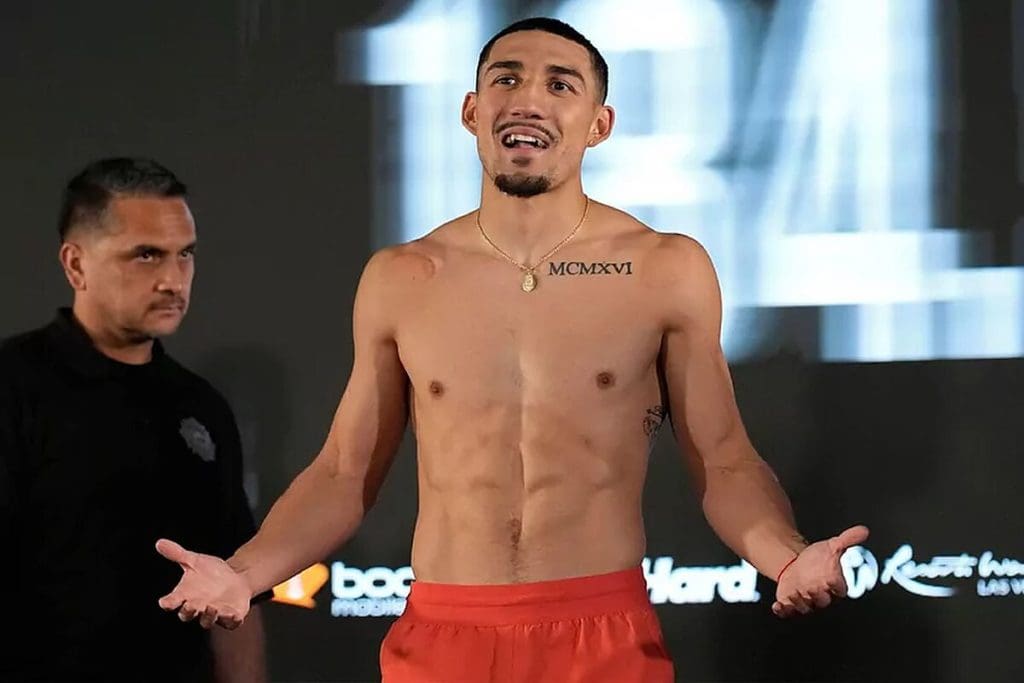
How did Teofimo Lopez build this fortune?
The answer unfolds through the career, earnings, deals and assets behind the headline estimate.
Before the fame
The background and early turning points that shaped Teofimo Lopez’s route to prominence.
Teofimo Andres Lopez Rivera was born on July 30, 1997, in Brooklyn, New York, to a family of Honduran descent; his paternal grandfather emigrated from Spain to Honduras before the family later settled in the United States (Wikipedia). His father, Teofimo Lopez Sr., a former amateur boxer, began training him at age six after the family relocated to Florida, and remained his primary trainer for most of his professional career.
Lopez represented Honduras, rather than the United States, at the 2016 Rio Olympics after winning the American Olympic trials, losing in the quarterfinals to eventual silver medalist Sofiane Oumiha (Wikipedia). He signed with Top Rank in October 2016 and turned professional at 19, building a 10-0 record that included a widely replayed December 2018 knockout of Mason Menard, before moving into IBF title contention with a unanimous decision win over Masayoshi Nakatani in July 2019.
The breakthrough years
The career decisions and defining moments that turned recognition into sustained earning power.
Lopez’s defining moment came on October 17, 2020, when he handed Vasiliy Lomachenko the first loss of his professional career by unanimous decision (116-112, 117-111, 119-109), unifying the WBA (Super), IBF, WBO and Ring lightweight titles in a result most experts had not predicted (Wikipedia). Lopez’s guaranteed purse for the fight was reported at $1.25 million plus a 40 percent share of pay-per-view revenue, though he later said that after taxes, training camp costs and other expenses, his actual take-home from the win was closer to $460,000 (Ready To Fight).

What the work can earn
Reported pay, contracts, royalties and performance income reveal how the fortune was funded.
Beyond the Lomachenko win, Lopez captured the IBF lightweight title with a second-round knockout of Richard Commey in December 2019, then lost his unified titles in a stunning split-decision defeat to George Kambosos Jr. in November 2021 despite flooring Kambosos in the first round. He rebuilt at 140 pounds, and on June 10, 2023, outpointed Josh Taylor to win the WBO and Ring light welterweight titles, making him a two-division world champion, before losing that title on points to Shakur Stevenson at Madison Square Garden in January 2026 (Wikipedia).
Lopez shared the Ring magazine Fighter of the Year award for 2020 with Tyson Fury, one of the sport’s most prestigious annual honors, on the strength of his win over Lomachenko (BoxingNews24). That same award has historically gone to boxing’s most dominant performers of each year, placing Lopez alongside a short list of past honorees (Wikipedia). He also received the Sugar Ray Robinson Award and was named Sports Illustrated’s Fighter of the Year for 2020, cementing that year as the high point of his mainstream recognition.
The business beyond the main career
Endorsements, ownership interests and investments can keep compounding long after the initial breakthrough.
Lopez has held sponsorship and endorsement relationships with brands including Bud Light, Budweiser, Essentia Water, Mandalay Bay Resort and Casino, Coca-Cola and Walt Disney World Ambassadors, along with smaller deals tied to Manscaped and Reign Body Fuel, reportedly worth around $100,000 a year combined, though exact contract terms are not public (EssentiallySports). In October 2025, he publicly said he was pursuing a sponsorship deal with Puma ahead of a world title defense, an indication his endorsement portfolio is still being actively built rather than locked in (EssentiallySports).
Lopez now serves as CEO of Takeover Promotions Inc., a promotional company he launched to give himself and other fighters more control over their careers and finances outside the traditional promoter model, with a stated focus on financial literacy for young athletes (No Smoke Boxing). In July 2026, he took that independence further by signing directly with broadcaster DAZN rather than a traditional promotional company, a structure still uncommon in boxing (BoxingNews24). No other publicly documented company or ownership stake beyond Takeover Promotions was found in the sourcing for this profile.

Notable luxury item
A reported property or major asset offers a tangible glimpse of the wealth behind the public estimate.
Lopez purchased and built a custom home in Jonesboro, Arkansas, just before the COVID-19 shutdown in 2020, a multi-level bungalow reported to include a movie room, a safe room, a personal boxing gym and a three-car garage (EssentiallySports). More recent coverage has referenced a custom Las Vegas residence built around his training and entertainment needs, though no purchase price or independently verified valuation for either property has been published.
Teofimo Lopez’s estimated net worth
Public estimates vary because private contracts, investments, taxes and liabilities are not fully disclosed.
How this estimate is calculated
HMW’s estimate starts with Lopez’s documented fight purses, led by a reported $1.25 million guarantee plus a 40 percent pay-per-view share for the 2020 Lomachenko fight (with Lopez saying his actual take-home was far lower after expenses), a reported $3.178 million purse for the 2021 Kambosos fight, and $1.5 million for the 2023 Josh Taylor bout, with combined purse and pay-per-view income reported as high as $12 million for a subsequent Jamaine Ortiz defense (EssentiallySports). That reporting places Lopez’s total boxing earnings over his roughly nine-year career at around $7 million before tax, trainer, cutman and promotional cuts, which typically consume a third to half of a touring boxer’s gross purse. Layering in his roughly $100,000-a-year endorsement income and factoring in the still-unproven revenue from his new Takeover Promotions venture, HMW’s range lands close to several independently published secondary estimates that put his current net worth at around $5 million (Surprise Sports), a figure treated here as a secondary reference point rather than a primary source.
Lopez has leaned heavily on his Honduran heritage as part of his public identity, and his 2020 title win was covered as a source of pride for Honduran-American communities specifically, with outlets noting celebrations that reached beyond typical boxing fandom (Fox News). No independently documented personal foundation or sustained charitable program was found in the sourcing for this profile, and his public image in recent years has been shaped more by outspoken interviews and social media conduct than by philanthropic work.
In a September 2024 interview, Lopez responded to a question about Terence Crawford and Gervonta Davis by saying he would fight “whichever monkey wants to get the banana,” a remark widely condemned as racist; Crawford called the comment evidence of “hatred” Lopez had carried since childhood, and Lopez maintained he was not racist, saying the criticism was about how people chose to interpret his words (World Boxing News). The WBO reviewed the incident and ultimately issued no sanction against him, a resolution some in the boxing media criticized as too lenient (Boxing News). Separately, Lopez split from his father as head trainer ahead of his May 2025 fight with Arnold Barboza Jr., calling the change painful given their lifelong training relationship, and after his January 2026 title loss to Shakur Stevenson he publicly placed blame on his father’s corner decisions, reopening a family and professional rift that has followed him for years (Sports Illustrated).