
 How Much Are They Worth?
Celebrity fortunes, explained
How Much Are They Worth?
Celebrity fortunes, explained





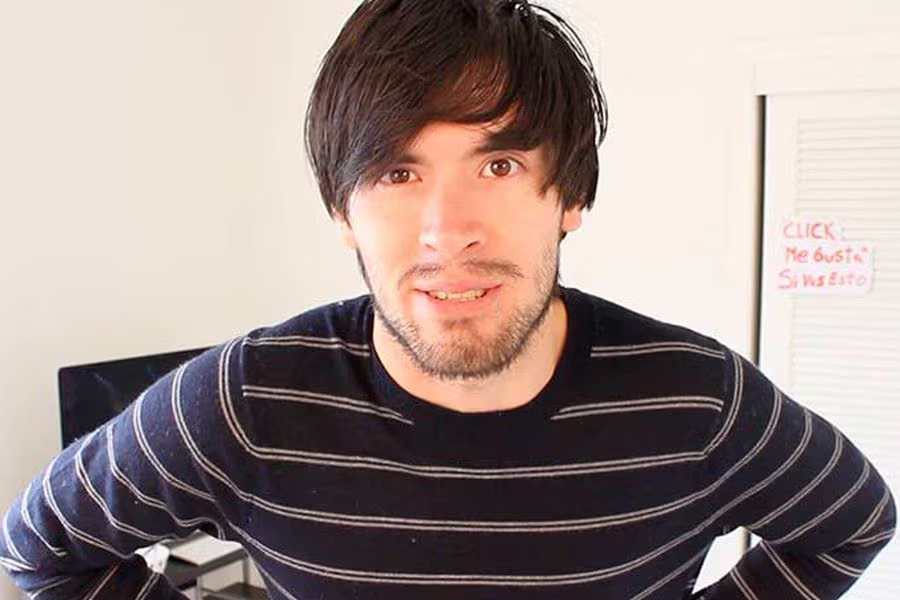



How did NigaHiga build this fortune?
The answer unfolds through the career, earnings, deals and assets behind the headline estimate.
Before the fame
The background and early turning points that shaped NigaHiga’s route to prominence.
Higa was born in Hilo, Hawaii, in 1990. He and school friend Sean Fujiyoshi began uploading lip-sync clips and comedy sketches in 2006, initially using basic home equipment. The Beacon’s 2009 profile of Higa and Fujiyoshi described the project’s high-school origins and recorded more than 50 million channel views while nigahiga was already among YouTube’s leading channels. Those early views occurred before today’s developed advertising marketplace, so HMW applies modest revenue per view.
Copyright claims removed several lip-sync videos and forced a pivot toward original music and written comedy. After Higa moved to Las Vegas for college, production became more structured and increasingly centered on him. “How to be Ninja,” “Nice Guys” and parody instruction videos built repeat viewing without depending on daily uploads. The copyright episode matters financially: deleted videos lose catalogue revenue, while original music, scripts and characters give the creator clearer control over future monetization.
The breakthrough years
The career decisions and defining moments that turned recognition into sustained earning power.
From 2009 into 2011, nigahiga held YouTube’s most-subscribed position for an extended period and became the first channel to pass important early subscriber milestones. Higa’s own company page now records more than 20 million subscribers and billions of views across his channels; Higa TV Productions’ biography cites 4.5 billion main-channel views and 20.4 billion minutes watched. These company-supplied totals demonstrate scale, but do not disclose monetized playbacks, geography or Higa’s after-tax share.

What the work can earn
Reported pay, contracts, royalties and performance income reveal how the fortune was funded.
Higa formed Ryan Higa Production Company, or RHPC, to make increasingly elaborate sketches with a regular team. Variety’s 2019 interview, republished by Yahoo, described his independent DIY studio and the writing-and-production process behind the channel. Independence preserved creative control but required salaries, rent, cameras, sets and post-production. HMW therefore models RHPC as an operating production business, not as a pure advertising margin.
YouTube advertising and sponsorships were the central sources during the main channel’s active years. HMW breaks the period into the low-rate 2006–2010 internet-video era, a higher-volume 2011–2016 run, and a mature but costlier RHPC phase through 2020. It then adds lower Twitch and catalogue income. No single modern RPM is multiplied by 4.5 billion lifetime views because platform policies, ad coverage, regional mix and revenue shares changed repeatedly.

The business beyond the main career
Endorsements, ownership interests and investments can keep compounding long after the initial breakthrough.
Higa published Ryan Higa’s How to Write Good, creating advance and royalty potential outside advertising. Hachette’s title page documents the illustrated memoir and its formats. He also acted in independent and studio productions, including Netflix’s Finding ‘Ohana. Acting and book income are included conservatively because fees, sales, returns and agent commissions are private.
Higa co-founded Ninja Melk after a three-year development process. Higa TV announced the May 2019 drink launch, while Ardagh’s packaging case study reported distribution through Circle K and 7-Eleven and European direct sales. Distribution proves a real operating venture, not profitability. Ingredient, canning, freight, retailer, marketing and working-capital costs can consume beverage revenue, and Higa’s ownership percentage is undisclosed. HMW assigns only a restrained equity value.

Notable luxury item
A reported property or major asset offers a tangible glimpse of the wealth behind the public estimate.
Public sources do not establish reliable purchase prices, mortgages or present ownership for Higa’s homes or studio property. RHPC equipment depreciates and may belong to a company rather than Higa personally. The model therefore emphasizes accumulated after-tax cash and investments, with no celebrity-house premium. It also excludes the closed TeeHee app as a current asset and does not assume parody-song chart placements created major recording royalties.
NigaHiga’s estimated net worth
Public estimates vary because private contracts, investments, taxes and liabilities are not fully disclosed.
How this estimate is calculated
HMW models roughly fourteen active YouTube years with lower early advertising yields, rising branded-video income and higher RHPC production expense as sketches became more ambitious. It adds conservative book, acting, podcast, Twitch and legacy-catalogue receipts, plus a discounted Ninja Melk interest based on proven retail distribution but unknown profit. YouTube and Twitch shares, managers, agents, RHPC payroll, studio rent, equipment, travel, beverage investment, taxes, charitable activity and ordinary spending are deducted. Fandango’s career biography helps verify the transition through film, RHPC and the TeeHee app, but none receives an invented sale value. The result is rounded because peak-era gross earnings were never publicly audited.
Higa’s appeal extended into acting, live appearances and collaborations, including the parody K-pop group Boys Generally Asian. After regular nigahiga uploads paused in 2020, he shifted toward Twitch gaming, particularly Valorant. The move maintained a paying community but at a smaller scale than peak YouTube. Legacy views still generate some advertising, although dormant catalogues usually have lower current velocity and older videos may contain licensed or demonetized elements.
The strongest evidence is the channel’s documented historic scale, the staffed independent studio and exact product and publishing records. Later audio work is also visible: Apple Podcasts lists 41 episodes of Off the Pill, ending in 2019, including sponsored episodes. A finite run supports some advertising income but not a continuing large podcast valuation. Missing variables include YouTube RPM, sponsor fees, payroll, Ninja Melk equity, beverage profitability, investment returns and tax residency.