
 How Much Are They Worth?
Celebrity fortunes, explained
How Much Are They Worth?
Celebrity fortunes, explained






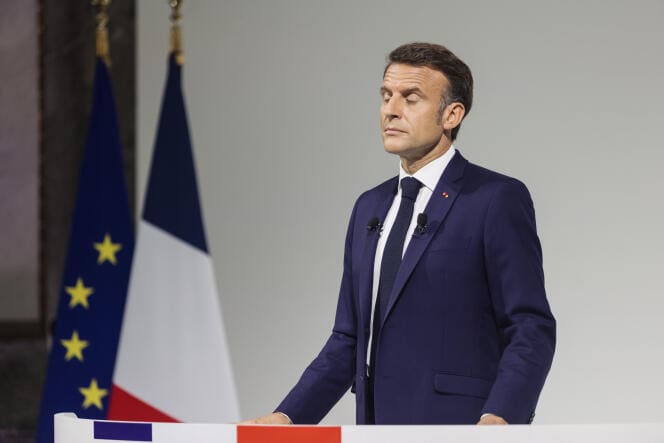
How did Emmanuel Macron build this fortune?
The answer unfolds through the career, earnings, deals and assets behind the headline estimate.
Emmanuel Macron before the fame
The background and early turning points that shaped Emmanuel Macron’s route to prominence.
Emmanuel Macron was born in Amiens in December 1977. He studied philosophy, attended Sciences Po and graduated from the École nationale d’administration. The Élysée’s official biography traces his route from the Inspectorate General of Finance into banking, the presidential staff and government. He married Brigitte Trogneux in 2007 and has no biological children; her family’s assets and any assets belonging to her adult children should not automatically be counted as his.
Macron’s unusual political trajectory—civil servant, investment banker, minister and president before turning 40—makes his finances more transparent than those of many world leaders because French law requires presidential candidates and officeholders to file declarations. It also creates frequent confusion between his earlier private earnings, the state property used by a president and his current personal wealth.
After ENA, Macron joined the Inspection générale des finances, an elite state audit body. He later moved to Rothschild & Cie Banque, working on corporate transactions. That private-sector interval is the most commercially significant part of his biography, but it did not make him an owner of Rothschild or of the companies involved in transactions. Fees earned by an advisory bank are corporate revenue, not the personal property of each banker.
Macron returned to public service in 2012 as deputy secretary-general at the Élysée under President François Hollande. In 2014 he became minister for the economy, industry and digital affairs. These roles gave him national recognition and associated him with market-oriented reform, competition policy and changes to labour regulation.
Emmanuel Macron’s breakthrough years
The career decisions and defining moments that turned recognition into sustained earning power.
In April 2016 Macron founded En Marche!, presenting it as a movement that would cut across France’s conventional left-right divide. He resigned from government, built a national campaign and won the 2017 presidential election. The Constitutional Council’s official 2017 result records the election that made him the youngest president in the history of the Fifth Republic.
His movement then secured a parliamentary majority, enabling an ambitious opening programme. Re-election in 2022 confirmed his personal electoral strength, although the following legislative election deprived his alliance of an absolute majority. The official 2022 presidential result documents his second victory.

What Emmanuel Macron’s work can earn
Reported pay, contracts, royalties and performance income reveal how the fortune was funded.
Macron’s governments pursued labour-market liberalisation, business-tax changes, apprenticeship expansion and policies intended to encourage investment. He championed European strategic autonomy and closer euro-area coordination, and France’s international profile remained central to his presidency. His administration also managed the pandemic response and an extensive programme of support during the energy-price shock.
On industrial policy, Macron has argued that reforms since 2017 reversed part of France’s long decline in factory numbers. A published presidential speech on reindustrialisation sets out that case in his own words. Supporters credit him with making France more attractive to investors; critics question the distribution and fiscal cost of the programme.
Macron is one of Europe’s most recognizable political leaders. His prominence comes from elected office, frequent international diplomacy and a communication style that places him at the centre of policy. Re-election was a major distinction because French presidents have often struggled to secure consecutive terms.
Official honours received as head of state are not personal business assets. Nor should use of the Élysée Palace, Fort de Brégançon, presidential aircraft or official vehicles be treated as evidence of private wealth. Those facilities belong to the French state and pass to future officeholders.

Emmanuel Macron’s business beyond the main career
Endorsements, ownership interests and investments can keep compounding long after the initial breakthrough.
Macron does not have a conventional commercial endorsement portfolio. A president appearing at a factory, technology conference or sporting event is performing a political or ceremonial role, not necessarily promoting a brand for personal payment. No trustworthy evidence supports adding sponsorship income from those appearances.
Political endorsements work in the opposite direction: parties, candidates and public figures endorse him. Campaign support and donations belong to regulated campaign structures rather than to the candidate as personal income. This separation is essential when estimating an elected official’s wealth.
Macron’s only well-documented major private-sector chapter was his employment in investment banking. He did not retain a publicly disclosed controlling stake in Rothschild & Cie and has not built a visible post-election corporate group. En Marche and its successor political organizations are parties or movements, not companies owned by Macron.
There is no credible basis for attributing the turnover of former clients, campaign donations or party funds to him personally. France’s political-finance and asset-disclosure systems create records that are more useful than unsourced “celebrity wealth” sites. The High Authority’s presidential-disclosure page links his official declarations and explains how changes in a president’s assets are reviewed.
Emmanuel Macron’s notable luxury item
A reported property or major asset offers a tangible glimpse of the wealth behind the public estimate.
Macron’s official declarations are the strongest evidence for his personal asset position. They report financial accounts, investments, liabilities and income under prescribed categories. They should be read as dated snapshots rather than a continuously updated balance sheet. The published 2022 asset declaration is an exact primary document.
State residences and transport are excluded, as are businesses belonging to Brigitte Macron’s wider family. Jointly held household interests should be treated according to the declaration rather than presumed from press photographs or family associations. The available filings point to liquid financial assets and past employment income, not a hidden portfolio of palaces or luxury companies.
Emmanuel Macron’s estimated net worth
Public estimates vary because private contracts, investments, taxes and liabilities are not fully disclosed.
How this estimate is calculated
The estimate gives primary weight to Macron’s official asset and interest declarations, including cash, financial instruments and liabilities at the dates filed. It considers his documented investment-banking earnings and subsequent public salaries while recognizing that gross lifetime income is not retained wealth. Taxes, household spending and transfers all reduce the amount accumulated.
It excludes presidential residences, security, aircraft, official hospitality and campaign resources. It also avoids assigning him the value of his former employer, political movement or his wife’s extended-family businesses. A High Authority dossier index for Macron provides the relevant transparency framework.
Using the public declarations as the anchor and allowing for subsequent salary, savings and ordinary investment changes, Emmanuel Macron’s estimated net worth is approximately $1 million to $3 million. The range is deliberately conservative and is not an official current valuation. It reflects personal and disclosed household finances, not French state property, party funds, Rothschild’s corporate assets or businesses associated with other members of Brigitte Macron’s family.
Macron regularly supports charitable and civic causes in his official capacity, while Brigitte Macron has held public-facing roles connected to education and hospitals. Those activities do not prove that charity funds are their private property. Personal giving is difficult to quantify because comprehensive donation records are not published.
His public image is sharply polarized. Admirers describe a pro-European modernizer; opponents depict an aloof president favouring wealthy interests. The “president of the rich” label became politically potent after tax and labour changes, but a political label is not evidence that his own fortune matches France’s business elite.
The yellow-vest protests, disputes over policing and the deeply contested pension reform have defined much of Macron’s domestic scrutiny. His government used constitutional procedures to enact pension changes without a final parliamentary vote, intensifying demonstrations. Reuters’ review of Macron’s political and fiscal legacy describes how the loss of a parliamentary majority complicated his reform programme.
His decision to call an early legislative election in 2024 also drew criticism after it produced a fragmented assembly. Separately, opponents have repeatedly questioned his earlier banking earnings. The appropriate response is to rely on official declarations and oversight rather than assume wrongdoing. The High Authority states that it reviewed the variation in his assets over his first term.