
 How Much Are They Worth?
Celebrity fortunes, explained
How Much Are They Worth?
Celebrity fortunes, explained








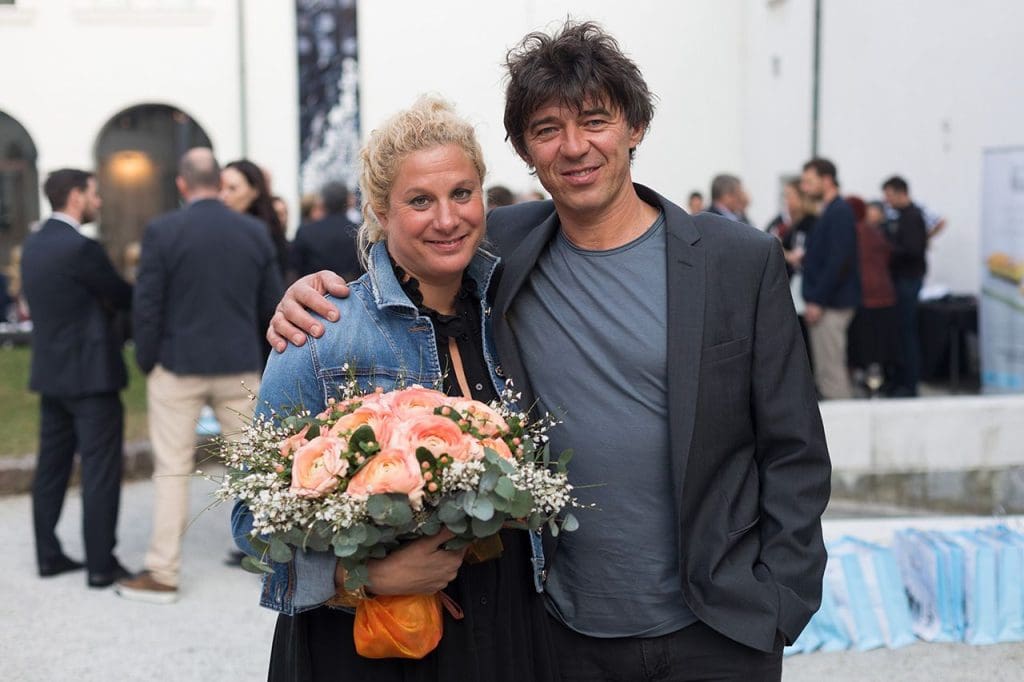
Ana Ros (Slovenia) – Hiša Franko
Net worth revealed after 6 slides
Begin the countdown ↓
How did Ana Ros (Slovenia) – Hiša Franko build this fortune?
The answer unfolds through the career, earnings, deals and assets behind the headline estimate.
Before the fame
The background and early turning points that shaped Ana Ros (Slovenia) – Hiša Franko’s route to prominence.
Ana Roš was born in 1972 in Šempeter pri Gorici, in what was then Yugoslavia, and grew up in the town of Tolmin near Slovenia’s border with Italy, the daughter of a physician father and a journalist mother, according to her biography on Wikipedia. As a child she trained seriously in alpine skiing and earned a place on the Yugoslavian youth national team before deciding against a professional racing career.
She went on to study diplomacy, was a skiing champion with a talent for languages, and was on track for a career in international relations rather than gastronomy before meeting her future husband, sommelier Valter Kramar, according to the South China Morning Post’s profile of the chef.
Roš had no professional kitchen training when she entered the restaurant business. In 2000 she met Valter Kramar, whose family owned a modest guesthouse restaurant called Hiša Franko in Kobarid, and the couple began working there together, with Roš initially serving tables while Kramar worked as sommelier, according to the official Hiša Franko biography of Ana Roš.
When Kramar’s parents retired in 2000, Roš unexpectedly ended up running the kitchen herself, three months pregnant and with zero formal training; her first service was, by her own account, terrifying, with bread that would not rise and meat that came out dry, according to the South China Morning Post profile. She has since described failure as “an engine for life,” saying that accepting the possibility of failing “makes you fight harder,” per the same report. Roš has described her approach as shaped entirely by the Soča Valley around her rather than by any formal culinary tradition, sourcing nearly every ingredient from within roughly 50 kilometres of the restaurant, a hyperlocal philosophy documented in the Hiša Franko biography.
The breakthrough years
The career decisions and defining moments that turned recognition into sustained earning power.
Roš’s profile shifted from a respected regional secret to an internationally known name after Netflix’s documentary series Chef’s Table devoted an episode to her and Hiša Franko, which aired on 27 May 2016, according to the episode’s IMDb listing. The episode introduced her self-taught story and remote Soča Valley setting to a global streaming audience well beyond the fine-dining press that had previously covered her.
Less than a year later, in January 2017, she was named The World’s Best Female Chef by The World’s 50 Best Restaurants organisation, an award formally presented at the Royal Exhibition Building in Melbourne on 5 April 2017, according to The Upcoming’s report on the announcement. Roš called the recognition “a big responsibility to accept… especially as a self-taught cook,” adding that it gave people a reason to reassess Slovenia as a serious gastronomic destination, per the same report.

What the work can earn
Reported pay, contracts, royalties and performance income reveal how the fortune was funded.
The Michelin Guide did not rate Slovenian restaurants until 2020, when its first Slovenia edition awarded Hiša Franko two stars, the country’s first Michelin recognition of any kind, according to coverage of the Michelin Guide’s own announcement of Hiša Franko’s three-star promotion. Just three years later, in 2023, Hiša Franko was elevated to three Michelin stars, becoming the first and so far only Slovenian restaurant to reach that tier and joining what Michelin itself notes was only the 140th restaurant worldwide to hold three stars, per the same Michelin Guide announcement.
Hiša Franko has also held a place on The World’s 50 Best Restaurants list every year since 2017, ranking 32nd in 2023 and 48th in 2024, an eighth consecutive year in the top 50, before slipping to 69th on the extended 51-100 list in 2025, according to the restaurant’s official World’s 50 Best Restaurants listing page.
Alongside its third Michelin star, Hiša Franko was also awarded a Michelin Green Star in 2023 for sustainable, low-impact cooking, a distinction highlighted in the same Michelin Guide announcement of the restaurant’s promotion. Slovenian tourism officials and international press have both credited Roš with almost single-handedly putting the country on the global fine-dining map; the BBC has described her as “at least in part” responsible for turning Slovenia into one of Europe’s prime gastronomic destinations, a characterisation reflected in her Wikipedia profile.
In 2018, Roš was selected as one of seven “Sages,” an elite mentoring panel that judged the S.Pellegrino Young Chef competition’s Grand Finale in Milan, a role that placed her among a small group of internationally recognised chefs entrusted with identifying rising culinary talent, according to S.Pellegrino’s announcement of the 2018 jury.

The business beyond the main career
Endorsements, ownership interests and investments can keep compounding long after the initial breakthrough.
Roš has not pursued the kind of mass consumer-brand ambassadorships common among television-first chefs; her commercial visibility instead runs through publishing and industry mentorship roles. In 2020, Phaidon published her first cookbook, “Ana Roš: Sun and Rain,” co-written with Kaja Sajovic, a commercial publishing deal that packaged her recipes and philosophy for an international audience, according to the publisher’s listing for the book.
Her most notable brand-level association is with S.Pellegrino, which named her one of the “Seven Sages” mentoring the 2018 S.Pellegrino Young Chef competition, a paid or expenses-covered ambassadorial role rather than a product endorsement in the conventional sense, per S.Pellegrino’s own announcement. No major appliance, spirits, or lifestyle brand ambassadorship beyond that role is documented in available reporting.
Hiša Franko remains Roš’s core business and is co-owned with Valter Kramar, whose family originally built the guesthouse restaurant; the two continue to run it together as business partners despite ending their personal relationship in 2017, according to Wikipedia’s account of the ownership history. Since then, Roš has expanded well beyond the flagship restaurant: she opened Pekarna Ana, an artisanal bakery in Ljubljana, and in 2023 launched JAZ by Ana Roš, a casual dining bistro in Ljubljana that later added a second location in Poreč, Croatia, per her official Ana Roš business website.
In 2025 she added a fourth commercial line, Ana Roš Drinks, a bottled ready-to-serve cocktail range launched with mixologist Anja Skrbinek and made with foraged Soča Valley botanicals and a bespoke vermouth produced with the Slovenian biodynamic winery Movia, according to Slovenia’s national tourism press agency. The expansion from a single co-owned countryside restaurant into a small multi-brand portfolio marks a deliberate diversification of her income beyond Hiša Franko alone.

Notable luxury item
A reported property or major asset offers a tangible glimpse of the wealth behind the public estimate.
No reliable public record of personal real estate, vehicles, or other major assets held by Ana Roš outside her restaurant businesses has surfaced in Slovenian or international reporting, and no specific figures for personal holdings should be assumed.
The one physical asset consistently tied to her name is the Hiša Franko property itself: a building erected around 1860 that served first as a farmhouse and later a World War I field hospital before Valter Kramar’s father converted it into a guesthouse restaurant in the 1970s, according to the Wikipedia entry for Hiša Franko. Ownership passed to Valter Kramar and Roš jointly in 2000, and the same source lists both as the restaurant’s current owners, meaning the property is a shared business asset rather than one Roš holds outright or personally.
Ana Ros (Slovenia) – Hiša Franko’s estimated net worth
Public estimates vary because private contracts, investments, taxes and liabilities are not fully disclosed.
How this estimate is calculated
Ana Roš does not appear prominently on English-language celebrity-wealth aggregators the way television-first chefs do. One such secondary aggregator site places her net worth in a broad $1 million to $5 million range, but that figure is unsourced and should be treated as a rough secondary indicator rather than verified data, per TheCityCeleb’s biography page.
Because Hiša Franko is co-owned with Valter Kramar rather than held outright by Roš, her personal share of the flagship restaurant is a partial stake plus chef-operator income rather than full equity, which caps how much of that business can reasonably be attributed to her personal wealth. Working in the other direction, she has spent the years since 2017 building a genuinely diversified portfolio around that restaurant, a bakery, a two-location bistro brand, a cookbook deal, and a 2025 bottled-cocktail line, income streams that are each individually modest but collectively broaden her earnings well beyond a single dining room. Two decades building Hiša Franko from an unrated countryside guesthouse to one of roughly 140 three-Michelin-star restaurants on earth, plus eight-plus consecutive years on the World’s 50 Best list, support a moderate estimate, while the shared ownership of the core restaurant and the still-young age of her newer ventures argue against assuming top-tier celebrity-chef wealth.
Roš’s most visible act of organised philanthropy followed the devastating floods that hit Slovenia in August 2023: she and her husband Urban Stojan hosted a charity dinner priced from €520 per person, with proceeds channelled through a relief fund set up with Slovenian Caritas to support a family that had lost everything, and Hiša Franko separately pledged a share of its lunch revenue through the end of October to the same fund, according to THE Slovenia’s coverage of the event. She was quoted saying, “we will continue to stand by the family in the future and assist them until they can establish a life with at least a modicum of human dignity,” per the same report.
Beyond that single event, Roš’s philanthropic profile is described as ongoing rather than one-off: she has mentored underprivileged girls in India, cooked alongside people recovering from addiction in Brazil, and worked with a Slovenian paediatric clinic to design menus for children living with diabetes, according to a profile from The CEO Magazine. Publicly, she is regarded less as a celebrity chef in the traditional sense and more as a fiercely independent, self-taught figure whose story of transformation from ski racer and diplomacy student to three-star chef anchors her image in Slovenian and international media alike.
No personal scandal, financial or otherwise, involving Ana Roš is documented in Slovenian or international press. The controversy that does exist attaches to the award category she won rather than to her personally: when Roš was named The World’s Best Female Chef in 2017, Eater editor-in-chief Amanda Kludt publicly criticised the gender-specific award itself as “not only absurd, it’s insulting,” arguing that “women are not curiosities… a different category of human,” while stressing her objection was to the award structure and not to Roš, according to Fox News’s report on the industry backlash. The World’s 50 Best organisation defended the category at the time as “affirmative feminism in action” meant to counter imbalance in male-dominated kitchens, per the same report.
Beyond that debate over the award’s framing, the scrutiny Roš and Hiša Franko attract is limited to ordinary fine-dining criticism over pricing and portioning at a three-Michelin-star level, the kind of commentary that accompanies any restaurant at the top of its category.