
 How Much Are They Worth?
Celebrity fortunes, explained
How Much Are They Worth?
Celebrity fortunes, explained







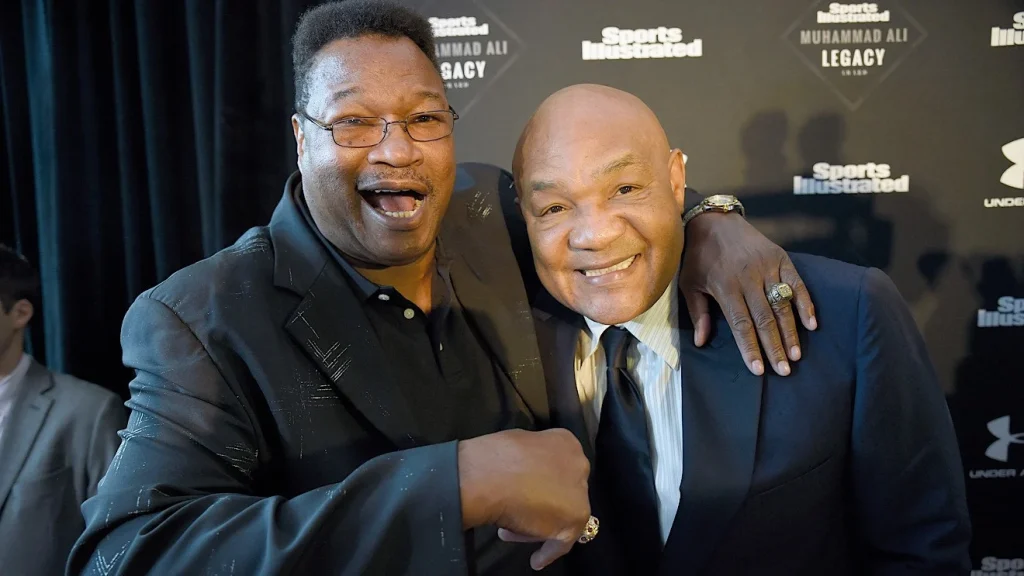
How did Larry Holmes build this fortune?
The answer unfolds through the career, earnings, deals and assets behind the headline estimate.
Larry Holmes before the fame
The background and early turning points that shaped Larry Holmes’s route to prominence.
Larry Holmes was born on November 3, 1949, in Cuthbert, Georgia, one of twelve children in a family that worked as sharecroppers in the rural South. In 1954 the family relocated to Easton, Pennsylvania, the small Lehigh Valley city that would give Holmes his lifelong nickname, the Easton Assassin. According to Wikipedia’s biography of Holmes, he grew up in poverty, dropped out of school around the seventh grade, and worked at a car wash for a dollar an hour before finding boxing as a way out. That hardscrabble start shaped the discipline and financial caution that would later define his post-boxing business decisions.
Holmes began boxing as a teenager and compiled a 19-3 amateur record before turning professional on March 21, 1973. He spent years as a sparring partner for Muhammad Ali, Joe Frazier and Earnie Shavers, absorbing lessons from three of the era’s biggest punchers while earning modest purses. As detailed by EBSCO’s research profile of Holmes, it was Easton’s Police Athletic League that first gave him supervised training and direction. His breakout moment came in March 1978 with an upset decision over the feared Earnie Shavers, a win that finally forced promoters and the heavyweight division to take him seriously.
Larry Holmes’s breakthrough years
The career decisions and defining moments that turned recognition into sustained earning power.
The true turning point came on June 9, 1978, when Holmes outpointed Ken Norton in a split decision to win the WBC heavyweight title, a fight regarded as one of the greatest in heavyweight history. He defended that title repeatedly through the following years, but the moment that cemented his standing with the wider public was his October 2, 1980 bout against Muhammad Ali. Holmes dominated every round before Ali’s corner stopped the fight in the tenth, the only stoppage loss of Ali’s career. Wikipedia’s account of the fight notes Holmes was visibly emotional afterward, insisting he had beaten “one of the baddest heavyweights in the world.”
What Larry Holmes’s work can earn
Reported pay, contracts, royalties and performance income reveal how the fortune was funded.
Holmes went on to defend his heavyweight title a record-setting 20 times and reigned for more than seven years, a run that still ranks among the longest in boxing history. He won his first 48 professional fights, a run that ended one short of Rocky Marciano’s untouched 49-0 record when Michael Spinks edged him by decision in 1985. His later comeback attempts against Mike Tyson, Evander Holyfield and others, while unsuccessful, added to his legend rather than diminishing it. As The Fight City’s account of the 1988 Tyson bout puts it, Holmes’ willingness to test himself against a new generation, even in defeat, reinforced just how far his prime-era dominance had carried him.
Holmes’ hometown has honored him repeatedly. Easton renamed a downtown street Larry Holmes Drive, and in December 2015 the city unveiled a nine-foot bronze statue of Holmes throwing his signature left jab in Scott Park. NBC10 Philadelphia’s coverage of the unveiling credited Holmes with putting Easton on the map and called him one of boxing’s most underrated champions. He was inducted into the International Boxing Hall of Fame in 2008, formal recognition of a career that had often been overshadowed by comparisons to Ali. Decades after retiring, Holmes remains one of the most visible and celebrated public figures the Lehigh Valley has produced.
Larry Holmes’s business beyond the main career
Endorsements, ownership interests and investments can keep compounding long after the initial breakthrough.
Holmes has continued to lend his name to commercial partnerships well into his seventies. In 2025, regional soft-drink maker A-Treat launched a Larry Holmes branded cream soda, with the deal structured so that Jaindl Beverage Company donates a fifth of proceeds from every bottle to Holmes’ own charitable foundation. Lehigh Valley Public Media’s coverage of the launch quoted the company’s owner on the value of a hometown partnership built around a genuine local figure rather than a generic athlete endorsement. The arrangement reflects the pattern of Holmes’ post-boxing income: modest, locally rooted deals rather than blockbuster national campaigns.
Holmes was unusually deliberate about turning his ring earnings into lasting local businesses. Over the years he built a portfolio in downtown Easton that, at its peak, included restaurants, a nightclub, an office complex, a training facility and other commercial property employing more than 200 people. His signature venue, the Larry Holmes Ringside Restaurant and Lounge, operated for years before relocating; WFMZ reported on the restaurant’s move from its original Larry Holmes Drive location. In December 2014, Holmes sold his Easton business complex to local entrepreneur Gerald Gorman, closing out one chapter of his commercial life after roughly three decades as a hands-on Easton employer.

Larry Holmes’s notable luxury item
A reported property or major asset offers a tangible glimpse of the wealth behind the public estimate.
Holmes’ most visible personal asset has been his longtime home in Palmer Township, just outside Easton, an estate he and his wife Diane eventually listed for roughly 1.7 million dollars. Patch’s report on the listing described an 8,000-square-foot property on 2.4 acres with seven bathrooms, a home theater, a sauna, a tennis court and garage space for eight cars, a physical record of decades of boxing and business earnings converted into real estate. Beyond the house itself, Holmes’ Easton commercial holdings, before their 2014 sale, represented millions more in property value accumulated directly from his ring career.
Larry Holmes’s estimated net worth
Public estimates vary because private contracts, investments, taxes and liabilities are not fully disclosed.
How this estimate is calculated
HMW’s estimate starts from Holmes’ documented ring earnings, which included roughly 8 million dollars for the 1980 Ali fight, 2.8 million dollars for the 1988 Tyson bout and 7 million dollars for his 1992 fight with Evander Holyfield, among dozens of other purses across a 29-year career. It adds the value of his Easton commercial real estate before its 2014 sale and his Palmer Township home, then layers in decades of modest post-boxing income from media work, appearances and the recent A-Treat licensing deal, minus taxes, training costs and business overhead across five decades. Celebrity Net Worth’s figure is used only as a secondary check against this bottom-up build, not as the source of the estimate itself.
Holmes and his wife Diane formalized their charitable work in 2015 by founding Heart of a Legend, a registered nonprofit built around helping underprivileged Easton residents regardless of age. The foundation’s website outlines its focus on local agencies, community beautification and support for families affected by illness or personal disaster, including past donations of computers to a shelter for homeless women and children. The foundation has become the primary charitable vehicle tied to Holmes’ name, channeling both his own giving and proceeds from partnerships like the A-Treat soda deal back into the city that raised him.
Holmes’ public image has never been entirely smooth. Because so much of his prime came while boxing fans were still mourning Ali’s decline, he spent years being booed by crowds who resented him for beating an aging icon, a grievance he discussed publicly for decades afterward. The sharpest flashpoint came moments after his 1985 loss to Michael Spinks, when a bitter Holmes told reporters “Rocky Marciano couldn’t carry my jockstrap,” dismissing the retired champion he had just failed to match in career wins. Boxing247’s retrospective on the moment notes the remark drew immediate backlash, prompting Holmes to walk it back and call Marciano one of the greatest fighters ever within the same press conference.