
 How Much Are They Worth?
Celebrity fortunes, explained
How Much Are They Worth?
Celebrity fortunes, explained





How did Sachin Tendulkar build this fortune?
The answer unfolds through the career, earnings, deals and assets behind the headline estimate.
Before the fame
The background and early turning points that shaped Sachin Tendulkar’s route to prominence.
Tendulkar was born in Dadar, Bombay (now Mumbai), to Ramesh Tendulkar, a respected Marathi novelist and poet, and Rajnitai Tendulkar, who worked in the insurance sector. His elder brother, Ajit, first recognised his talent and introduced him to coach Ramakant Achrekar at the Shivaji Park nets, where Tendulkar trained for hours daily from around age eleven. At Sharadashram Vidyamandir school, he and fellow future India batsman Vinod Kambli put together an unbroken 664-run schools partnership in 1988 that drew national attention. Tendulkar married Anjali Tendulkar, a paediatrician, in 1995; the couple have two children, Sara and Arjun, the latter also a professional cricketer.
Tendulkar made his first-class debut for Bombay in the 1988 Ranji Trophy season, scoring a century on debut at age fifteen. He was picked for the Indian Test team the following year, debuting against Pakistan in Karachi in November 1989 aged just sixteen. Through the 1990s, as satellite television transformed cricket broadcasting in India, Tendulkar became the sport’s biggest domestic star and, by his early twenties, the face of a wider range of Indian advertising than any cricketer before him. That commercial profile only grew as his batting records accumulated over the following two decades.
The breakthrough years
The career decisions and defining moments that turned recognition into sustained earning power.
Tendulkar’s international career ran from 1989 to 2013, spanning 200 Test matches and 463 One Day Internationals — he remains the leading run-scorer in both formats, with 15,921 Test runs and 18,426 ODI runs, and the only player to reach 100 international centuries (51 in Tests, 49 in ODIs). In February 2010 he became the first man to score a double century in an ODI innings, hitting 200 not out against South Africa in Gwalior. He played six Cricket World Cups between 1992 and 2011, finally lifting the trophy with India on home soil in 2011. In the IPL, he played for and captained Mumbai Indians from the tournament’s 2008 launch through 2013. He retired from ODIs in December 2012 and from all cricket in November 2013 after his 200th Test, at Wankhede Stadium in Mumbai. Weeks later, he received the Bharat Ratna, India’s highest civilian honour, as its youngest-ever recipient and the first sportsperson to be awarded it.

What the work can earn
Reported pay, contracts, royalties and performance income reveal how the fortune was funded.
During his playing days, Tendulkar’s cricket income — BCCI central contract payments, Test and ODI match fees, and later his IPL salary — was modest by the standards of cricket’s current television-rights-fuelled economy, even though it was substantial for its era. The larger share of his income came from endorsements: Indian business press reported him simultaneously fronting more than a dozen major brands at his commercial peak in the 2000s, with combined playing-era annual earnings (salary plus sponsorships) estimated by outlets including Forbes India in the low tens of millions of dollars. Since retirement, his annual income has come almost entirely from endorsement renewals, business dividends, and appearance fees, which Indian financial media have periodically estimated in the several-million-dollar range annually — these figures are industry estimates rather than disclosed totals.
Tendulkar’s BCCI central contracts placed him in the board’s top pay bracket for most of his career, though the sums involved — typically low crores of rupees annually — were far smaller than the multi-crore central contracts and IPL auction prices common today. His Mumbai Indians IPL salary across his six seasons with the franchise (2008-2013) was reported at various points to be in the region of several crore rupees per season, making him one of the tournament’s better-paid players in its early years, even as those figures were later dwarfed by the auction prices paid for top players in subsequent IPL seasons.

The business beyond the main career
Endorsements, ownership interests and investments can keep compounding long after the initial breakthrough.
Tendulkar’s endorsement portfolio is one of the longest-running and most extensive in Indian sport. His bat sponsorship deal with MRF Tyres, dating to the late 1980s and early 1990s, is considered one of the most durable individual athlete-brand relationships in Indian cricket history, and his endorsement of Boost, the malt energy drink, produced one of Indian advertising’s most quoted taglines from the 1990s. He also held long-running deals with Adidas, Pepsi, Colgate, Britannia, Visa, TVS Motor, Fiat, Canon, Sunfeast, and Airtel over the course of his career. Since retirement he has continued signing new ambassador deals, including a reported agreement with IDFC FIRST Bank, while maintaining several of his longest-standing brand relationships. Exact per-deal figures are rarely disclosed publicly, so amounts cited in Indian media should be read as industry estimates.
Beyond playing contracts and endorsements, Tendulkar has held stakes in a number of Indian ventures. He was an investor and brand face of Smaaash Entertainment, a sports-themed gaming and entertainment chain founded by Shripal Morakhia around 2012, an investment Indian business press has reported faced financial difficulties in later years. He has also lent his name to food and beverage ventures, including the Tendulkar’s restaurant brand and a Pune venue called Sachin’s — A Bar Exchange, and has been reported to hold stakes in fitness-sector businesses. His philanthropy runs through the Sachin Tendulkar Foundation, a non-commercial charity supporting health and education causes, and he has served as a UNICEF ambassador.
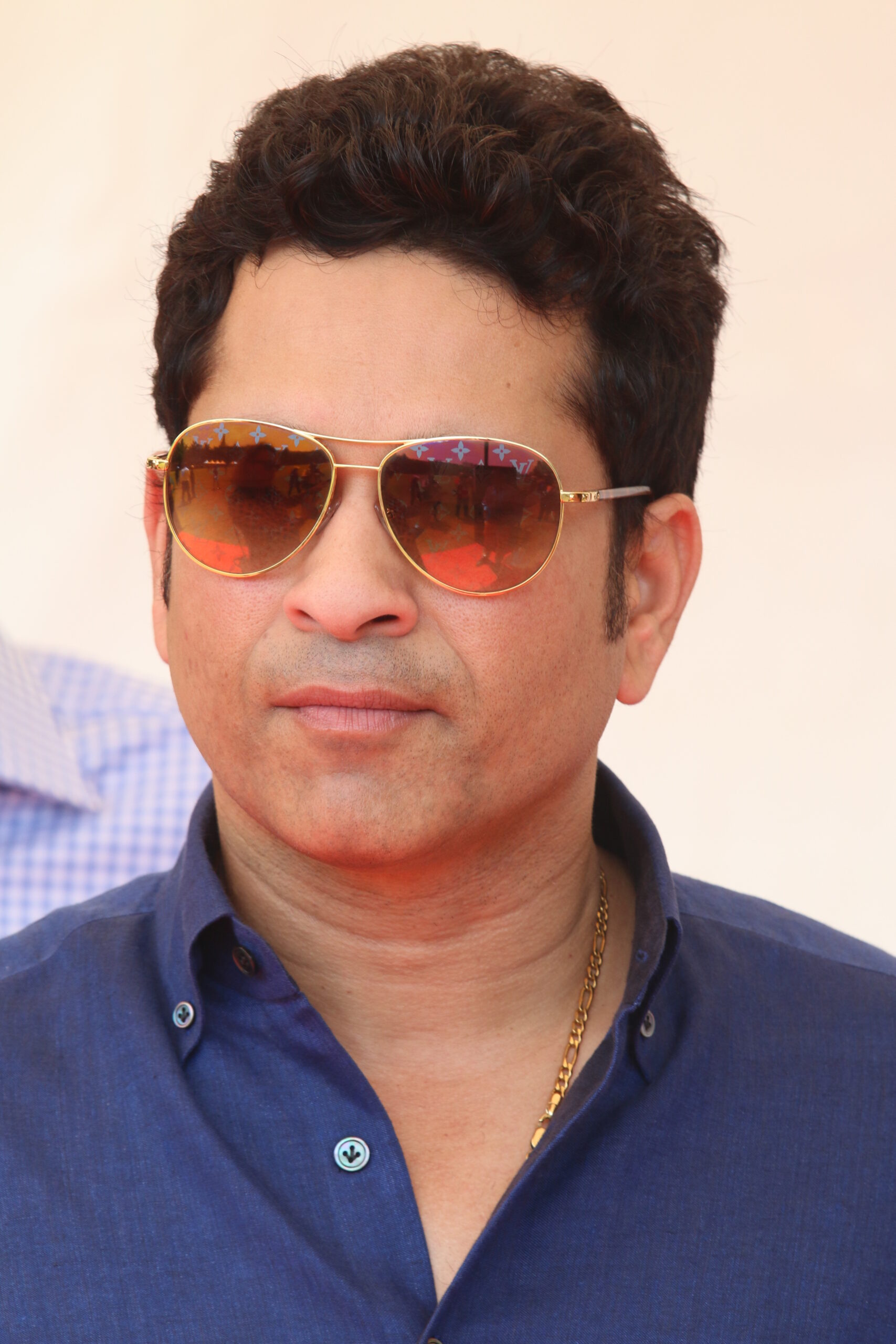
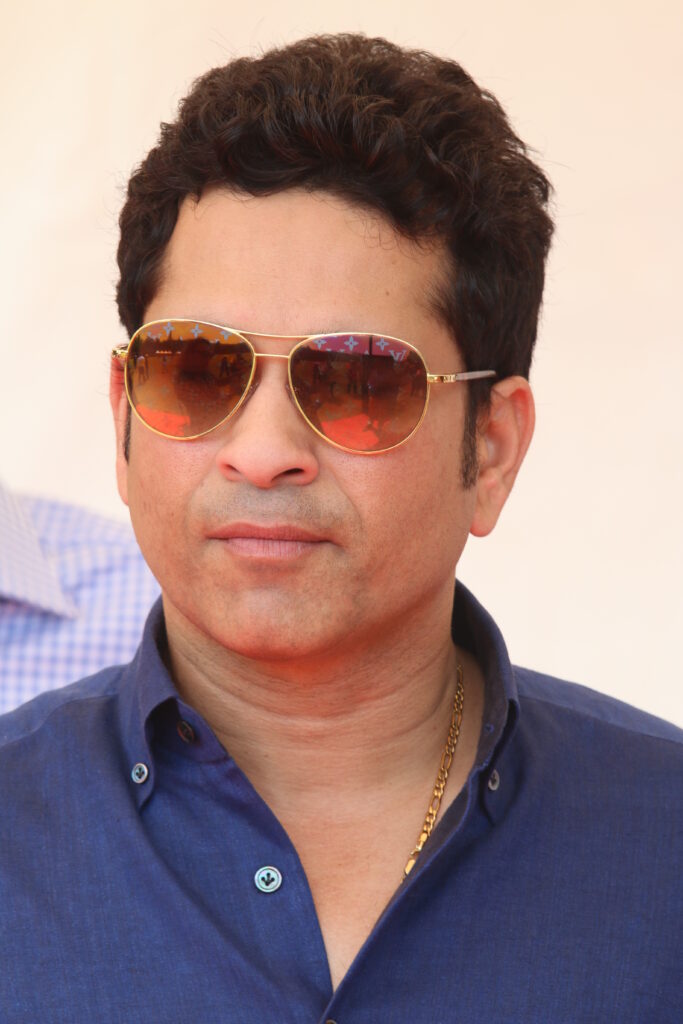
Photo: British High Commission, New Delhi via Wikimedia Commons (CC BY-SA 2.0)
Notable luxury item
A reported property or major asset offers a tangible glimpse of the wealth behind the public estimate.
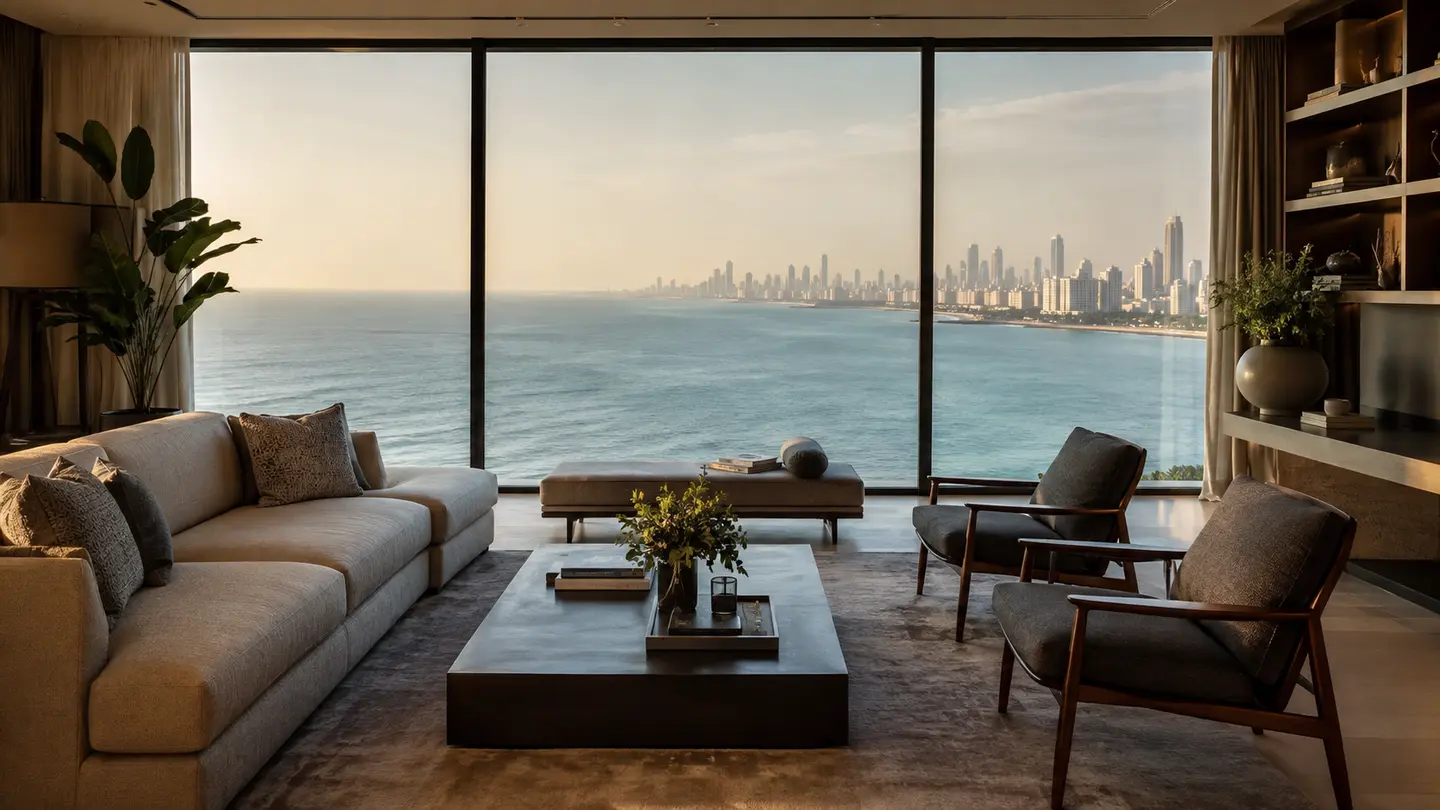
Tendulkar’s primary residence is a sea-facing bungalow on Perry Cross Road in Bandra, one of Mumbai’s most expensive neighbourhoods, completed around 2011 and widely reported by Indian real estate outlets to be among the city’s most valuable private homes. He has also been reported to own a holiday property in Goa. His car collection has long attracted public attention: in 2002, after equalling Don Bradman’s record of 29 Test centuries, he was gifted a Ferrari 360 Modena by Italian carmaker Fiat, a gesture that drew controversy after the Indian government waived the substantial import duty normally levied on such vehicles. He has also been reported to own a BMW 7 Series, a Mercedes-Benz S-Class, a Nissan GT-R, and a Porsche 911, among other vehicles, per Indian automotive and lifestyle press.
Sachin Tendulkar’s estimated net worth
Public estimates vary because private contracts, investments, taxes and liabilities are not fully disclosed.
| 1989 | International debut aged 16 against Pakistan in Karachi; modest early match fees |
| Mid-1990s | Becomes India’s most in-demand endorsement face as satellite-TV cricket coverage expands nationwide |
| 2002 | Equals Bradman’s 29 Test centuries; gifted a Ferrari 360 Modena by Fiat, sparking an import-duty controversy |
| 2008 | IPL launches; Tendulkar becomes captain and icon of Mumbai Indians |
| 2010 | Scores 200 not out against South Africa, the first-ever ODI double century |
| 2012 | Reaches his 100th international century; nominated to India’s Rajya Sabha (upper house of parliament) |
| 2013 | Retires after his 200th Test; awarded the Bharat Ratna, India’s highest civilian honour |
| 2026 | Estimated net worth widely reported in the $170m-$200m+ range, built on endorsements, business stakes, and property |
Tendulkar’s wealth is often discussed alongside that of the generation of Indian cricketers who followed him into a far larger IPL and endorsement economy. Virat Kohli, whose career overlapped with Tendulkar’s final seasons, is generally estimated to have a comparable or higher net worth built on much larger modern IPL contracts and endorsement fees. MS Dhoni, another contemporary of Tendulkar’s later career, is similarly estimated in a comparable range, helped by long-running personal business ventures alongside cricket earnings. Compared to both, Tendulkar’s fortune was built disproportionately on endorsement longevity rather than playing-era cricket salaries, reflecting how much smaller BCCI and IPL pay scales were during the bulk of his career.
Sources and references
Sources referenced for this article include career statistics from ESPN Cricinfo and the BCCI, and net-worth and endorsement reporting from Forbes India and other Indian financial and sports-business media. Net worth figures are estimates compiled from public reporting, compiled from public reporting. Last updated: August 2026.
From a middle-class household in Dadar to the most decorated career in cricket history, Sachin Tendulkar’s financial story looks unlike that of any athlete who came after him — a fortune built less on modern IPL riches than on a 24-year playing career and an endorsement portfolio that, more than a decade into retirement, is still being renewed.
Answer 5 questions about Sachin Tendulkar and get a free offer
Take the Quiz