
 How Much Are They Worth?
Celebrity fortunes, explained
How Much Are They Worth?
Celebrity fortunes, explained









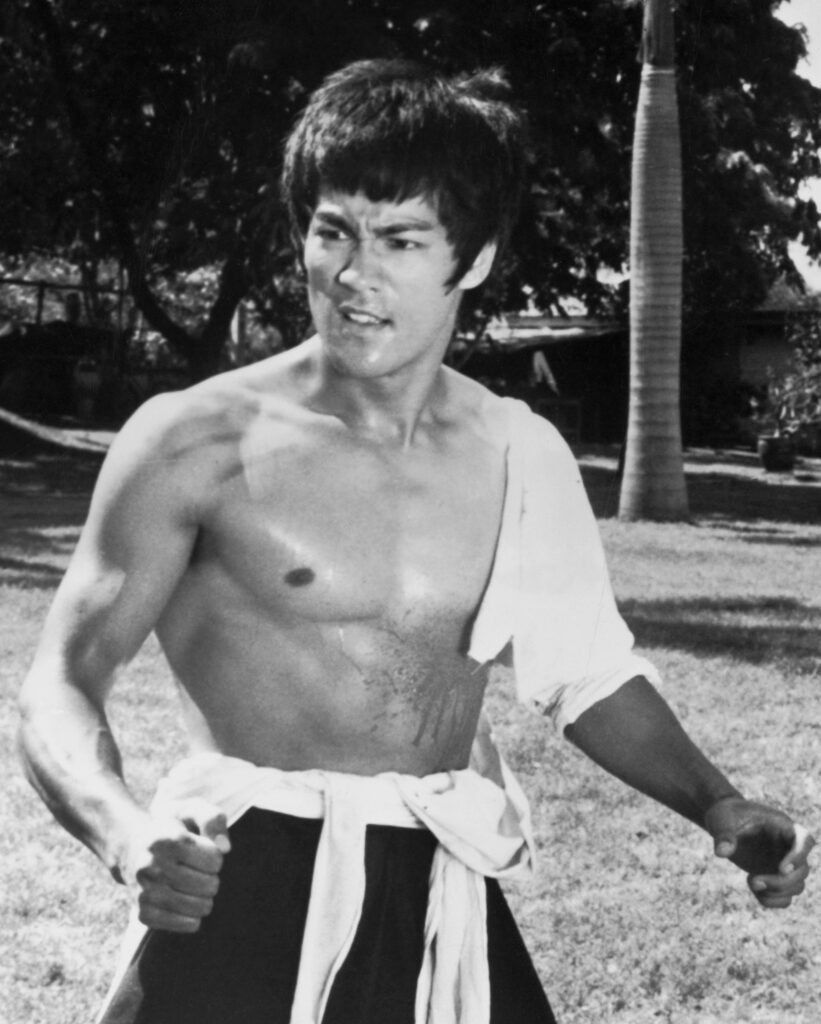
How did Bruce Lee build this fortune?
The answer unfolds through the career, earnings, deals and assets behind the headline estimate.
Before the fame
The background and early turning points that shaped Bruce Lee’s route to prominence.
Bruce Lee was born Lee Jun-fan on 27 November 1940 in San Francisco’s Chinatown, while his father, the Cantonese opera performer Lee Hoi-chuen, was touring the United States. The family returned to Hong Kong within months, and Lee grew up in Kowloon during the Japanese occupation and the difficult years that followed. He appeared in Hong Kong films as a child, racking up around twenty screen credits before he turned eighteen, and acquired the stage name Lee Siu Lung, meaning Little Dragon, according to Wikipedia.
As a teenager Lee trained in Wing Chun under the master Ip Man, took up Western boxing, and in 1958 won a Hong Kong cha-cha championship, a detail that says a good deal about the footwork that later defined his screen fighting. Street brawling brought him to the attention of the police, and in 1959 his parents sent him back to the United States. He finished school in Seattle, enrolled at the University of Washington, and began teaching martial arts, eventually opening the Jun Fan Gung Fu Institute and taking students of every background at a time when that was itself controversial.
The breakthrough years
The career decisions and defining moments that turned recognition into sustained earning power.
A demonstration at the 1964 Long Beach International Karate Championships, where he performed his one-inch punch, brought Lee to the attention of Hollywood producers. He was cast as Kato in The Green Hornet, which ran for a single season from 1966 and made him better known in Hong Kong than in America. Frustrated by the supporting roles available to an Asian actor in Los Angeles, he returned to Hong Kong and signed with Raymond Chow’s new studio Golden Harvest. The Big Boss, released in 1971, broke box-office records across Asia and made him a star almost overnight.

What the work can earn
Reported pay, contracts, royalties and performance income reveal how the fortune was funded.
Fist of Fury followed in 1972, then Way of the Dragon, which Lee wrote and directed himself and which culminates in a fight with Chuck Norris staged in the Roman Colosseum. Enter the Dragon, the first co-production between Hollywood and a Hong Kong studio, was released in 1973 and became one of the most profitable martial arts films ever made. Alongside the films he developed Jeet Kune Do, a deliberately unsystematic approach to fighting that rejected fixed forms in favour of adaptability, and which reshaped how martial arts were taught in the West.
Lee died weeks before Enter the Dragon opened, and his reputation grew rather than faded. He was named among Time magazine’s most influential people of the twentieth century, a bronze statue of him was unveiled on Hong Kong’s Avenue of Stars in 2005, and his stance and yellow tracksuit remain among the most imitated images in cinema. More than fifty years after his death he is still a reference point for fighters, choreographers and film-makers who were born long after he died.
The business beyond the main career
Endorsements, ownership interests and investments can keep compounding long after the initial breakthrough.
Lee signed almost nothing in his lifetime; the endorsement income arrived posthumously. His image has been licensed to global campaigns for telecommunications and drinks brands, to video games, to apparel ranges and to an extensive line of collectibles. Not all of it has been uncontroversial: a computer-generated recreation of Lee used in a whisky advertisement in 2013 drew criticism from those who noted he did not drink, and it sharpened a wider debate about the digital resurrection of dead performers.
Lee’s most significant business decision was co-founding Concord Production Inc. with Raymond Chow, which gave him an ownership stake in his own films rather than a straight fee, and it was that stake rather than his salary that made his estate valuable. The commercial legacy is now managed by Bruce Lee Enterprises, run by his daughter Shannon Lee, which controls his name and likeness and licenses them for merchandise, publishing, exhibitions and games including Tekken and the EA Sports UFC series. The scale is not trivial: Forbes has ranked him among its Top-Earning Dead Celebrities, placing his annual posthumous earnings at around seven million dollars in the year it assessed him, and Forbes has tracked the periodic revivals of the brand since.

Notable luxury item
A reported property or major asset offers a tangible glimpse of the wealth behind the public estimate.
At the time of his death Lee owned a house at 41 Cumberland Road in Kowloon Tong, which he had bought after his Hong Kong success, along with a property in Los Angeles. The Cumberland Road house later became a love hotel and the subject of a long preservation campaign. The estate’s real asset, however, was never bricks and mortar: it is the intellectual property in his name, image and film participations, which has generated income every year for over five decades.
Bruce Lee’s estimated net worth
Public estimates vary because private contracts, investments, taxes and liabilities are not fully disclosed.
How this estimate is calculated
Documented. Lee’s ownership stake in Concord Production Inc., the company he co-founded with Raymond Chow, which gave him a participation in his own films rather than a fee. Forbes has since ranked him among its Top-Earning Dead Celebrities, measuring the estate’s annual posthumous earnings in the millions.
Estimated. What he personally left in 1973: commonly reported at approximately 1.5 million dollars, worth roughly ten million in today’s money once inflation is applied. Contemporary accounts suggest his liquid assets were far smaller, with most of the value sitting in the film participations rather than in cash.
Not verifiable. The composition of the 1973 estate; the terms of the Concord participations; and the current value of Bruce Lee Enterprises, which is privately held and publishes no accounts.
Why this range. Three different figures circulate for Bruce Lee and they measure different things: what he left, what the estate earns annually, and the cumulative value of the brand since his death, which some trade estimates put in the hundreds of millions. The range below is the first of the three – the inflation-adjusted value of the estate he personally left. It excludes the licensing business his family built afterwards, which belongs to his heirs rather than to him.
The working supports a range of $10 million to $15 million. The figure we publish is its midpoint.
Related on How Much Are They Worth: Tom Holland · Robert Redford · 10 of the Most Expensive Celebrity Homes and Estates
Think you know Bruce Lee? Take the quiz: Easy · Medium · Legendary
The Bruce Lee Foundation, established by his family, promotes his philosophy and supports martial arts education, and the family have consistently steered the estate towards legacy projects rather than pure merchandising. Lee’s public image rests on more than fighting: his insistence on teaching across racial lines in 1960s America, and his writing on self-knowledge and adaptability, have given him a following well beyond the martial arts world.
Lee collapsed and died in Hong Kong on 20 July 1973, aged 32. The inquest recorded death by misadventure, attributing it to cerebral oedema brought on by a reaction to a painkiller he had taken for a headache. The suddenness of it, and the fact that he had collapsed once before that year, fed decades of speculation ranging from the plausible to the fantastical, and researchers have continued to propose alternative explanations, including a 2022 paper suggesting hyponatremia. None has displaced the original verdict.