 How Much Are They Worth?
Celebrity fortunes, explained









How did Matt Damon build this fortune?
The answer unfolds through the career, earnings, deals and assets behind the headline estimate.
Matt Damon before the fame
The background and early turning points that shaped Matt Damon’s route to prominence.
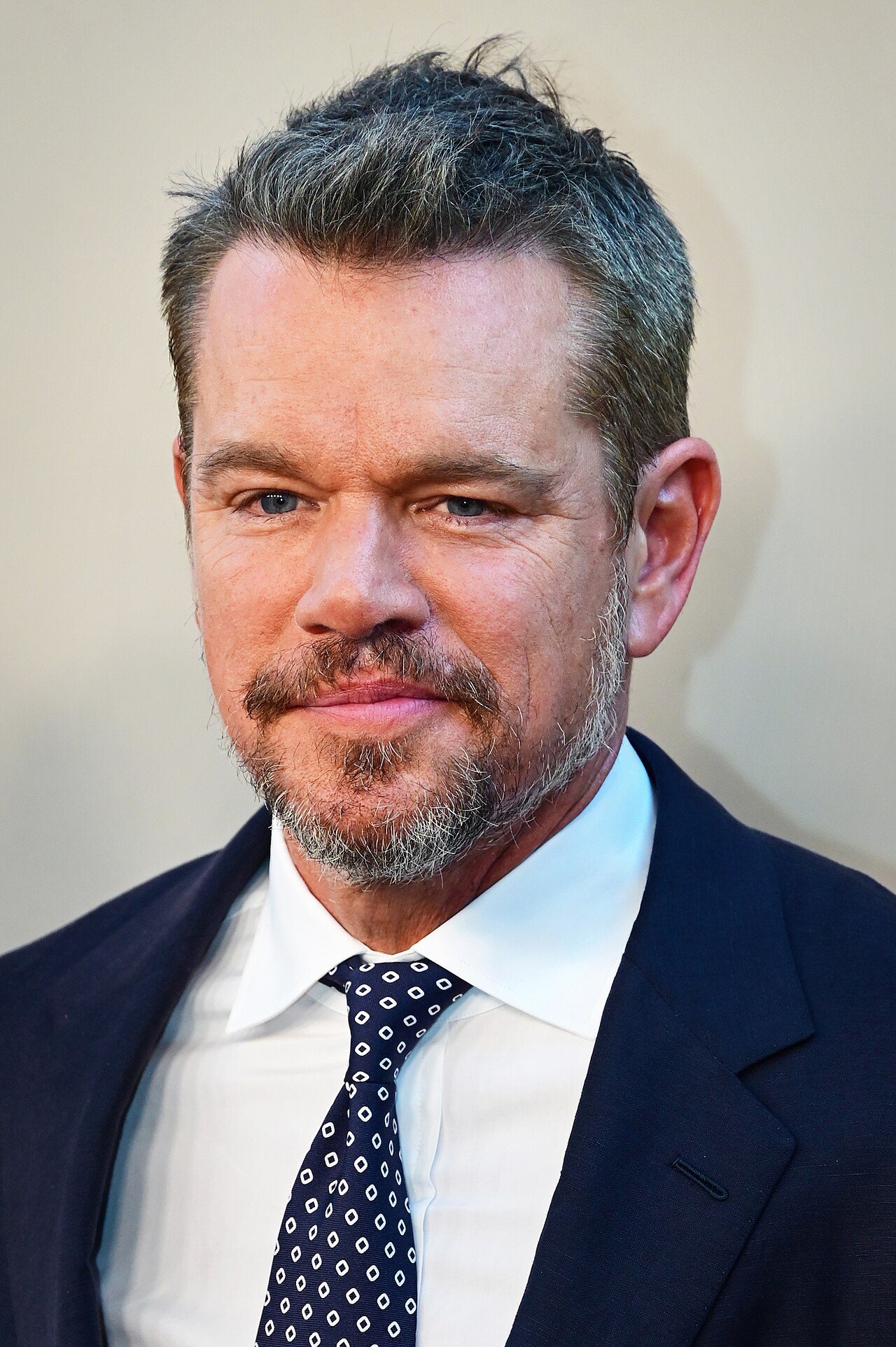
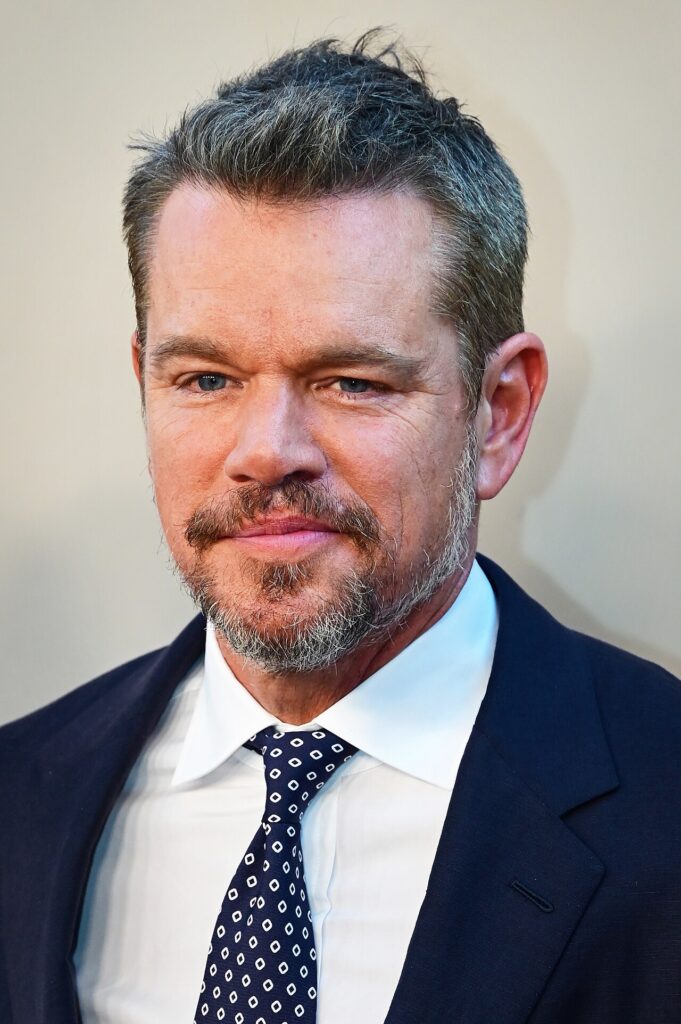
Matt Damon was born on 8 October 1970 in Cambridge, Massachusetts. He won an Academy Award for co-writing Good Will Hunting at twenty-seven and has led the Bourne series since 2002.
The number most often attached to his name is one he says he did not receive, and the more interesting fact about his finances is that he has spent the last decade trying to change how film profits are shared rather than simply collecting a larger slice of them.
Damon appeared in small parts through the early 1990s while writing, with his childhood friend Ben Affleck, the screenplay that became Good Will Hunting. The script began as a university assignment and went through several studios before it was made.
That apprenticeship matters commercially: like a handful of his contemporaries, Damon arrived in the industry as a writer with a produced credit rather than as a hired actor, which set the terms on which he negotiated from then on.
Matt Damon’s breakthrough years
The career decisions and defining moments that turned recognition into sustained earning power.
Good Will Hunting was released in 1997, and at the 70th Academy Awards in March 1998 Damon and Affleck won for Writing (Screenplay Written Directly for the Screen), with Robin Williams taking Actor in a Supporting Role for the same film (Academy of Motion Picture Arts and Sciences).
The breakthrough as a commercial lead came five years later. The Bourne Identity opened in June 2002 and grossed over $214 million worldwide (Box Office Mojo), establishing a franchise that has been the largest single contributor to his income ever since.
What Matt Damon’s work can earn
Reported pay, contracts, royalties and performance income reveal how the fortune was funded.
Damon has anchored three distinct franchise strands – Bourne, the Ocean’s films and Christopher Nolan’s and Ridley Scott’s large-format pictures – while continuing to write and produce. He has been nominated for acting Academy Awards for Good Will Hunting and Invictus and again as a producer.
The achievement he is likeliest to be remembered for outside the screen work is Water.org, the non-profit he co-founded with the engineer Gary White, which finances water and sanitation access through small loans rather than donations (Water.org).
The 1998 Academy Award for original screenplay remains the formal high point, shared with Affleck and won before either was thirty (Academy of Motion Picture Arts and Sciences). Since then the recognition has been commercial rather than ceremonial: he is one of the small group of actors whose name still opens a non-franchise film in wide release.
He has also become a recognised advocate on water access, appearing in a Stella Artois Super Bowl campaign in 2018 that tied product sales to Water.org’s work and drew a detailed fact-check of its claims (NPR).

Matt Damon’s business beyond the main career
Endorsements, ownership interests and investments can keep compounding long after the initial breakthrough.
Damon’s two best-known endorsements both connect to Water.org, by design. The 2018 Stella Artois Super Bowl campaign linked purchases of a limited-edition chalice to clean water provision (NPR), and in October 2021 he fronted Crypto.com’s global campaign Fortune Favors the Brave, directed by Wally Pfister; Crypto.com made a $1 million donation to Water.org alongside the deal (Variety).
He has also given directly: in 2013 he announced a $1 million gift to his own charity from a corporate partner at the Milken Conference (The Hollywood Reporter). None of his personal fees for these campaigns has been disclosed.
In November 2022 Damon and Affleck launched Artists Equity, a production company backed by Gerry Cardinale’s RedBird Capital Partners, with Affleck as chief executive and Damon as chief content officer (Variety). RedBird committed at least $100 million of funding (RedBird Capital Partners, Deadline).
The company’s stated purpose is to widen profit participation so that more of a film’s upside reaches the people who made it, rather than concentrating it in the studio and a handful of above-the-line names (Artists Equity). Its first release was Air, about Nike’s pursuit of Michael Jordan – a film about an endorsement deal, made by a company set up to renegotiate how creative work is paid for.

Matt Damon’s notable luxury item
A reported property or major asset offers a tangible glimpse of the wealth behind the public estimate.
Damon’s property is held privately and has not been itemised in any public filing. He has bought and sold homes in New York and California over the past two decades, and his holdings are conventional for an actor at his level: a primary residence, a second home, and no disclosed commercial real estate.
His largest non-property asset is his stake in Artists Equity, which is privately held, carries no public valuation and is therefore not assigned a number here (Variety).
Matt Damon’s estimated net worth
Public estimates vary because private contracts, investments, taxes and liabilities are not fully disclosed.
How this estimate is calculated
The documented material is thinner than the coverage suggests. Avatar‘s gross is a matter of record and Damon did not appear in it; nothing about the alleged offer is documented by either party, and this site does not treat a contested recollection as a fact (The Hollywood Reporter, The Hollywood Reporter). What is documented on the asset side is the launch of Artists Equity with a RedBird commitment of at least $100 million – capital committed to the company, not paid to Damon (RedBird Capital Partners).
The arithmetic therefore runs on fees. Three decades of salaries and participations, with the Bourne series the largest single contributor after its first film grossed over $214 million worldwide (Box Office Mojo); roughly half removed for federal and state tax; another fifteen to twenty per cent for representation; property added as an asset and the Artists Equity stake left unvalued because it is private (Variety). The disputed Avatar participation contributes nothing in either direction, because a payment not received is not a liability.
What is not disclosed: every fee and participation he has signed, his equity percentage in Artists Equity, and what that company is currently worth. His most quoted number describes money he never received, while his most consequential decision – taking equity in a production company instead of a bigger cheque – produces a figure only that company’s cap table could settle.
The working supports a range of $170 million to $200 million. The figure we publish is its midpoint.
Confidence: Partly documented — built from published box office and a documented company launch, with fees, participations and his private equity stake all unvalued.
Think you know Matt Damon? Take the quiz: Easy · Medium · Legendary
Water.org is the centre of Damon’s public life outside film. Co-founded with Gary White, it works by financing affordable loans for household water connections and sanitation rather than by building infrastructure directly, a model designed to recycle capital instead of spending it once (Water.org).
His public image – capable, unshowy, politically engaged but not performatively so – has been stable for twenty-five years. The one sustained dent in it came from an advertisement rather than a film.
The Crypto.com campaign was mocked widely when cryptocurrency prices fell through 2022, with critics arguing the advertisement dressed a speculative market as an act of courage (Variety). Damon has since said the fee went to Water.org, though the amount has not been published.
The second point of scrutiny is the Avatar story. Damon has said James Cameron offered him the lead with ten per cent of the film’s gross attached, and that he declined because he was contracted to complete another Bourne film (The Hollywood Reporter, Variety); Avatar went on to gross more than two billion dollars, which would have made that participation worth in the region of 250 million. Cameron has disputed the account directly, saying there was never an offer and never a deal, and suggesting Damon extrapolated from the terms he commands generally (The Hollywood Reporter). Both men are describing the same conversation and remember it differently.