
 How Much Are They Worth?
Celebrity fortunes, explained
How Much Are They Worth?
Celebrity fortunes, explained
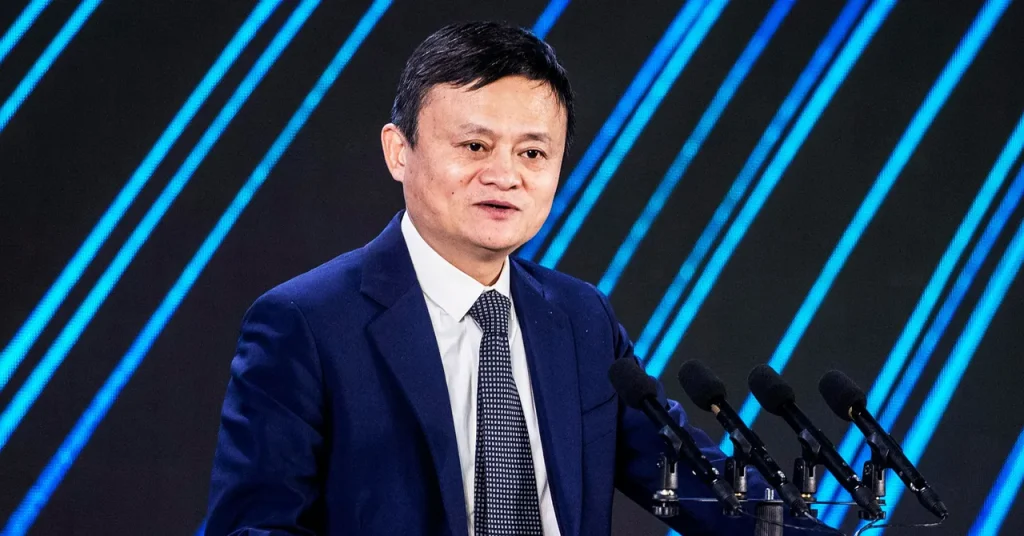
How did Jack Ma build this fortune?
The answer unfolds through the career, earnings, deals and assets behind the headline estimate.
Before the fame
The background and early turning points that shaped Jack Ma’s route to prominence.
Jack Ma, born Ma Yun on September 10, 1964, in Hangzhou, Zhejiang province, China, is a Chinese entrepreneur best known as the co-founder of Alibaba Group, the e-commerce and technology conglomerate that grew from a Hangzhou apartment into one of the world’s largest internet companies. Ma grew up in modest circumstances and struggled academically, reportedly scoring just 31 points on the mathematics section of his high school entrance exam, and he later failed China’s national college entrance exam, the gaokao, twice before being admitted on his third attempt. He was also rejected from dozens of jobs, including an application to KFC, before eventually earning a place at Hangzhou Teachers College (now Hangzhou Normal University), where he graduated in 1988 with a bachelor’s degree in English, according to Wikipedia’s biography of Ma. That persistence, combined with an early fascination with English gained from years of practicing with foreign tourists, would later shape his path into international business.
After graduating, Ma worked as an English lecturer at Hangzhou Dianzi University, a job that paid a modest salary but gave him time to explore outside interests. In 1994 he founded the Hangzhou Hope Translation Agency, and a trip to the United States in 1995 gave him his first exposure to the internet, an encounter widely credited with inspiring him to build China’s earliest commercial websites, as detailed by Wikipedia. He went on to build China Pages, one of the country’s first online business directories, before briefly working for a China International Electronic Commerce Center affiliate in Beijing. That government stint proved short-lived, but it gave Ma a close look at how internet commerce might work at scale in China, knowledge he carried into his next venture.
The breakthrough years
The career decisions and defining moments that turned recognition into sustained earning power.
In 1999, Ma gathered 17 friends and former students in his Hangzhou apartment and, with roughly 500,000 yuan in pooled savings, founded Alibaba.com as a business-to-business marketplace connecting Chinese manufacturers with buyers abroad. The company secured early venture funding, including a landmark $20 million investment from SoftBank’s Masayoshi Son in 2000, and expanded quickly into consumer e-commerce with the 2003 launch of Taobao Marketplace and, later, the Alipay payments platform, per Wikipedia’s account of Alibaba’s founding. Taobao’s rapid rise let Alibaba outmaneuver eBay’s China operations, cementing Ma’s company as the dominant force in Chinese e-commerce within just a few years of its founding.

What the work can earn
Reported pay, contracts, royalties and performance income reveal how the fortune was funded.
Ma’s defining business achievement came on September 19, 2014, when Alibaba Group listed on the New York Stock Exchange in what was, at the time, the largest initial public offering in history, raising roughly $25 billion and instantly making Ma China’s richest man. He served as Alibaba’s CEO until 2013 and as executive chairman until his planned retirement in September 2019, a transition he had been signaling publicly for years, according to his Forbes billionaire profile. Under his leadership, Alibaba grew into a sprawling conglomerate spanning e-commerce, cloud computing, logistics, and digital payments, and its Ant Group financial affiliate became one of the most valuable fintech companies in the world before regulatory intervention reshaped its trajectory.
Ma’s business success brought him extensive international recognition. Time magazine named him one of the world’s 100 most influential people in both 2009 and 2014, and Fortune ranked him second on its “World’s 50 Greatest Leaders” list in 2017, according to biographical detail compiled on Wikipedia. He was named a Young Global Leader by the World Economic Forum in 2005, received France’s Chevalier of the Legion of Honour in 2016, and holds honorary doctorates from multiple universities. Despite his diminished public profile since 2020, Ma has continued to be cited by global business and philanthropy publications, including a Time100 Philanthropy honor referenced in the same Wikipedia summary of his career.
The business beyond the main career
Endorsements, ownership interests and investments can keep compounding long after the initial breakthrough.
Ma has largely avoided conventional celebrity-style brand endorsements, but he has lent his name and image to a handful of high-profile promotional projects tied to his own companies and philanthropic causes. In 2017, he made a cameo acting appearance in the kung fu short film “Gong Shou Dao,” produced alongside martial arts stars including Jet Li and Donnie Yen to mark Alibaba’s anniversary, a project documented on Wikipedia. He has also served as the public face and chief sponsor of “Africa’s Business Heroes,” a televised entrepreneurship competition funded through his foundation’s Africa Netpreneur Prize Initiative, according to the program’s own site, Africa’s Business Heroes. These appearances function more as extensions of his business and philanthropic brand than as paid third-party endorsement deals typical of entertainment celebrities.
Beyond Alibaba, Ma co-founded the private equity firm Yunfeng Capital and has held significant stakes in Ant Group, the fintech affiliate that operates Alipay and once pursued what would have been the largest IPO in history before it was suspended by Chinese regulators. As of recent shareholder disclosures, Ma held roughly a 10 percent direct stake in Ant Group, though a 2023 ownership restructuring reduced his voting influence there substantially, according to CNBC’s coverage of the Ant Group restructuring. On the Alibaba side, Ma has in recent years actually increased his holdings: reporting from the South China Morning Post shows that Ma and Alibaba co-founder Joe Tsai together overtook SoftBank as Alibaba’s largest shareholders in early 2024 after buying shares during a slump in the stock price, with Ma’s own stake estimated at roughly 4 percent of the company.
Notable luxury item
A reported property or major asset offers a tangible glimpse of the wealth behind the public estimate.
Ma’s real estate holdings are not comprehensively documented in any single public filing, since much of his wealth is held through private holding companies, but individual purchases have been reported by business and property outlets over the years. In 2015, Ma paid a reported $193 million for a mansion at 22 Barker Road on Hong Kong’s Victoria Peak, at the time one of the most expensive residential purchases ever recorded in the territory, according to Mingtiandi’s real estate reporting. That same year, Ma also acquired a roughly 28,000-acre estate known as Brandon Park in New York’s Adirondack Mountains for about $23 million, a purchase reported by Fortune. His Forbes profile additionally notes he owns a vineyard in France, part of a broader pattern of Ma investing in wine estates including properties in the Bordeaux region, per the Forbes billionaire profile. Given the scale of his fortune, these disclosed purchases are almost certainly a partial picture of his total property holdings rather than a complete inventory.
Jack Ma’s estimated net worth
Public estimates vary because private contracts, investments, taxes and liabilities are not fully disclosed.
How this estimate is calculated
Jack Ma’s net worth estimate is derived primarily from the market value of his disclosed equity holdings in publicly traded Alibaba Group, which trades on both the New York Stock Exchange and the Hong Kong Stock Exchange, combined with the estimated value of his stake in the privately held Ant Group. Forbes and Bloomberg, the two most widely cited real-time billionaire trackers, calculate his fortune primarily from Alibaba’s fluctuating share price applied to his roughly 4 percent disclosed stake, as outlined in his Forbes real-time profile, with adjustments for his Ant Group interest, real estate holdings, and other private investments through Yunfeng Capital. Because Ant Group is not publicly traded and Ma’s various holding-company structures are not fully disclosed, any figure should be treated as a well-informed estimate rather than an exact accounting. For additional context on how such estimates are sometimes compiled by entertainment-focused outlets using looser methodology, see Celebrity Net Worth, used here strictly as a secondary reference point.
This figure is grounded in Forbes’ real-time billionaire tracker, which places Ma at roughly $27.4 billion and ranks him among the world’s wealthiest individuals, per his Forbes profile. Other trackers place his fortune in a broadly similar range, generally between the high $20 billion and low $30 billion mark, reflecting normal day-to-day swings in Alibaba’s share price. Ma’s fortune remains overwhelmingly tied to Alibaba’s stock performance, meaning his ranking among global billionaires can shift meaningfully with market movements, even though his direct operational role at the company he founded has been greatly reduced since his 2019 retirement as executive chairman.
Ma established the Jack Ma Foundation in 2014 to focus on education, entrepreneurship, women’s leadership, and environmental protection, and the foundation has since distributed or pledged several hundred million dollars in grants and donations, according to Wikipedia’s entry on the Jack Ma Foundation. Alongside the Alibaba Foundation, it coordinated a major global COVID-19 relief effort in 2020, donating masks, test kits, and ventilators to more than 150 countries, detailed in a factsheet published by Alizila, Alibaba’s official news outlet. Ma has also become a prominent philanthropic figure in Africa through the Africa Netpreneur Prize Initiative and its “Africa’s Business Heroes” competition, which has committed $10 million over ten years to identify and fund African entrepreneurs, per the initiative’s own site, Africa’s Business Heroes. These efforts have helped Ma maintain a public image as a global business statesman even as his domestic profile in China has become more carefully managed since 2020.
Ma’s public standing changed dramatically after an October 2020 speech in Shanghai in which he criticized China’s financial regulators, comparing the Basel Accords to “an old people’s club” and arguing that state-owned banks operated with a “pawnshop mentality.” Within days, Chinese regulators suspended Ant Group’s record-breaking $37 billion initial public offering, just before it was due to begin trading, as reported by The China Project. Ma subsequently disappeared from public view for several months, fueling widespread speculation about his whereabouts, before reports emerged that he had spent extended periods living quietly in Tokyo and traveling in Japan, the United States, and Europe, according to Forbes. In January 2023, Ant Group formally restructured its ownership so that Ma no longer held a controlling stake, with his voting rights reduced from more than 50 percent to roughly 6.2 percent, a change confirmed by CNBC’s reporting on the restructuring. Ma has since returned to China and made occasional public appearances, but he has kept a markedly lower profile than before the 2020 crackdown, and the episode remains a defining, well-documented chapter of his career.