 How Much Are They Worth?
Celebrity fortunes, explained
How Much Are They Worth?
Celebrity fortunes, explained





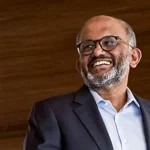
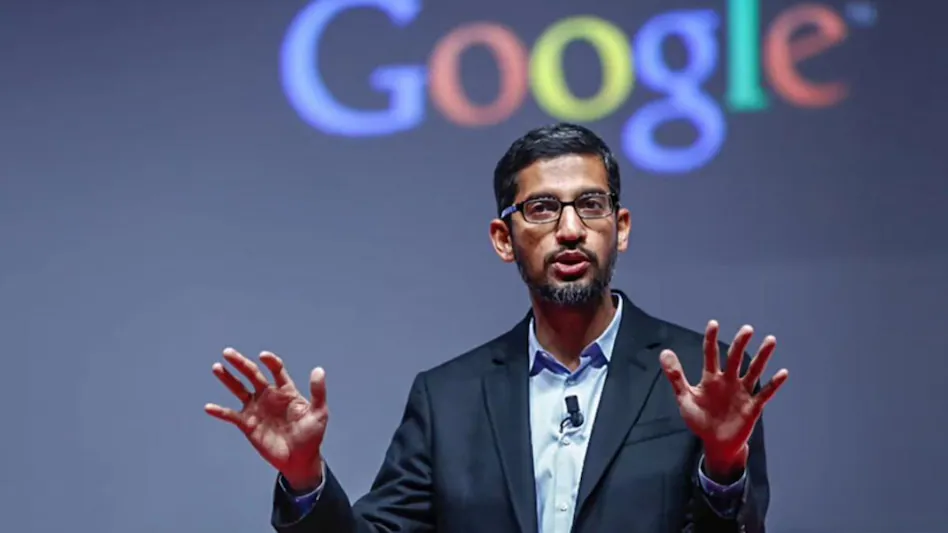
How did Sundar Pichai build this fortune?
The answer unfolds through the career, earnings, deals and assets behind the headline estimate.
Before the fame
The background and early turning points that shaped Sundar Pichai’s route to prominence.
Pichai Sundararajan was born on June 10, 1972, in Madurai, Tamil Nadu, India, and grew up in Chennai, where the family lived in a two-room apartment in the Ashok Nagar neighborhood. He and his younger brother, Srinivasan, shared the living room floor to sleep, and for much of his childhood the family did not own a refrigerator, television, or car; a telephone did not arrive in the household until Pichai was around 12. His father, Regunatha Pichai, was an electrical engineer at GEC, a British-owned manufacturing conglomerate, while his mother, Lakshmi, worked as a stenographer before becoming a homemaker.
Pichai attended Jawahar Vidyalaya school in Ashok Nagar before completing his final years of secondary education at Vana Vani Matriculation Higher Secondary School, located on the Indian Institute of Technology (IIT) Madras campus. Even as a child he was known for an unusually sharp memory, particularly for phone numbers, and for a fascination with how electrical devices worked — traits that later biographers and colleagues have pointed to as early signs of his engineering bent.
Pichai earned a bachelor’s degree in metallurgical engineering from IIT Kharagpur in 1993, graduating with distinction, then received a scholarship to Stanford University, where he completed a master’s degree in materials science and engineering. He later added an MBA from the Wharton School of the University of Pennsylvania, where he was named a Siebel Scholar and a Palmer Scholar. Before returning fully to the tech industry, he briefly worked as an engineer at Applied Materials and as a management consultant at McKinsey & Company.
Pichai joined Google in 2004 to lead product management for the company’s client software, including Google Toolbar. His breakthrough came through his central role in conceiving and developing the Google Chrome browser, publicly launched in September 2008 and widely demonstrated to the world by late 2009, followed by Chrome OS — bets that were reportedly internally controversial at the time but proved decisive as Chrome became the world’s most-used browser. That success established Pichai as one of Google’s most important product executives and set up his ascent through the company’s leadership ranks over the following decade.
The breakthrough years
The career decisions and defining moments that turned recognition into sustained earning power.
Following Chrome’s success, Pichai took on oversight of an expanding set of major Google products, including Google Drive, Gmail, and Google Maps, and on March 13, 2013, he additionally took charge of Android after the departure of Android co-founder Andy Rubin — consolidating control of Google’s two most important platforms under one executive for the first time. Google restructured into the Alphabet holding-company structure in 2015, and Pichai was named CEO of Google on October 24, 2015, reporting to Alphabet co-founders Larry Page and Sergey Brin.
In December 2019, Page and Brin stepped back from Alphabet’s day-to-day leadership, and Pichai was promoted to CEO of Alphabet itself while remaining CEO of Google — putting him in charge of the entire corporate structure, including so-called “Other Bets” like Waymo (self-driving cars) and Wing (drone delivery). Since taking that role, Pichai has overseen Alphabet’s expansion into cloud computing through Google Cloud and, from 2023 onward, an aggressive push into generative artificial intelligence via the Gemini model family, positioned as Alphabet’s answer to OpenAI’s ChatGPT and Microsoft’s AI investments. He has continued to lead the company through 2026, including the board’s decision that year to tie a large share of his own future pay directly to the market value Waymo and Wing eventually achieve.

What the work can earn
Reported pay, contracts, royalties and performance income reveal how the fortune was funded.
Alphabet’s board pays Pichai on a triennial cycle: a large stock grant roughly every three years, with much smaller “off-year” compensation in between consisting mostly of his flat salary and personal security costs. In the year he was named Alphabet CEO, his total reported compensation was approximately $281 million, driven by a large multi-year stock award; the following year, 2021, with no new grant, his total compensation was a comparatively modest $6.3 million. The cycle repeated in 2022, when a fresh triennial grant pushed his total compensation to $226 million — comprising roughly $218 million in stock awards, a $2 million salary, and about $5.94 million in personal security costs — even as Alphabet shares fell 39% that year amid a broader tech-sector slowdown, a disclosure that drew criticism given his pay was reported as roughly 808 times Alphabet’s median employee compensation of $279,802.
In the “off-years” that followed, Pichai’s reported total compensation fell back to $8.8 million in 2023 and $10.73 million in 2024, in both cases consisting almost entirely of his unchanged $2 million base salary plus rapidly rising personal security costs — $6,775,631 in 2023, rising 22% to $8,267,123 in 2024 — with only a small $405,630 stock component in 2024. Alphabet’s 2026 proxy statement reported his 2025 total compensation at $10,906,079, made up of a $2,007,692 salary and $8,898,387 in other compensation (primarily continued security costs), with no new stock awards granted that year. For comparison, other major tech CEOs’ 2025 pay ranged widely: Meta’s Mark Zuckerberg was reported at $25.1 million, Apple’s Tim Cook at $74.3 million, and Amazon’s Andy Jassy at $2.06 million, while Alphabet separately disclosed a CEO-to-median-worker pay ratio of 35-to-1 for Pichai that year, well below Apple’s reported 533-to-1 ratio for Cook.
Pichai’s compensation has always been structured through formal, board-approved multi-year contracts disclosed in Alphabet’s SEC filings rather than individually negotiated endorsement-style deals. When he was elevated to Alphabet CEO in December 2019, the board set his salary at $2 million annually starting in 2020 and awarded equity built to vest between 2020 and 2022, targeted at nearly $250 million if performance conditions were met — including an additional tranche of up to $90 million tied to Alphabet shares outperforming the S&P 100 Index. That package was the basis for the roughly $281 million total compensation figure reported for 2019, and its successor — the 2022 triennial grant — followed the same broad structure, again layering a large stock award on top of the flat $2 million salary.
Alphabet’s board approved a new three-year contract for Pichai on March 7, 2026, structured very differently from his earlier packages and potentially worth up to $692 million if every target is hit. The package includes performance stock units worth up to $260 million tied specifically to the value appreciation of Waymo, Alphabet’s autonomous-driving unit, between 2026 and 2028; performance stock units worth up to $90 million tied to per-unit value benchmarks at Wing, its drone-delivery business; a further $252 million in performance stock units tied to Alphabet’s total shareholder return relative to the S&P 100; and a straightforward time-based restricted stock grant of approximately $84 million vesting over the full three-year term if Pichai remains employed. It marks the first time Pichai’s personal pay has been directly linked to the value of Alphabet’s “Other Bets” rather than to Google’s core advertising and cloud businesses or Alphabet’s stock price alone, and none of it had been earned or vested as of this writing — it remains a forward-looking, performance-contingent target rather than money already paid.

The business beyond the main career
Endorsements, ownership interests and investments can keep compounding long after the initial breakthrough.
There is no reliable public record of Pichai signing a personal endorsement deal, brand ambassadorship, or paid sponsorship of any kind, and none should be assumed. As a corporate technology executive rather than a public-facing performer or athlete, his income and wealth are tied entirely to his Alphabet employment contract, stock compensation, and modest personal philanthropy, not to outside endorsement contracts — a pattern consistent with other hired tech CEOs profiled on this site, such as Tim Cook and Satya Nadella, none of whom maintain conventional celebrity endorsement portfolios.
Unlike many wealthy entrepreneurs profiled on this site, Pichai has no significant publicly documented business ventures or investment portfolio outside of Alphabet. He joined Alphabet’s board of directors in July 2017, giving him a formal governance role in addition to his executive duties, and his financial life remains almost entirely tied to his Alphabet salary, security allowance, and vesting stock — he is not known to run, co-found, or hold a controlling stake in any outside company, unlike, for example, Reed Hastings’ post-Netflix ownership of Powder Mountain ski resort or Mark Cuban’s Cost Plus Drugs venture.
Pichai’s disclosed philanthropy has been modest relative to his net worth and relative to founder-billionaires’ giving. During the COVID-19 pandemic in 2020, he personally donated $1 million to Bay Area families in need through the direct-cash-transfer nonprofit GiveDirectly, and separately matched a Google corporate donation with roughly ₹5 crore (about $600,000) of his own money to GiveIndia in support of daily-wage workers affected by lockdowns in India. He has also been involved with the Giving Pledge community associated with Warren Buffett and Bill and Melinda Gates, though, unlike Reed Hastings or Mark Cuban, Pichai has not personally signed the Giving Pledge or disclosed lifetime charitable giving on a comparable scale, and no verified figure for his total lifetime donations is publicly available.

Notable luxury item
A reported property or major asset offers a tangible glimpse of the wealth behind the public estimate.
The one well-documented property tied to Pichai is his family home in Los Altos Hills, California. Public records indicate he purchased the underlying “Westwind” parcel in July 2014 for approximately $6 million, and the Los Altos Hills Planning Commission subsequently approved plans for a large custom residence on the site. Lifestyle and real-estate outlets have since estimated the completed home’s value at roughly $40 million, though that figure — unlike the original land purchase price — comes from real-estate and celebrity-homes press rather than a county assessor’s record or an SEC filing, and should be treated as an approximate media estimate rather than a confirmed number.
Beyond the Los Altos Hills residence, no reliable, itemized public record of other major Pichai-owned assets — a yacht, private jet, art collection, or additional real estate — was located for this article. Some coverage references Alphabet-provided security and transportation arrangements for Pichai, disclosed in SEC filings as part of his annual “other compensation,” but these are corporate security benefits rather than personally owned assets, and are addressed above under Annual Earnings rather than repeated here as property he owns.
Sundar Pichai’s estimated net worth
Public estimates vary because private contracts, investments, taxes and liabilities are not fully disclosed.
How this estimate is calculated
This figure reflects Forbes’ Real-Time Billionaires tracker, the primary basis for the estimate used here, which placed Pichai at approximately $1.6 billion and ranked him around #2522 globally as of August 16, 2026 — the date this estimate reflects. Forbes’ methodology for Pichai combines his disclosed 0.02% Alphabet stake (a mix of Class A and Class C shares held directly and through family trusts, as itemized in SEC Form 4 filings), the value of vested but unexercised equity, and an estimate of realized proceeds from past stock sales — Forbes notes he has sold more than $500 million worth of Alphabet shares, before taxes, over his tenure. Because Alphabet’s share price moves constantly and Pichai continues to sell stock on a pre-scheduled Rule 10b5-1 trading plan, this figure is a snapshot tied to the date cited, not a fixed number, and will likely have shifted by the time this is read; Alphabet’s Class A shares traded in a roughly $196.60-to-$408.61 52-week range heading into mid-August 2026.
Other trackers use different methodologies and land at meaningfully different points. The Bloomberg Billionaires Index calculated that Pichai first crossed the $1 billion threshold on July 24-25, 2025, driven by a 13% one-month rise in Alphabet’s Class A shares amid AI-fueled optimism around the company’s earnings; at that time Bloomberg valued his 0.02% Alphabet stake at roughly $440 million but estimated the majority of his fortune as cash and other assets built from approximately $650 million in stock he had sold over his decade running the company — shares Bloomberg noted would have been worth over $1 billion had he held them, illustrating how much wealth he left on the table by selling early and often rather than concentrating his fortune in Alphabet stock the way a founder typically would. Celebrity Net Worth, a secondary aggregator rather than a financial data provider, lists a broadly comparable figure in the roughly $1 billion range; it is cited here only as a rough, non-primary cross-check.
It is also worth distinguishing the paper value of Pichai’s compensation from his realized, liquid wealth. Alphabet’s own SEC filings report enormous headline compensation totals in triennial grant years — $281 million in 2019, $226 million in 2022, and a package potentially worth up to $692 million approved for 2026-2028 — but those figures represent the maximum grant-date or target value of stock that vests over several years and, in the case of the 2026 package, is also contingent on Waymo and Wing hitting specific performance benchmarks that may or may not be met. Pichai’s actual realized wealth is a smaller, harder-to-pin-down figure built from shares that have already vested and been sold under his 10b5-1 plan, which is the reason Forbes, Bloomberg, and Celebrity Net Worth each land on a different, more conservative number than any single year’s eye-catching compensation headline would suggest. Given the swings and methodological differences described above, any single net-worth figure for Pichai should be read as a dated estimate rather than a fixed or guaranteed sum.
Key moments in the growth of Pichai’s fortune:
| Date | Event |
|---|---|
| June 1972 | Born in Madurai, Tamil Nadu, India |
| 2004 | Joins Google to lead product management |
| 2008-2009 | Leads development and launch of the Google Chrome browser |
| March 2013 | Takes over oversight of Android |
| October 2015 | Named CEO of Google as Alphabet holding structure is created |
| December 2019 | Named CEO of Alphabet; awarded a multi-year stock package reported at approximately $281 million |
| 2021 | No new stock grant; total compensation falls to $6.3 million |
| 2022 | New triennial stock grant lifts total compensation to $226 million |
| April 2024 | Bloomberg reports Pichai is “nearing” billionaire status as AI optimism lifts Alphabet shares |
| July 24-25, 2025 | Bloomberg Billionaires Index calculates that Pichai has crossed $1 billion in net worth, becoming a rare non-founder tech CEO billionaire |
| March 7, 2026 | Alphabet’s board approves a new three-year pay package for Pichai worth up to $692 million, tied partly to Waymo and Wing valuations |
| August 16, 2026 | Forbes’ Real-Time Billionaires index estimates Pichai’s net worth at approximately $1.6 billion |
Pichai belongs to a small, specific category: hired chief executives of trillion-dollar tech companies who have become billionaires almost entirely through stock compensation rather than founder’s equity. The closest comparison is Apple’s Tim Cook, another long-tenured operational CEO rather than a founder, whom Forbes valued at approximately $2.9 billion in 2026 (rank #1504) — nearly double Pichai’s roughly $1.6 billion — reflecting Cook’s longer tenure as CEO (since 2011, versus Pichai’s 2019 Alphabet appointment) and Apple’s own stock performance. Microsoft’s Satya Nadella, who has led that company since 2014, sits in a broadly similar range to Pichai, with various trackers placing his net worth at roughly $1.3 to $1.5 billion, built the same way — salary, security costs, and periodic large stock grants realized through disciplined, pre-scheduled share sales.
The gap to founder-CEOs profiled elsewhere on this site is far larger. Reed Hastings, who co-founded rather than merely ran Netflix, is valued by Forbes at roughly $4.5 billion despite holding less than 1% of that company after years of stock sales and donations, while Mark Cuban’s fortune — built on selling Broadcast.com outright rather than drawing a corporate salary — sits at roughly $6 billion. Pichai’s own Alphabet stake, at approximately 0.02% of the company, is smaller as a percentage than either man’s holding in the business they built, which is the central reason his net worth trails founder-billionaires at similarly famous companies even though Alphabet’s roughly $2.3 trillion market capitalization dwarfs Netflix’s or Cost Plus Drugs’.
Sources and references
- Forbes — Real-Time Billionaires profile tracking Sundar Pichai’s net worth day by day; the primary basis for the estimate in this article. Sundar Pichai, Forbes Real-Time Net Worth
- Bloomberg — Reporting on Pichai crossing the $1 billion net-worth threshold in July 2025, including Bloomberg’s own stake and cash-versus-equity calculation. “Alphabet’s Rise Propels CEO Sundar Pichai to $1 Billion Fortune”
- Bloomberg — Earlier reporting on Pichai “nearing” billionaire status as AI optimism lifted Alphabet shares. “Google CEO Sundar Pichai Nears Billionaire Status Powered by AI Boom”
- U.S. Securities and Exchange Commission (SEC EDGAR) — Alphabet Inc.’s 2026 definitive proxy statement (DEF 14A), disclosing Pichai’s 2025 compensation and the newly approved 2026-2028 pay package. Alphabet Inc. 2026 Proxy Statement (DEF 14A)
- SEC EDGAR — Form 4 insider-ownership filing detailing Pichai’s direct and trust-held Alphabet Class A and Class C share holdings following a May 2026 equity vesting event. Alphabet Inc. Form 4, Sundar Pichai (May 2026)
- Storyboard18 — Reporting on Pichai’s 2024 and 2025 total compensation, including the year-over-year rise in personal security costs. “Sundar Pichai’s 2024 compensation reaches $10.73 mn, up from $8.8 mn in 2023”
- Gulf News — Reporting on Pichai’s $226 million total compensation for 2022, including the breakdown of stock awards and security costs. “Alphabet CEO’s pay soars to $226 million on huge stock award”
- Forbes — Reporting on Pichai’s December 2019 pay package as newly appointed Alphabet CEO. “New Alphabet CEO Sundar Pichai Gets A Hefty Raise”
- Entrepreneur — Reporting on Alphabet’s March 2026 approval of Pichai’s new three-year, up-to-$692 million compensation package tied to Waymo and Wing performance. “Alphabet CEO Sundar Pichai Could Earn $692 Million — But Only If He Hits These Targets”
- Los Altos Online — Local reporting on the Los Altos Hills Planning Commission’s approval of the design for Pichai’s home. “Los Altos Hills Planning Commission approves Google CEO’s home design”
- Celebrity Net Worth — Secondary aggregator profile of Sundar Pichai, cited here only as a rough cross-check rather than a primary source. Sundar Pichai, Celebrity Net Worth