 How Much Are They Worth?
Celebrity fortunes, explained
How Much Are They Worth?
Celebrity fortunes, explained






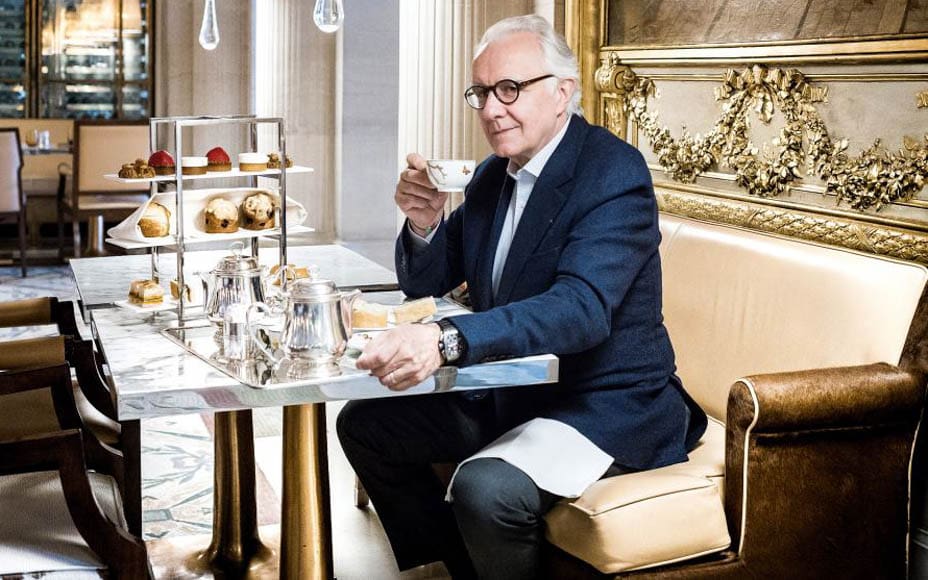
How did Alain Ducasse build this fortune?
The answer unfolds through the career, earnings, deals and assets behind the headline estimate.
Before the fame
The background and early turning points that shaped Alain Ducasse’s route to prominence.
Alain Ducasse is a French-born Monégasque chef and hospitality entrepreneur whose business extends far beyond a single celebrated dining room. He has developed restaurants at several price levels, culinary schools, publishing, chocolate and coffee manufacturing, and hotel partnerships across multiple countries. That breadth distinguishes his finances from those of a salaried executive chef. The Ducasse Paris official biography describes the philosophy and international organisation attached to his name; it does not disclose his private balance sheet, so this profile values only identifiable operating interests.
Born in 1956 on a farm in the Landes region, Ducasse entered hospitality school and trained in demanding French kitchens rather than inheriting an established restaurant empire. He worked with Michel Guérard, Gaston Lenôtre, Roger Vergé at Moulin de Mougins and Alain Chapel. Those posts exposed him to Provençal ingredients, pastry, disciplined brigade systems and the economics of destination dining. Encyclopaedia Britannica’s Alain Ducasse biography records the sequence and also notes the 1984 plane crash he survived, after which he rebuilt both his health and career.
The breakthrough years
The career decisions and defining moments that turned recognition into sustained earning power.
Ducasse’s decisive opportunity came at Monaco’s Hôtel de Paris, where he took charge of Le Louis XV in 1987 with a contractual objective of earning three Michelin stars. The restaurant achieved that distinction within three years. This breakthrough provided something more commercially useful than an award: it connected Ducasse’s culinary identity with luxury-hotel ownership, international clients and management arrangements. Monte-Carlo Société des Bains de Mer’s Le Louis XV page confirms the continuing partnership and the restaurant’s place within the Hôtel de Paris.

What the work can earn
Reported pay, contracts, royalties and performance income reveal how the fortune was funded.
Ducasse became the first chef to have three restaurants holding three Michelin stars simultaneously, with flagship operations in Monaco, Paris and London. He also moved into more accessible concepts such as Benoit and Spoon, demonstrating that the business was not dependent on one tasting-menu format. The Michelin Guide’s Alain Ducasse profile documents his extraordinary star history. Stars amplify demand and negotiating power but belong to restaurants and guide editions; HMW does not assign a cash value to the accolade itself.
Restaurant management fees, profit shares, licensing, consulting and ownership interests are the main sources. Luxury-hotel restaurants often involve the hotel funding premises and staff while the chef’s organisation supplies concept, standards and reputation under a negotiated agreement. Independently operated venues may offer more upside but also carry rent, payroll and working-capital risk. Publishing and education add diversified income. Dorchester Collection’s Ducasse restaurant archive illustrates the long relationship between his organisation and leading hotels, although former venues are not counted as current assets.

The business beyond the main career
Endorsements, ownership interests and investments can keep compounding long after the initial breakthrough.
Ducasse Édition has issued professional and consumer culinary books, while the chef has participated in branded events and consulting projects. His food-manufacturing expansion is more tangible: Le Chocolat Alain Ducasse makes chocolate from beans in its Paris manufacture, and Le Café Alain Ducasse roasts coffee. Le Chocolat Alain Ducasse’s manufacture page explains the bean-to-bar operation, and Le Café Alain Ducasse’s official manufacture page documents the related coffee business. Revenue and margins are private, so both receive conservative values.
Ducasse Paris is the central enterprise connecting restaurants, consulting, manufacturing and publishing. In 2020, investment group Mirabaud Patrimoine Vivant acquired a minority interest to support development, a transaction that confirms outside institutional value without revealing enough detail to calculate Ducasse’s exact holding. Mirabaud’s announcement of its Ducasse Paris investment describes the stake as minority. HMW therefore treats the group as valuable private equity but does not invent a deal price or assume the founder still owns every concept outright.
Notable luxury item
A reported property or major asset offers a tangible glimpse of the wealth behind the public estimate.
The visible operating footprint includes intellectual property, restaurant interests, schools and manufacturing, but many premises belong to hotel or property partners. Gross sales across branded venues would greatly overstate personal wealth because they fund ingredients, hundreds of employees, occupancy, equipment and partner returns. Monaco residence and citizenship may affect taxation, yet private tax records, securities, property, debt and succession arrangements are unavailable. Ducasse Paris’s activities overview is used to identify business lines, not to assign the chef assets that the group merely manages.
Alain Ducasse’s estimated net worth
Public estimates vary because private contracts, investments, taxes and liabilities are not fully disclosed.
How this estimate is calculated
The model estimates that Ducasse’s attributable cumulative compensation and distributions from restaurants, management, consulting, publishing and education have totalled $55 million to $85 million before personal tax and consumption. Chocolate, coffee and other manufactured products add an estimated $8 million to $18 million of attributable earnings or retained value. After deductions for tax, reinvestment and spending, the model allows $30 million to $50 million in accumulated liquid assets. It then assigns $45 million to $85 million to his remaining private-company interests, intellectual property and property, before subtracting $15 million to $30 million for minority investors, liabilities, overlap and illiquidity. This produces a defensible range around $65 million to $105 million, with the conclusion placed near its centre.
The Ducasse name functions internationally in hotels, books, education and manufactured food. Unlike a chef whose visibility depends mainly on television, his authority is reinforced by operating venues and training professionals. École Ducasse offers programmes for career chefs and enthusiasts, creating tuition revenue and a pipeline into the wider organisation. École Ducasse’s official history identifies the school’s founding by Ducasse and its educational mission. The precise economics depend on corporate ownership and partnership terms, which are not fully public.
Ducasse’s international platform and outside investor offer strong evidence of enterprise value, but consolidated accounts and ownership percentages are not readily available. Restaurant openings and Michelin recognition establish commercial endurance, while closure of past concepts warns against valuing every historical venue as permanent. The Alain Ducasse restaurant directory provides a current operating cross-check. The estimate excludes charity resources, hotel-owned real estate and the full sales of partner venues, and applies a private-company discount because the stake cannot be priced like listed shares.