 How Much Are They Worth?
Celebrity fortunes, explained
How Much Are They Worth?
Celebrity fortunes, explained

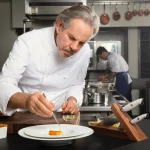



Alberto Landgraf (Brazil) – Oteque
Net worth revealed after 6 slides
Begin the countdown ↓How did Alberto Landgraf (Brazil) – Oteque build this fortune?
The answer unfolds through the career, earnings, deals and assets behind the headline estimate.
Before the fame
The background and early turning points that shaped Alberto Landgraf (Brazil) – Oteque’s route to prominence.
Alberto Landgraf was born in Cornélio Procópio, a small town in the Brazilian state of Paraná, into a family of German and Japanese descent, according to a biography published by Reporter Gourmet. That dual heritage would later become the defining thread of his cooking, with critics repeatedly pointing to the way he layers Japanese restraint and precision onto Brazilian ingredients. He did not set out to become a chef. Landgraf initially trained in physics, and it was only after he relocated to London in the early 2000s, ostensibly to study English, that he found his way into professional kitchens, a detour that changed the course of his career entirely, the same profile notes.
Once in London, Landgraf immersed himself in the city’s fine-dining scene, training at Westminster Kingsway College and working in the kitchens of Gordon Ramsay and Tom Aikens, two of the most demanding names in British haute cuisine at the time, according to FOUR Magazine. He also spent time working with the French chef Pierre Gagnaire, broadening his technical grounding beyond the British kitchens where he started. Landgraf returned to Brazil in 2006 carrying that European training with him, and two years later, in 2008, he opened his first restaurant, Epice, in São Paulo, betting that the precision he had learned abroad could be applied to Brazilian ingredients back home.
The breakthrough years
The career decisions and defining moments that turned recognition into sustained earning power.
Epice quickly established Landgraf as one of Brazil’s most closely watched young chefs, earning a Michelin star and being named a “South American rising star” by FOUR Magazine, cementing his reputation years before Oteque existed. He ran Epice for seven years before closing it in 2015, a decision that came during a period when he was also processing the death of his mother, according to the same FOUR Magazine profile. Landgraf stepped back from the industry to regroup rather than immediately opening something new, and it was three years later, in 2018, that he opened Oteque in Rio de Janeiro, a considerably more personal restaurant built around his Japanese heritage and a stripped-back philosophy of “simplicity and technical precision rather than ingredients,” as described in a profile by Culture Trip.

What the work can earn
Reported pay, contracts, royalties and performance income reveal how the fortune was funded.
Oteque’s rise was fast by Michelin standards. The restaurant earned its first star not long after opening, and by 2020 it had been awarded a second Michelin star as part of that year’s Rio de Janeiro and São Paulo selection, according to the Michelin Guide’s own announcement, making Landgraf one of a small handful of Brazilian chefs to hold two stars at once. Oteque has also placed consistently on the global rankings that matter most in fine dining, landing at number 37 on the World’s 50 Best Restaurants list in 2024 and ranking 38th on Latin America’s 50 Best Restaurants in 2025, keeping the restaurant inside the region’s top tier for several years running rather than as a one-off entry.
Landgraf’s profile has grown well beyond Brazil’s borders through international press coverage and guest appearances rather than any single breakout media moment. He has been profiled by outlets including Tatler Asia, FOUR Magazine and Culture Trip, and has appeared as a speaker at industry gatherings such as the Food on the Edge symposium in Ireland and the European Food Summit. In August 2023 he took his cooking abroad for a high-profile residency, taking over the Sabayon kitchen at EQ Kuala Lumpur for two weeks to present a menu fusing Brazilian ingredients with Japanese technique to a Southeast Asian audience, according to Tatler Asia. The residency was covered widely across Malaysian and Singaporean lifestyle press, extending his recognition into a region where Oteque itself has no physical presence.

The business beyond the main career
Endorsements, ownership interests and investments can keep compounding long after the initial breakthrough.
Landgraf keeps a noticeably lower commercial profile than many chefs with comparable Michelin standing, and no major long-term brand endorsement or sponsorship deal turns up in available reporting. What functions closest to a commercial partnership in his career is guest chef work, most visibly the paid residency at EQ Kuala Lumpur’s Sabayon restaurant in 2023, where the hotel built an entire marketing push around his two-week takeover, as covered by The Edge Malaysia. These appearances function more as reputational cross-promotion between his restaurant and an international hospitality partner than as a conventional product endorsement, and there is no public record of him lending his name to a packaged food line, cookware brand or spirits label in the way some peer chefs have.
Unlike many chefs of his stature, Landgraf has not built a restaurant group. His commercial footprint centers on Oteque itself, run as a single, tightly controlled dining room rather than a multi-location brand, following the earlier, now-closed Epice in São Paulo. His main venture beyond the restaurant is publishing: in 2026, Phaidon released his debut chef monograph, “Oteque: Ideas, Principles, Recipes, Stories and Connections,” featuring essays by food writer Andrea Petrini alongside recipes and photography documenting the restaurant, according to Phaidon’s own announcement. The book is notable for a detail that doubles as a business collaboration in its own right: working with the sustainability consultancy Reach Eat, Landgraf calculated and published the carbon footprint of all 78 dishes in the book, a step The Upcoming reported as a world first for a chef cookbook.
Notable luxury item
A reported property or major asset offers a tangible glimpse of the wealth behind the public estimate.
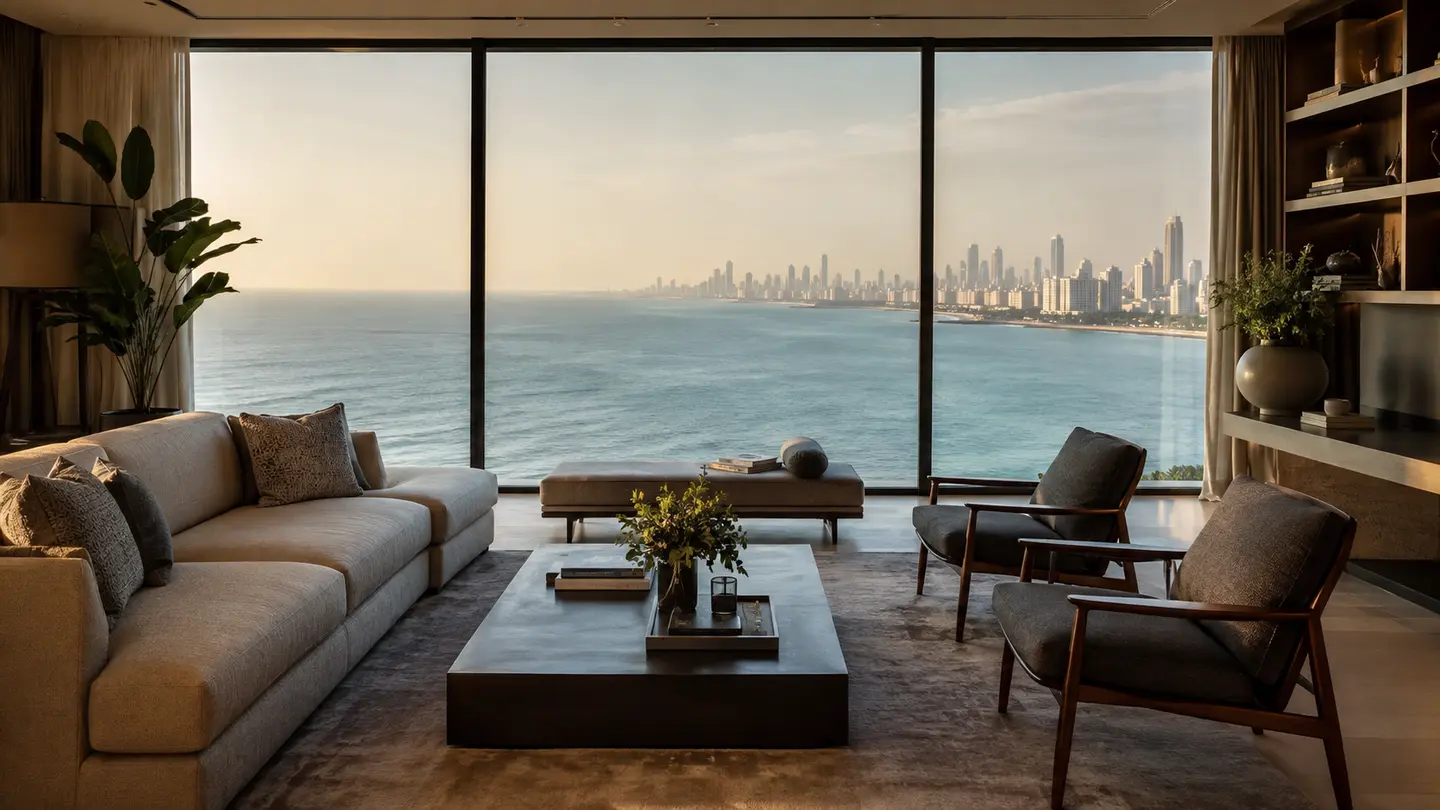
There is no reliable public record of personal real estate or other major assets held by Landgraf outside his restaurant business. What is documented is the property Oteque itself occupies: a house built in 1938 in Rio de Janeiro’s Botafogo neighborhood, which Landgraf had painstakingly refurbished into the restaurant’s current form, an open-plan kitchen and dining room built around exposed brick, a handful of tables and a separate six-seat chef’s counter, according to Brazil City Guides. That renovation represents a meaningful, self-directed investment in a single physical space, but whether Landgraf owns the building outright or operates it under a commercial lease has not been disclosed, and no filings or reporting establish it as a personal asset separate from the restaurant business itself.
Alberto Landgraf (Brazil) – Oteque’s estimated net worth
Public estimates vary because private contracts, investments, taxes and liabilities are not fully disclosed.
How this estimate is calculated
Alberto Landgraf does not publicly disclose his personal finances, and Oteque, as a privately held single-location restaurant, does not publish revenue or profit figures. No celebrity net worth aggregator site appears to carry a published estimate for him, so this figure is built from indirect business signals rather than adjusted from an existing public number. Those signals include roughly two decades of running high-end restaurants since Epice opened in 2008, sole ownership and self-funded renovation of Oteque’s building, two Michelin stars held since 2020, consistent placement on both the World’s 50 Best and Latin America’s 50 Best Restaurants rankings, a 2026 Phaidon-published chef monograph, and paid international guest chef residencies such as the 2023 EQ Kuala Lumpur takeover. Working against a higher figure is the fact that Landgraf operates a single small dining room rather than a restaurant group, has no disclosed hospitality-group backing or equity partners the way some peer chefs do, has no major brand endorsement deals, and fine-dining margins on an eight-table restaurant remain modest even at two-Michelin-star pricing. Taken together, these signals point to a chef-owner with solid, single-restaurant wealth built over nearly twenty years at the top of Brazilian fine dining, but well short of the fortunes built by chefs who run multi-restaurant groups or hold major licensing and product deals.
Landgraf has not attached his name to a personal charitable foundation, and no dedicated philanthropic initiative appears in available reporting. His public image instead rests on two related pillars: environmental responsibility and workplace culture. The carbon-footprint data published alongside every recipe in his 2026 Phaidon cookbook reflects a broader commitment to sourcing and sustainability that runs through Oteque’s kitchen, not just the book. On the internal side, Landgraf has spoken about deliberately building a healthier restaurant culture than the one he trained in, prioritizing staff growth opportunities and work-life balance, arguing that how a kitchen treats its own team shapes the dining experience as much as the food does, according to a 2023 interview with Restaurant Online.
No personal scandal or public controversy involving Landgraf turns up in available reporting, and the coverage of both Epice and Oteque has been overwhelmingly focused on the food rather than his conduct. The closest thing to recurring public tension is structural rather than personal: Oteque seats only a small number of diners a night in its converted Botafogo house, and demand driven by two Michelin stars and repeated placement on the World’s 50 Best and Latin America’s 50 Best lists has made reservations difficult to secure, a scarcity dynamic common to small, highly ranked restaurants rather than anything specific to Landgraf’s own reputation. Beyond that, public discussion of Landgraf centers almost entirely on his cooking philosophy and career decisions, such as closing a Michelin-starred restaurant at the height of its success in 2015, rather than on any dispute or misconduct.