 How Much Are They Worth?
Celebrity fortunes, explained
How Much Are They Worth?
Celebrity fortunes, explained


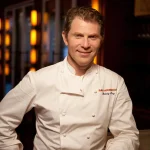
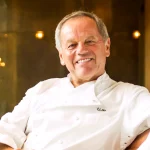
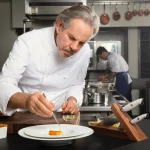



Christian Bau (Germany) – Victor’s Fine Dining
Net worth revealed after 6 slides
Begin the countdown ↓How did Christian Bau (Germany) – Victor’s Fine Dining build this fortune?
The answer unfolds through the career, earnings, deals and assets behind the headline estimate.
Before the fame
The background and early turning points that shaped Christian Bau (Germany) – Victor’s Fine Dining’s route to prominence.
Christian Bau was born on January 14, 1971, in Offenburg-Zunsweier, a town in the Baden-Württemberg region of southwestern Germany, according to German Wikipedia’s sourced biography of the chef. He completed his culinary apprenticeship in the nearby town of Achern, entering the trade in a region of Germany already dense with Michelin-starred kitchens and demanding culinary standards. Bau has said his cooking identity was shaped early by the discipline of classical German and French kitchen training rather than by any single formative childhood memory, a grounding that would later let him absorb Japanese technique without abandoning that structure. That combination, precise European fundamentals layered with an openness to outside influence, became the foundation of the style that eventually carried him to three Michelin stars and, according to the The Staff Canteen’s profile of Germany’s three-starred chefs, made him one of the country’s most influential culinary figures of the past two decades.
Bau’s professional training began in 1991 at the Hotel-Restaurant Talmühle in Sasbachwalden under chef Gutbert Fallert, an apprenticeship that instilled a lasting respect for ingredient purity, according to his own account in an Andy Hayler chef interview. After completing military service and a stint at the Le Canard restaurant in Offenburg in 1992, he moved in 1993 to Harald Wohlfahrt’s three-Michelin-starred Schwarzwaldstube in Baiersbronn, joining as sous chef in what was then considered the high temple of German haute cuisine. Bau has described Wohlfahrt as the mentor who raised him to a new level both personally and professionally, particularly in kitchen discipline, precision and staff management, according to German Wikipedia’s sourced biography. He earned his master chef certification in 1997, closing out a formative six years spent almost entirely under two of the country’s most demanding kitchen leaders before striking out to run a kitchen of his own.
The breakthrough years
The career decisions and defining moments that turned recognition into sustained earning power.
In April 1998, at age 27, Bau was brought to Saarland by hotelier Hartmut Ostermann and Susanne Kleehaas, now CEO of Victor’s Residenz-Hotels, to take over as head chef of what was then Victor’s Gourmet-Restaurant Schloss Berg in Perl-Nennig, according to eattravel.de’s account of the hotel’s history. The results were immediate: the restaurant earned its first Michelin star within seven months of Bau taking the kitchen, a second star followed in 1999 when he was just 28, and a third star arrived in 2005, making him the youngest chef in Germany at the time to reach three-star status, per The Staff Canteen. That same year Der Feinschmecker magazine named him Chef of the Year, cementing in a single twelve-month stretch both the critical recognition and the Michelin rating that would define the rest of his career.

What the work can earn
Reported pay, contracts, royalties and performance income reveal how the fortune was funded.
Victor’s Fine Dining by Christian Bau has held three Michelin stars continuously since 2005, one of the longest unbroken three-star tenures of any restaurant in Germany, according to the chef’s own official awards page. Gault Millau awarded the restaurant 19.5 of a possible 20 points and named Bau its Chef of the Year for 2018, and in 2025 the restaurant was ranked second among 1,000 restaurants worldwide on La Liste, the French government-backed global restaurant ranking that aggregates dozens of guides and reader surveys into a single list. Held together, the sustained three-star status, the top domestic critical honors and a top-three global ranking two decades into his tenure place Bau among a small handful of chefs anywhere who have combined that level of longevity with that level of continued relevance.
Bau’s recognition has extended well beyond restaurant criticism into formal national and diplomatic honors. In October 2018 he received Germany’s Federal Cross of Merit (Bundesverdienstkreuz), the country’s highest civilian honor, awarded on the Day of German Unity for his role as a culinary ambassador, according to the Andy Hayler interview and his official awards page. In March 2019 the Japanese government named him a Goodwill Ambassador for Japanese Cuisine, making him the first German and only the third European chef to receive the title, in recognition of his decades of work blending Japanese technique into fine French dining. In April 2023 the Michelin Guide presented him with its Mentor Chef Award at that year’s German ceremony, according to the Michelin Guide’s own coverage of the event, recognizing his record of developing young chefs who have gone on to run kitchens of their own.
The business beyond the main career
Endorsements, ownership interests and investments can keep compounding long after the initial breakthrough.
Bau’s public profile leans toward media and institutional affiliations rather than paid consumer endorsements. He writes a regular column for the national Sunday paper Welt am Sonntag, which reaches roughly a million readers, and maintains a combined social media following above 100,000 across platforms, according to his official awards page. He is a member of the connoisseur associations Les Amis de l’Art de Vivre and Traditions & Qualité, and he sits on the jury for the Walter Scheel Medal, a German honor for cultural and civic achievement, per the same source. His profile on Reporter Gourmet describes his approach to outside partnerships as selective, built around his role as a bridge between French and Japanese culinary culture rather than broad commercial licensing, and no major consumer product endorsement deal for Bau has been publicly reported.
Bau’s primary commercial vehicle remains Victor’s Fine Dining itself, where guests choose between a nine-course “Voyage Culinaire” tasting menu, a personalized “Carte Blanche” surprise menu built around individual preferences, and a signature “Paris-Tokyo” menu built on Japanese kaiseki principles, with tasting menus starting at roughly $325 per person, according to World’s 50 Best Discovery’s profile of the restaurant. He has also built a modest publishing business around his cooking, releasing six books since his 2004 debut “Das Kochbuch: Innovation durch Tradition,” including 2025’s “Einfach Bau: Sterneküche für zu Hause” co-written with his wife Sarah Bau, with a further title, “Paris-Tokyo,” announced for 2026, per his official awards page. Unlike some three-star peers, Bau has not opened a chain of casual restaurants, licensed products or expanded into hotel ownership; his restaurant operates as one outlet within the larger 13-property Victor’s Residenz-Hotels group rather than as an independently owned business, according to the Victor’s Residenz-Hotels group’s own site.
Notable luxury item
A reported property or major asset offers a tangible glimpse of the wealth behind the public estimate.
No outlet has published a verified account of Christian Bau’s personal real estate holdings, and he does not appear to own the restaurant venue that made him famous. Victor’s Residenz-Hotel Schloss Berg, the historic castle property in Perl-Nennig that houses his restaurant, is owned by hotelier Hartmut Ostermann, who also serves as president of third-division football club 1. FC Saarbrücken, while the wider Victor’s Residenz-Hotels group of 13 properties is led by CEO Susanne Kleehaas, according to eattravel.de and the hotel group’s own site. Bau has operated as the group’s head chef and restaurant host since 1998 rather than as a property owner or equity partner in the hotel, meaning his identifiable financial stake sits in his restaurant operation and brand rather than in a personally owned building or a documented property portfolio.
Christian Bau (Germany) – Victor’s Fine Dining’s estimated net worth
Public estimates vary because private contracts, investments, taxes and liabilities are not fully disclosed.
How this estimate is calculated
Christian Bau does not publicly disclose his personal finances, and Victor’s Fine Dining, operated within the privately held Victor’s Residenz-Hotels group rather than as an independent company, does not publish restaurant-level revenue or profit figures. One celebrity biography aggregator, TheCityCeleb, lists an unsourced estimate of roughly five million dollars; that figure should be treated as a secondary, unverified data point rather than a confirmed number. Working in favor of a solid mid-range estimate: Bau has held three Michelin stars for two decades, commands tasting menu pricing above 300 euros per person, has published six books, earns income from a national newspaper column, and holds a formal diplomatic title tied to Japanese cuisine. Working against a higher figure: he does not own the restaurant property or the hotel group itself, has not built the multi-restaurant empire, television deal or product licensing business that drives the largest chef fortunes, and fine-dining margins remain thin even for restaurants with sustained global recognition. Taken together, these signals point to a chef with substantial, career-built wealth concentrated in salary, book royalties and media income rather than restaurant ownership or equity.
Bau has not attached his name to a dedicated personal charitable foundation, and public coverage of his image centers instead on mentorship and cultural diplomacy rather than fundraising. His 2023 Michelin Mentor Chef Award specifically recognized his record of training young cooks who went on to lead their own kitchens, described by the Michelin Guide as reflecting the “passion” he brings to developing emerging talent. His role as Japan’s Goodwill Ambassador for Japanese Cuisine, held since 2019, functions as an ongoing cultural bridge-building position rather than a one-off honor, and he continues to represent that relationship at events tied to Japanese gastronomy in Germany, according to the Andy Hayler interview. Combined with the Federal Cross of Merit he received in 2018 for service as a “culinary ambassador,” Bau’s public identity is built substantially around representing German and Japanese food culture on a national and diplomatic stage rather than around a personal brand of celebrity in the American sense.
Christian Bau has not been tied to any personal scandal, and the scrutiny his restaurant attracts is almost entirely about price and portioning rather than conduct. A detailed 2025 review by Travels for Stars scored the meal 19 out of 20 and praised the Japanese-inspired half of the tasting menu as “bursting with flavors, yet still balanced,” but flagged several dishes, including the agnolotti, lobster mousseline and turbot, as overly salty, and described the French half of the menu as “a small step down” from the Japanese courses. The same review noted the tasting menu runs roughly 345 euros with wine pairings adding another 175 to 250 euros, and questioned whether the restaurant’s extensive à la carte list, kept mainly for regular guests, represents good value for occasional visitors given how little of it gets ordered. That gap between critical acclaim and price-value grumbling is typical of ultra-high-end dining rather than a sign of any deeper reputational issue for Bau himself.