
 How Much Are They Worth?
Celebrity fortunes, explained
How Much Are They Worth?
Celebrity fortunes, explained







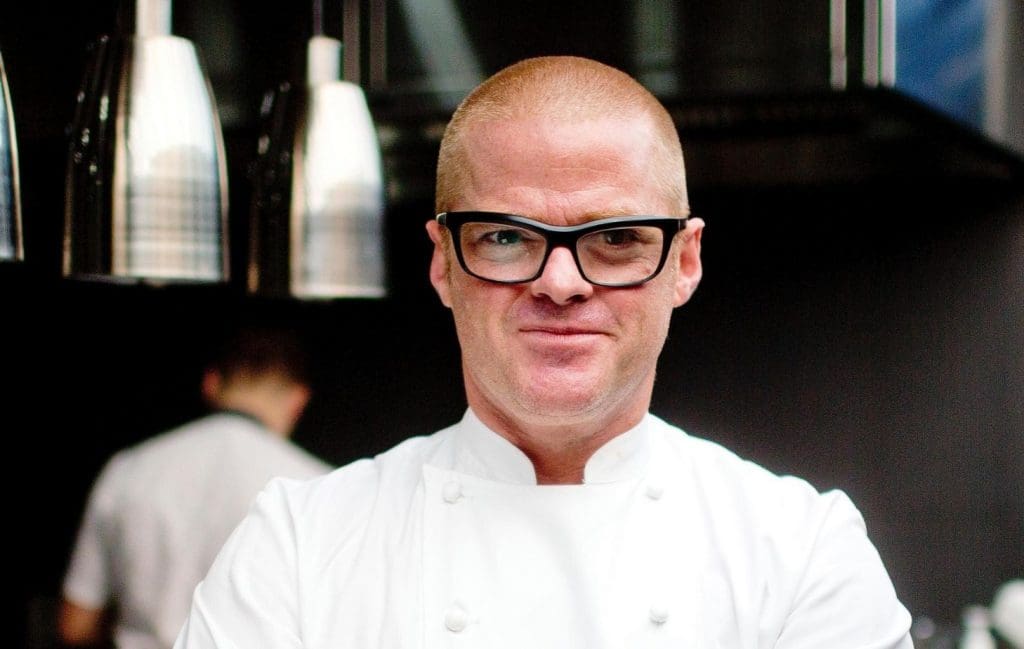
Heston Blumenthal (UK) – The Fat Duck
Net worth revealed after 6 slides
Begin the countdown ↓
How did Heston Blumenthal (UK) – The Fat Duck build this fortune?
The answer unfolds through the career, earnings, deals and assets behind the headline estimate.
Before the fame
The background and early turning points that shaped Heston Blumenthal (UK) – The Fat Duck’s route to prominence.
Heston Blumenthal is a British chef and restaurateur known for treating perception, memory and science as ingredients. His financial position comes from a tightly held restaurant group, television, books, supermarket products and intellectual property built around The Fat Duck. Unlike a chef with dozens of franchises, Blumenthal’s core operations are concentrated and costly, which limits the usefulness of fame-based estimates. The Fat Duck’s official Heston Blumenthal profile explains his self-taught development and experimental approach, providing a subject-specific foundation for the business analysis.
Blumenthal became fascinated by cooking after a family visit to the three-star L’Oustau de Baumanière in Provence. He worked in several non-culinary jobs while teaching himself through books, experiments and short periods observing professional kitchens. In 1995, aged 29, he bought a run-down pub called The Ringers in Bray and reopened it as The Fat Duck, initially with only a dishwasher assisting him. The Guardian’s history of The Fat Duck records the purchase, early bistro menu and severe financial pressure, including the restaurant’s proximity to bankruptcy.
The breakthrough years
The career decisions and defining moments that turned recognition into sustained earning power.
The Fat Duck earned its first Michelin star in 1999, a second in 2001 and a third in 2004. Blumenthal’s dishes—snail porridge, bacon-and-egg ice cream and the sound-enhanced “Sound of the Sea”—made the dining room internationally distinctive rather than merely luxurious. In 2005 it ranked first on The World’s 50 Best Restaurants list. The World’s 50 Best Restaurants’ Fat Duck profile confirms the restaurant’s historical status. Recognition drove bookings and media opportunities, but it did not remove the high labour and research costs.

What the work can earn
Reported pay, contracts, royalties and performance income reveal how the fortune was funded.
Blumenthal added The Hind’s Head in Bray and opened Dinner by Heston Blumenthal at Mandarin Oriental Hyde Park in 2011, where historic British recipes inspired dishes such as Meat Fruit. He also developed airport and international concepts. The Michelin Guide’s Hind’s Head listing verifies the pub’s continuing recognised operation, and Mandarin Oriental’s Dinner by Heston Dubai page documents the international hotel partnership. Partner-operated restaurants are valued through attributable fees or interests, not total hotel revenue.
Restaurant operating profit, hotel partnerships, television production and presenting, books, endorsements and product royalties form the main income mix. A rare public data point appeared in 2012, when company accounts showed that SL6 paid a £750,000 dividend to Blumenthal and other family members. The Evening Standard’s report on the SL6 dividend also noted income from Dinner and Waitrose-related work. The payment belonged to several recipients and one year, so it is not multiplied indiscriminately across the career.

The business beyond the main career
Endorsements, ownership interests and investments can keep compounding long after the initial breakthrough.
Blumenthal’s long Waitrose relationship put his recipes and name on supermarket products, most famously a hidden-orange Christmas pudding that repeatedly sold out. This type of arrangement can generate development fees, advertising compensation and royalties at a much larger unit volume than fine dining. Waitrose’s Heston product range confirms the continuing branded line. The retailer does not disclose royalty terms, so the estimate recognises a meaningful commercial stream without claiming ownership of retail sales.
SL6 Limited has been the holding company associated with The Fat Duck group and its commercial income. The restaurants’ value includes brands, recipes, reservation demand, staff systems and property interests, but founder dependence and recent trading pressure reduce the appropriate multiple. A 2026 investment by Como Group reportedly gave it a controlling position in SL6. The Times’ report on Como Group’s Fat Duck investment cited group revenue of £8.9 million and a £2.1 million pre-tax loss. HMW therefore does not assume Blumenthal retains control or all enterprise value.

Notable luxury item
A reported property or major asset offers a tangible glimpse of the wealth behind the public estimate.
Restaurant property in Bray, trademarks and personal investments may be valuable, but company charges, mortgages, minority rights and the terms of the Como transaction are not fully public. The Fat Duck’s tasting price demonstrates premium demand but only a small number of covers can be served, supported by a large team. The Fat Duck’s official restaurant page documents the current experience and booking structure. Charitable activities, awards and honorary academic positions are excluded from personal assets.
Heston Blumenthal (UK) – The Fat Duck’s estimated net worth
Public estimates vary because private contracts, investments, taxes and liabilities are not fully disclosed.
How this estimate is calculated
The calculation assigns £15 million to £24 million of cumulative pre-tax personal compensation and distributions from restaurants, television, books, Waitrose and other commercial work. After tax, reinvestment and spending, roughly £7 million to £13 million may have been retained. Property, trademarks, cash, investments and any continuing stake in restaurant operations add an estimated £8 million to £15 million, while £3 million to £7 million is deducted for debt, partner interests, illiquidity and recent business weakness. The resulting £12 million to £21 million range converts to roughly $16 million to $28 million at contemporary exchange rates. The conclusion sits near the middle and is materially below estimates that capitalise fame without considering disclosed operating losses.
Television substantially widened Blumenthal’s audience. Series including Heston’s Feasts, In Search of Perfection, Heston’s Fantastical Food and Heston’s Great British Food translated laboratory-style cooking into entertainment. His books provided a parallel publishing stream and reinforced the intellectual property around specific techniques. Channel 4’s Heston Blumenthal programme archive records his relationship with the broadcaster. Fees are private, so screen work is estimated from duration and volume rather than assigned a celebrity rate without evidence.
This estimate has more downside evidence than a typical celebrity-chef calculation. Historical television and Waitrose work generated substantial income, while the 2012 dividend proves the group once distributed cash. Recent reported losses and outside control show that restaurant prestige does not guarantee current profitability. The precise sale consideration, retained stake and personal liabilities remain unknown. The model separates Blumenthal’s accumulated career wealth from the present value of SL6 and does not treat revenue as profit or a strategic investor’s capital as money paid directly to him.