
 How Much Are They Worth?
Celebrity fortunes, explained
How Much Are They Worth?
Celebrity fortunes, explained










How did Martha Stewart build this fortune?
The answer unfolds through the career, earnings, deals and assets behind the headline estimate.
Before the fame
The background and early turning points that shaped Martha Stewart’s route to prominence.
Martha Stewart was born Martha Helen Kostyra on August 3, 1941, in Jersey City, New Jersey, the second of six children of Edward and Martha Kostyra, a family of Polish descent. The family soon moved to Nutley, New Jersey, where her father, a pharmaceutical salesman, and her mother, a schoolteacher, taught her to cook, garden, sew, and can preserves — skills she has credited as the foundation of her later career. Stewart began modeling as a teenager to help support the household, appearing in local advertisements and runway shows, and graduated from Nutley High School before enrolling at Barnard College in New York, where she studied art history and architectural history and continued modeling to help pay tuition. She earned her degree in 1963.
In 1961, while still a student, she married Yale law student Andrew Stewart after a year of dating; the couple’s only child, daughter Alexis Stewart, was born in 1965. Martha Stewart worked briefly as a stockbroker in the late 1960s before the family moved to Westport, Connecticut, where she and Andrew restored a run-down 1805 farmhouse on Turkey Hill Road — the property that later gave its name to her Turkey Hill lifestyle brand. Andrew and Martha Stewart separated in 1987 and divorced in 1990; the two have remained largely estranged since, and Stewart has spoken publicly about the divorce as one of the most painful periods of her life. She has not remarried.
After leaving her Wall Street career amid a 1973 market downturn, Stewart turned her attention to the Turkey Hill farmhouse renovation and began hosting small dinner parties and cooking classes from her home, building a word-of-mouth reputation among Westport’s social circle. In 1976 she and business partner Norma Collier founded a catering company run out of the farmhouse basement, which grew rapidly and became one of the most sought-after catering operations in Fairfield County, serving high-profile clients and events; the partnership with Collier later dissolved amid disputes over Stewart’s demanding management style.
The catering business became the springboard for Stewart’s publishing career. In 1982, she released her first book, “Entertaining,” co-written with Elizabeth Hawes and drawing directly on her catering experience and personal aesthetic; the book was a surprise bestseller and established the template — polished, aspirational, instructional — that would define her brand for decades. A string of further books followed through the 1980s covering cooking, weddings, and home keeping, alongside a consulting relationship with Kmart that gave her products national retail distribution and a growing media profile, including a column and eventually a namesake magazine.
The breakthrough years
The career decisions and defining moments that turned recognition into sustained earning power.
In 1990, Stewart launched Martha Stewart Living magazine with Time Publishing Ventures, followed by a syndicated television show of the same name in 1993, and in 1997 she bought back the rights to her media properties from Time Inc. to found Martha Stewart Living Omnimedia (MSLO), which expanded into books, a second television show, a radio presence, and a retail products line. MSLO went public on the New York Stock Exchange on October 19, 1999; shares priced at $18 surged to as high as $38 on the first day of trading, briefly valuing the company at roughly $1.8 billion and Stewart’s own majority stake at over $1 billion, making her, by most press accounts at the time, the first self-made female billionaire in the United States.
Stewart’s career was upended in 2004 when she was convicted of conspiracy, obstruction of justice, and making false statements to federal investigators regarding her December 2001 sale of ImClone Systems stock — she was never charged with insider trading itself, but with lying about the circumstances of the trade. She was sentenced on July 16, 2004 to five months in federal prison plus five months of home confinement, a $30,000 fine, and two years of probation, and served her sentence at the minimum-security Alderson Federal Prison Camp in West Virginia from October 2004 to March 2005. MSLO’s stock and revenue fell sharply during the investigation and her incarceration, and she stepped down as chairman and CEO before the trial, though she remained the company’s controlling shareholder and chief creative force.
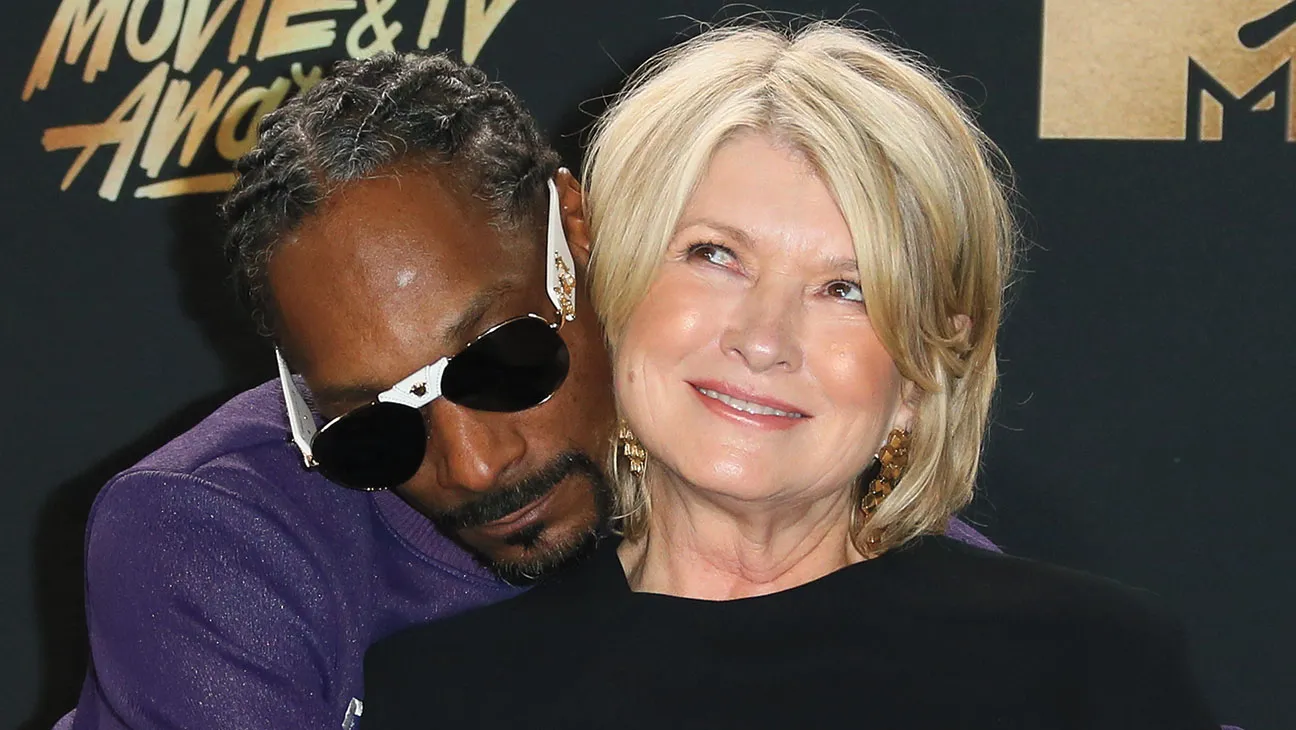
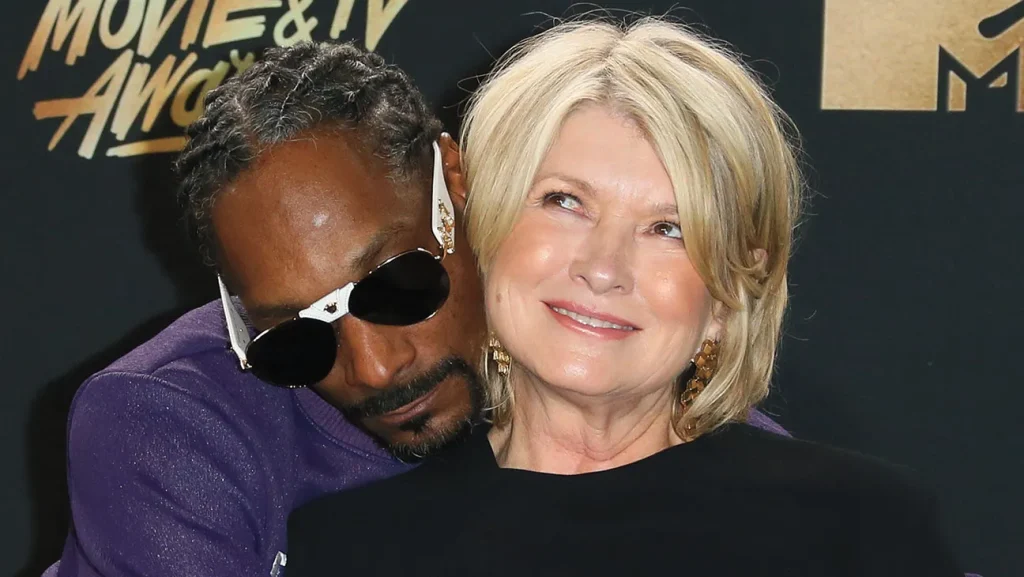
Stewart rebuilt her public image quickly after her release, relaunching “The Martha Stewart Show” in syndication in 2005, appearing as a boardroom advisor on “The Apprentice: Martha Stewart” the same year, and later co-hosting the VH1 competition series “Martha & Snoop’s Potluck Dinner Party” (2016-2017) alongside Snoop Dogg, a pairing that reframed her image for a younger, more irreverent audience and became one of the most widely discussed rebrands of her later career. She has since appeared as a judge on Food Network’s “Bake in the American Pie” and other cooking competitions, published dozens of additional books, and in 2023, at age 81, became the oldest cover model in the history of the Sports Illustrated Swimsuit Issue. In October 2024, Netflix released “Martha,” a feature documentary directed by R.J. Cutler chronicling her life and career using extensive archival material and new interviews, which drew strong reviews and renewed mainstream attention to her story.

What the work can earn
Reported pay, contracts, royalties and performance income reveal how the fortune was funded.
Stewart’s income today is drawn from a wide mix of sources rather than a single employer paycheck: television hosting and production fees, book advances and royalties across a catalogue approaching 100 titles, licensing royalties from the Martha Stewart brand now owned by Marquee Brands, equity and consulting income from Martha & Marley Spoon, endorsement fees from partners such as Skechers, and appearance and speaking fees. None of these individual streams is publicly broken out on an annual basis, and because Stewart no longer owns or controls the Martha Stewart brand outright — having sold her media company in stages between 2015 and 2019 — her current income looks structurally different from the operating-company profits she once collected as MSLO’s controlling shareholder. As with most celebrity net-worth estimates, any single annual figure should be read as a rough approximation rather than a confirmed number (see Estimated Net Worth below for a fuller discussion).
Stewart’s most consequential contracts have been the ones that reshaped ownership of her media empire. When Martha Stewart Living Omnimedia went public in 1999, she retained roughly 90 percent of the company’s voting power through a dual-class share structure that kept creative and strategic control firmly in her hands even as outside shareholders bought in. In June 2015, MSLO agreed to be acquired by Sequential Brands Group in a stock-and-cash deal valuing the company at approximately $353 million, with Stewart becoming a significant shareholder of the combined company and joining its board as chief creative officer; the deal closed in December 2015. Sequential Brands, in turn, sold the Martha Stewart and Emeril Lagasse brands to Marquee Brands in June 2019 for a reported $175 million, with additional earnout payments of up to roughly $215 million tied to performance targets — a transaction between two licensing companies that did not by itself represent a personal payout to Stewart of the full sale price.
On the publishing side, Stewart has released close to 100 books since “Entertaining” in 1982, spanning cooking, entertaining, home decorating, gardening, and weddings, under a series of contracts with major publishers including Clarkson Potter and Random House; she announced her 100th book was in progress in 2023. Individual advance figures for her more recent titles are not publicly disclosed, but her decades-long, multi-book relationships with major publishing houses represent a recurring and substantial contributor to her overall income alongside her television and licensing work.

The business beyond the main career
Endorsements, ownership interests and investments can keep compounding long after the initial breakthrough.
Stewart’s most visible current endorsement is a namesake footwear and apparel collection with Skechers, sold primarily through QVC, spanning comfort sneakers, slip-ons, sandals, and boots aimed at her longtime home-shopping audience. She has also maintained a long-running relationship with QVC itself, appearing regularly to sell kitchenware, home goods, and apparel lines under the Martha Stewart name. Earlier in her career, MSLO-era licensing arrangements placed Martha Stewart-branded paint, bedding, and craft lines in Kmart and Martha Stewart Collection home goods in Macy’s, though those particular retail partnerships have since evolved or ended as the brand changed hands. Stewart has also lent her name and voice to shorter-term promotional campaigns tied to her television appearances and public persona, including her widely covered 2023 Sports Illustrated Swimsuit cover, which functioned as a major publicity and brand moment even though it was not a traditional paid endorsement deal.
Since exiting day-to-day ownership of Martha Stewart Living Omnimedia, Stewart has built a second wave of ventures around licensing and partnership deals rather than outright company ownership. Martha & Marley Spoon, a meal-kit subscription service launched in 2017 in partnership with the German-founded Marley Spoon company (then majority-owned by Sequential Brands), uses Stewart’s recipes and likeness and has continued operating as one of her most durable post-MSLO business relationships. In 2019, Stewart partnered with Canadian cannabis producer Canopy Growth as a strategic advisor to help develop a line of CBD-based wellness products — including gummies, oils, and soft gels — a partnership she has publicly credited to her friendship with Snoop Dogg, who holds his own licensing deal with Canopy Growth for the “Leafs by Snoop” cannabis brand. The two later extended their collaboration into wine, launching “Martha’s Chard” and other bottlings with Australian producer 19 Crimes, building on Snoop Dogg’s existing wine partnership with the same label.
It is worth noting that the Martha Stewart brand itself — the trademark, the magazine archive, and much of the merchandising apparatus built during the MSLO era — has been owned by outside licensing companies since 2015 (Sequential Brands, then Marquee Brands from 2019 onward), meaning Stewart today functions primarily as a paid brand ambassador, content partner, and equity or royalty participant in these ventures rather than as the outright owner of the businesses that carry her name.

Notable luxury item
A reported property or major asset offers a tangible glimpse of the wealth behind the public estimate.
Stewart’s best-known and most extensively documented property is Cantitoe Corners, her roughly 153-acre farm estate in Bedford (Katonah), New York, assembled gradually since 2000 through a series of adjoining land purchases reported at $1.6 million, $1.1 million, and $10.5 million for various parcels. The estate includes five separate residences — among them a 1925 Federal-style main house, an 18th-century farmhouse, and several older cottages — along with stables, greenhouses, gardens, orchards, ponds, and equestrian facilities that Stewart has used extensively as backdrops for her television shows, magazine features, and social media content. She has described the property, developed over more than two decades, as a lifelong personal project rather than a simple residence.
Beyond Bedford, Stewart has owned additional residential property over the years, including a Manhattan apartment and, earlier in her career, an oceanfront estate in East Hampton known as Lily Pond and a Maine island retreat called Skylands, a former Edsel Ford summer estate she purchased in 1997; the current disposition of some of these earlier properties is not consistently confirmed in recent reporting. Her Bedford farm remains the centerpiece of her public real estate profile and a recurring subject of her media output.
Martha Stewart’s estimated net worth
Public estimates vary because private contracts, investments, taxes and liabilities are not fully disclosed.
How this estimate is calculated
This range reflects a synthesis of public reporting on Stewart’s television and publishing income, her historical MSLO shareholding and the subsequent 2015 and 2019 sales of the brand, her Martha & Marley Spoon and Canopy Growth partnerships, her Skechers/QVC endorsement, and her Bedford, New York real estate, rather than any single confirmed figure. Aggregator site Celebrity Net Worth lists a commonly cited $400 million estimate, which sits within this range and is treated here as one secondary data point among several rather than as an authoritative figure, since aggregator sites do not have access to Stewart’s actual financial records, tax filings, or the private terms of her licensing and equity arrangements.
It is also important to distinguish between the sale prices attached to Stewart’s former company and her actual personal net worth. The $353 million valuation placed on Martha Stewart Living Omnimedia in its 2015 sale to Sequential Brands, and the roughly $175 million (up to $215 million with earnouts) Sequential later received for the Martha Stewart brand from Marquee Brands in 2019, were transaction values for entire companies and brand portfolios, not disclosed personal payouts to Stewart herself; as a major but not sole shareholder in each transaction, her actual proceeds would represent a portion of those totals rather than the full amount. Her wealth also declined substantially from its 1999 peak, when her MSLO stake was briefly valued above $1 billion, following the stock’s collapse during and after her 2004 conviction — a reminder that celebrity net worth figures tied to public company shares can be highly volatile and are not a permanent state. Her current fortune reflects a rebuilt, more diversified income base of licensing, television, publishing, and partnership deals accumulated in the two decades since her release from prison, rather than a continuation of her pre-2004 corporate wealth.
| 1976 | Co-founds catering business The Uncatered Affair from her Westport, Connecticut farmhouse |
| 1982 | Publishes her first book, “Entertaining,” launching her publishing career |
| 1997 | Buys back her media properties from Time Inc. to found Martha Stewart Living Omnimedia |
| 1999 | MSLO goes public on the NYSE; her majority stake is briefly valued at over $1 billion |
| 2004 | Convicted of conspiracy, obstruction and false statements in the ImClone stock case; steps down as chairman and CEO |
| 2005 | Released from federal prison; relaunches “The Martha Stewart Show” and rebuilds her media presence |
| 2015 | MSLO acquired by Sequential Brands Group in a deal valuing the company at roughly $353 million |
| 2016 | Co-hosts “Martha & Snoop’s Potluck Dinner Party” with Snoop Dogg, reintroducing her to a younger audience |
| 2019 | Sequential Brands sells the Martha Stewart brand to Marquee Brands for a reported $175 million; launches CBD line with Canopy Growth |
| 2023 | Becomes the oldest cover model in Sports Illustrated Swimsuit Issue history at age 81 |
| 2024 | Netflix releases “Martha,” a documentary chronicling her life and career, to strong reviews |
| 2026 | Continues Skechers footwear line via QVC and Martha & Marley Spoon meal-kit partnership (see Estimated Net Worth below for current figures) |
Among lifestyle and media entrepreneurs, Stewart’s estimated fortune places her in a similar range to fellow television-and-licensing figures such as Rachael Ray and Ina Garten, whose wealth also blends television hosting fees with cookbook royalties and product licensing, though none of them experienced the dramatic billion-dollar peak and subsequent decline that defined Stewart’s public financial story. She trails media-and-merchandising peers with larger current operating businesses, such as Oprah Winfrey, and sits below fellow celebrity-chef entrepreneurs like Wolfgang Puck, who has retained direct ownership of a larger restaurant and product empire. Stewart’s trajectory is most useful as a case study in how a celebrity fortune can survive both a criminal conviction and the sale of the underlying company that built it: her net worth today reflects licensing, media, and partnership income built on top of the Martha Stewart name rather than ownership of the original operating company that made her famous.
Sources and references
- Forbes — “Martha Stewart Is Selling Her Empire For $353 Million” (2015)
- PR Newswire — “Marquee Brands Acquires Martha Stewart and Emeril Lagasse Brands” (2019)
- Forbes — “Martha Stewart Brand Finds A Buyer, But Even At Cheaper Price, There’s No Guarantee Deal Pays Off” (2019)
- Celebrity Net Worth — Martha Stewart Net Worth
- Wikipedia — Martha Stewart
- Wikipedia — Martha Stewart Living Omnimedia
- History.com — “Martha Stewart Is Released From Prison” (2005)
- Forbes — “Martha Stewart On How Snoop Dogg Got Her Into The Cannabis Business” (2019)
- Wine Spectator — “Martha Stewart and 19 Crimes Launch Martha’s Chard”
- Business Wire — “Martha Stewart… Revealed as Sports Illustrated Swimsuit’s 2023 Cover Models”
- Wikipedia — Martha (2024 film)
- Robb Report — “Inside Martha Stewart’s $30 Million Property Portfolio”