
 How Much Are They Worth?
Celebrity fortunes, explained









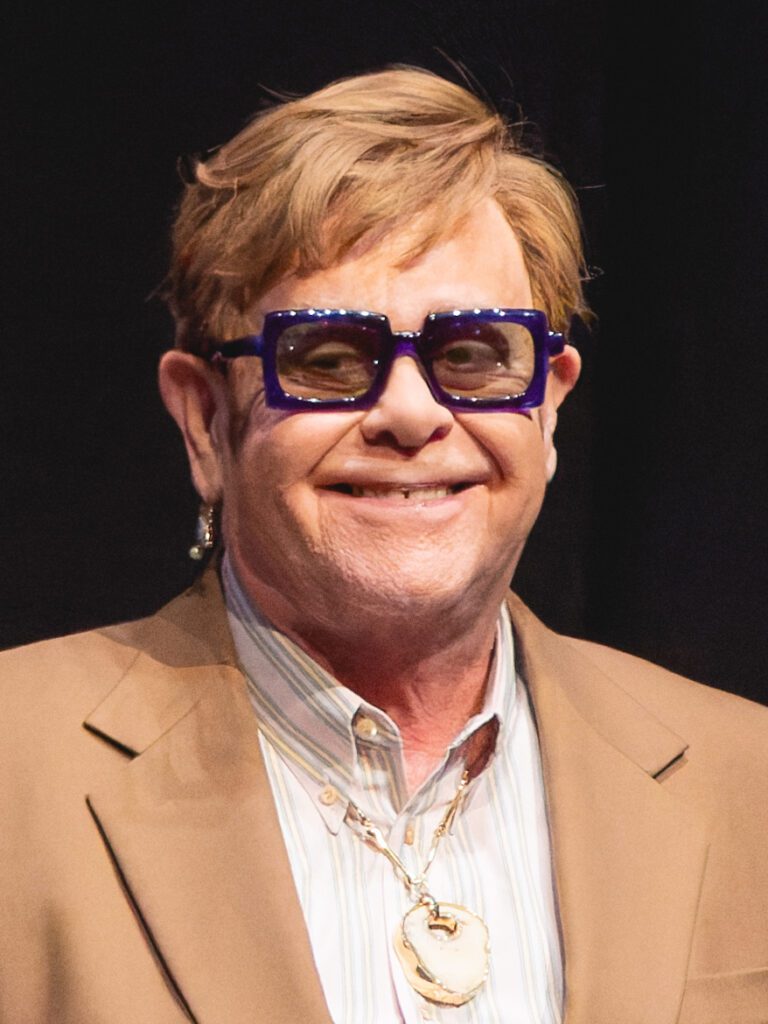
How did Elton John build this fortune?
The answer unfolds through the career, earnings, deals and assets behind the headline estimate.
Elton John before the fame
The background and early turning points that shaped Elton John’s route to prominence.
Reginald Kenneth Dwight was born on 25 March 1947 in Pinner, Middlesex, the only child of an RAF officer and his wife, and won a junior scholarship to the Royal Academy of Music at the age of eleven. He has recorded as Elton John since 1967, and his songwriting partnership with the lyricist Bernie Taupin has now run for more than fifty years without a formal break. His company, Rocket Entertainment, manages his catalogue, his touring and his film and television productions, which makes it the entity through which most of his money moves and the reason so little of it is visible from outside.
He played weekend piano at the Northwood Hills Hotel as a teenager before joining Bluesology, a band that spent the middle 1960s backing visiting American soul acts and later Long John Baldry. In 1967 he answered an advertisement placed by Liberty Records; it produced no record deal, but it put him in contact with Taupin, and the two wrote by post for months before they met. He assembled his stage name from two colleagues of that period, the saxophonist Elton Dean and Baldry himself. His first album, Empty Sky, appeared in 1969 and sold very little.
Elton John’s breakthrough years
The career decisions and defining moments that turned recognition into sustained earning power.
The turn came at the Troubadour in Los Angeles in August 1970, a short residency that American critics received with a warmth his British reception had not prepared him for. “Your Song” reached the American top ten that autumn, and between 1972 and 1975 he placed seven consecutive albums at number one in the United States. That run matters financially more than anything that followed it: the songs that still earn publishing and recording income more than half a century later were, for the most part, written inside a five-year window at the very start of his career.

What Elton John’s work can earn
Reported pay, contracts, royalties and performance income reveal how the fortune was funded.
The Farewell Yellow Brick Road tour is the single best-documented thing in his finances, because Billboard’s Boxscore chart collects reported grosses show by show. It ran from 2018 to its final night on 8 July 2023 and finished with $939.1 million grossed and six million tickets sold across 330 shows – 183 in North America, 101 in Europe and 46 in Australia and Asia. Billboard It was the first tour in Boxscore history to pass both $800 million (Billboard) and $900 million (Billboard), and it made him the highest-grossing solo touring artist in the chart’s near four decades.
He was knighted in 1998 and raised to the Order of the Companions of Honour in the 2020 New Year Honours (Billboard). He holds two Academy Awards for song, for The Lion King in 1995 and for Rocketman in 2020, and in January 2024 an Emmy for Elton John Live: Farewell from Dodger Stadium completed an EGOT, making him one of fewer than twenty people to have won all four (Deadline). The recognition is relevant here mainly because awards of that kind lengthen a catalogue’s commercial life rather than paying anything directly.

Elton John’s business beyond the main career
Endorsements, ownership interests and investments can keep compounding long after the initial breakthrough.
He has taken remarkably little brand work for an artist of his longevity. The conspicuous exception was John Lewis’s 2018 Christmas film “The Boy and the Piano”, built around “Your Song” and a childhood piano (NPR). His fee was reported in the British press at several million pounds and the retailer publicly disputed the numbers attached to the campaign; no contract value has ever been confirmed, so none is stated here. Tour sponsorship on the farewell run was handled at promoter and venue level and was never broken out as income to him.
He founded Rocket Records in 1973, initially to sign other artists, and Rocket Entertainment remains his management and production company. In 2018 Rocket and Universal Music Group signed a global partnership covering recorded music, music publishing, merchandise, brand management and licensing rights, an unusually broad arrangement that bundles rights normally negotiated separately and runs for the rest of his recording career (Billboard; The Hollywood Reporter). On the film side, Elton John: Never Too Late, co-produced by Rocket and Disney Original Documentary, had a limited theatrical release in November 2024 taking about $1.35 million before moving to Disney+ (Disney+).

Elton John’s notable luxury item
A reported property or major asset offers a tangible glimpse of the wealth behind the public estimate.
Woodside, near Old Windsor, has been his principal home since the mid-1970s and houses much of his art and photography collection. The one part of his property that has been itemised in public is what he sold: Christie’s ran The Collection of Sir Elton John: Goodbye Peachtree Road, the contents of his Atlanta apartment, across two live sales and six online sales in February 2024, and more than 900 lots realised $20.5 million, roughly double the pre-sale estimate (NBC News; Galerie). No valuation of anything he kept has ever been published.
Elton John’s estimated net worth
Public estimates vary because private contracts, investments, taxes and liabilities are not fully disclosed.
How this estimate is calculated
The arithmetic. The only published valuation of his own wealth is The Sunday Times Rich List, which placed him at £475 million in its 2025 edition (The Sunday Times Rich List). Test that against the documented flows. The farewell tour grossed $939.1 million (Billboard); if an artist of his standing retains somewhere in the region of 20 to 35 per cent after venue costs, promoter and production shares, commissions and tax in every territory played, that run produced roughly $190 million to $330 million before tax, spread over five years. Add the $20.5 million realised at Christie’s (NBC News), a property and art position with no published valuation, and catalogue and publishing income under the Universal agreement (Billboard) that is almost certainly his largest recurring source and is not broken out anywhere. That retention band is a working assumption rather than a reported figure; real rates vary by deal, by promoter and by territory. The specific difficulty with Elton John is sequencing – a single late-career tour dropped five years of concentrated income onto a fortune that had already been built and largely spent once over, and no public figure separates what the tour added from what was there before it.
Confidence: Partly documented — a published Rich List valuation of his own wealth, sitting on one fully documented tour gross and one itemised auction, with catalogue income entirely unpublished.
Think you know Elton John? Take the quiz: Easy · Medium · Legendary
The Elton John AIDS Foundation was established in 1992 and states that it has raised more than $650 million, funding over 3,100 projects in 102 countries (Elton John AIDS Foundation). It is worth saying plainly that this money is not his and is counted nowhere in this profile: a foundation’s fundraising total is frequently confused with a founder’s wealth, and the two have no relationship. His public standing since the 1990s has rested at least as much on that work as on the records.
The most financially revealing episode of his career was a court case he lost. He sued PricewaterhouseCoopers and Andrew Haydon, former managing director of his old management company, over touring expenses he said should not have been charged to him; after a hearing that ran for 43 days the claim was dismissed in April 2001 (Billboard; Accountancy Age). The proceedings put his spending into open court and left him with costs reported at the time in the millions of pounds. He had separately settled with his former manager before the case reached trial.