
 How Much Are They Worth?
Celebrity fortunes, explained










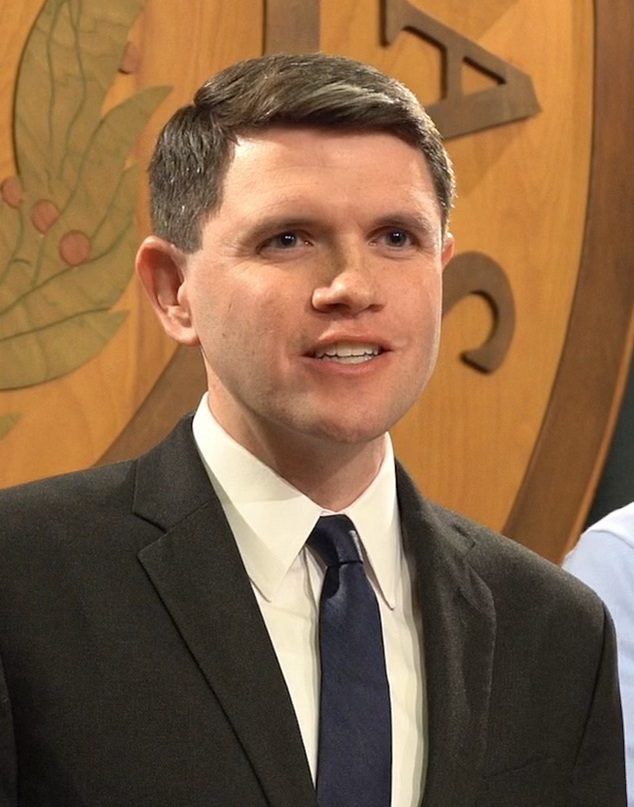
How did James Talarico build this fortune?
The answer unfolds through the career, earnings, deals and assets behind the headline estimate.
James Talarico before the fame
The background and early turning points that shaped James Talarico’s route to prominence.
James Talarico was born on 17 May 1989 and grew up in Round Rock, the suburb north of Austin where his family has roots going back eight generations in Texas. He went through the town’s public schools, Wells Branch Elementary and then McNeil High School, and read government at the University of Texas at Austin. Nothing in that background involves inherited money or a family business, and the financial story in this profile is the unusual one of a major-party United States Senate nominee whose own asset schedule runs to two lines. He is also a Presbyterian seminarian, studying alongside the legislative work.
Talarico joined Teach For America in 2011 and taught sixth-grade English language arts at Rhodes Middle School on the west side of San Antonio, one of the poorest school catchments in the state. After two years in the classroom he became Central Texas executive director of Reasoning Mind, a nonprofit that put computer-based mathematics lessons into schools, and he later took a master’s degree in education policy at Harvard. Texas classroom salaries at the start of that decade began around $27,000 on the state minimum schedule, with urban districts paying into the low forties, and a regional nonprofit directorship in Texas then paid in the high five figures. Our estimate for those seven years is roughly $450,000 in gross pay.
James Talarico’s breakthrough years
The career decisions and defining moments that turned recognition into sustained earning power.
He was elected to the Texas House of Representatives in 2018 at twenty-nine, the youngest member of the 2019 session, taking District 52 in Williamson County and moving to District 50 after the 2021 redistricting. His House biography has carried the same combination since: teacher, seminarian, legislator.
The pay for that office is the striking part. Texas fixes legislators’ compensation in its constitution at $600 a month, $7,200 a year, one of the lowest in the United States, as the Legislative Reference Library sets out; on top of it the Texas Ethics Commission sets a per diem of $221 for each day the legislature sits, in regular and special session alike. Across eight years, four regular sessions of 140 days each and the special sessions called between them, our estimate is about $240,000 in total legislative pay and per diem — $57,600 of it salary and the balance per diem. That is the money the job itself has paid him.

What James Talarico’s work can earn
Reported pay, contracts, royalties and performance income reveal how the fortune was funded.
He was returned to the House in 2020, 2022 and 2024, sat on its education committees, and became one of the most widely watched state legislators in the country through video of committee and floor exchanges. In September 2025 he entered the race for the United States Senate seat in Texas and won the Democratic nomination in the May 2026 primary runoff against a field of better-funded rivals. The campaign then broke records: Axios reported $27 million raised in the first quarter of 2026, more than any other federal candidate in the country over that stretch, and the Texas Tribune put the second quarter at $30 million, more than triple the sum raised by the Republican nominee, Ken Paxton.
The recognition is disproportionate to the office. A member of a part-time state legislature paid $7,200 a year built a national audience, and by 2026 more than 1.5 million donations had come into his Senate campaign from some 780,000 individual contributors, with 97 per cent of gifts at $100 or less and the most common profession among them, his campaign said, teaching. CNN reported more than $3 million arriving in the twenty-four hours after the primary runoff, the campaign’s biggest single day. None of that is his money, a point the calculation section returns to, but it is the clearest available measure of his public standing.

James Talarico’s business beyond the main career
Endorsements, ownership interests and investments can keep compounding long after the initial breakthrough.
Elected officials in Texas operate under gift and honorarium restrictions that leave no room for commercial endorsement, and Talarico’s disclosures record no publishing advance, no paid media contract and no speaking income. That is worth stating plainly because a figure with his following has obvious commercial value: the same audience that produced 780,000 small donors would support a book, a podcast or a paid newsletter, and none of those appears in his filings. The commercial value of his name exists; it has not been converted into personal income.
There are none to speak of, and that is itself the finding. His filings show no company interests, no directorships, no partnership income and no rental business. The one property item on the record is the beneficial interest in a Round Rock property that appeared on his Texas Ethics Commission personal financial statement for 2019. His investable holdings are mutual funds and index funds, first appearing in his disclosures in 2022 and added to since. For a thirty-seven-year-old professional on a public salary in Texas that is an ordinary picture; for a Senate nominee it is a very plain one.

James Talarico’s notable luxury item
A reported property or major asset offers a tangible glimpse of the wealth behind the public estimate.
His 2025 United States Senate candidate financial disclosure, indexed among his filings at LegiStorm, is short. It lists one Wells Fargo checking account in the $15,001 to $50,000 band, jointly held with his mother, and an interest in the Employees Retirement System of Texas defined-benefit plan in the $1,001 to $15,000 band, alongside the fund holdings described above. The schedule records neither a home in his own name nor a vehicle of reportable value. The beneficial interest in the Round Rock property disclosed to the Texas Ethics Commission in 2019 is a partial family interest rather than owned real estate.
James Talarico’s estimated net worth
Public estimates vary because private contracts, investments, taxes and liabilities are not fully disclosed.
How this estimate is calculated
His federal disclosure reports assets in bands, so the working takes midpoints. The checking account’s $15,001 to $50,000 band has a midpoint of about $32,500, and because the account is held jointly with his mother we carry half of it, roughly $16,000. The Employees Retirement System band gives about $8,000. The mutual and index fund holdings reported since 2022 are not broken out to a band we can read, and on our estimate they sit between $30,000 and $60,000 for someone contributing out of a public salary over four years. The Round Rock beneficial interest is a partial family interest and we carry no value for it.
That gives a range of $60,000 to $150,000. The figure we publish is that midpoint, taken to the nearest round number we report in. Two exclusions do the real work. The $70 million and more raised by his Senate campaign is held by a federal committee and may be spent only on campaign purposes under federal law; it is not his and is not added. And his state pension entitlement is a future income stream reported as a band, not a balance he could draw today, so it enters at the band midpoint and no higher.
Confidence: Documented — built from his 2025 United States Senate candidate financial disclosure and his Texas Ethics Commission personal financial statements.
Talarico’s public contribution has been made through teaching, legislating and seminary study rather than through giving, which is what a schedule of this size implies. His image is built on the classroom and the pulpit: he talks about public education from inside it and about scripture as a student of it, and the combination is what carried his committee-room exchanges to a national audience. The donor base of teachers making small gifts is the practical expression of it.
The scrutiny in 2026 has been directed at the filings themselves. The disclosure showing a single checking account held jointly with his mother was widely reported during the general election campaign, and questions were raised about the timeline of his Round Rock and Austin residency in relation to the district he represents. Both are matters of public record rather than of legal proceedings: there is no enforcement action, no ethics finding and no tax matter on his file. For a profile about money, the notable fact is that the scrutiny has been about how little the filings contain rather than how much.