 How Much Are They Worth?
Celebrity fortunes, explained
How Much Are They Worth?
Celebrity fortunes, explained







How did Azumah Nelson build this fortune?
The answer unfolds through the career, earnings, deals and assets behind the headline estimate.
Before the fame
The background and early turning points that shaped Azumah Nelson’s route to prominence.
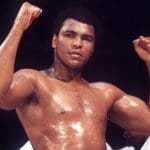
Azumah Nelson was born on July 19, 1958, in Accra, Ghana, and grew up training in the same Bukom neighborhood that has produced generations of Ghanaian boxing champions (Wikipedia). Nicknamed “The Professor” for his calculated, technical style and also known as “Zoom Zoom,” he stands 5 feet 5 inches tall and built his early reputation in Ghana’s amateur boxing scene before turning professional in December 1979. He has been married twice; his first wife Beatrice died of cancer in the 1990s, and he later married Peggy Nelson, with six children across both marriages, including a son who has followed him into the sport (SportsBrief).
Nelson had a standout amateur career, winning gold in the featherweight division at both the 1978 Commonwealth Games in Edmonton and the 1978 All-Africa Games in Algiers, and was named Amateur Boxer of the Year by Ghana’s Sports Writers Association that same year (Wikipedia). He turned professional on December 1, 1979, and built an undefeated 13-fight record while still largely unknown outside Ghana. That changed on July 21, 1982, when he stepped in on short notice to challenge WBC featherweight champion Salvador Sanchez at Madison Square Garden; Nelson lost by 15th-round technical knockout, but his performance against one of the era’s best champions announced him as a serious contender on the world stage.
The breakthrough years
The career decisions and defining moments that turned recognition into sustained earning power.
Nelson’s breakthrough came on December 8, 1984, in Puerto Rico, when he knocked out Wilfredo Gomez in the 11th round to win the WBC featherweight title despite trailing on the scorecards, a result that made him the first Ghanaian world boxing champion (Wikipedia). He defended the featherweight title through 1987 before moving up and winning the vacant WBC super-featherweight title with a split-decision win over Mexico’s Mario Martinez on February 29, 1988, a fight Nelson later called the toughest of his career after being dropped in the 10th round (Modern Ghana). That victory made him the first African boxer to win world titles in two different weight classes.

What the work can earn
Reported pay, contracts, royalties and performance income reveal how the fortune was funded.
Nelson’s signature achievement is his trilogy with Australian star Jeff Fenech: a controversial draw on June 28, 1991, a statement eighth-round knockout win on March 1, 1992, that The Ring magazine named its Upset of the Year, and a final loss by majority decision in a 2008 comeback bout 17 years later. Across a 47-fight career from 1979 to 2008 he compiled a 39-6-2 record with 28 knockouts, also fighting Pernell Whitaker for the unified WBC/IBF lightweight title in 1990 and splitting a trio of bouts each with Gabriel Ruelas and Jesse James Leija (Wikipedia). In 2004 he became the first Ghanaian and African boxer inducted into the International Boxing Hall of Fame, a moment he described as the greatest in the history of African boxing (International Boxing Hall of Fame).
Nelson’s standing in Ghana and in global boxing has only grown since his retirement. In June 2025 the World Boxing Council honored him at Accra’s Bukom Boxing Arena as part of its “Year of Africa” celebrations, exactly 21 years after his Hall of Fame induction, with the WBC previously having recognized him as the greatest super-featherweight of all time and presenting him honorary belts during his 60th birthday celebration in 2018 (GBC Ghana Online). Ghana has also honored him with the Order of the Volta, one of the country’s highest civilian awards, recognizing both his boxing achievements and his broader contribution to Ghanaian sport and society.

The business beyond the main career
Endorsements, ownership interests and investments can keep compounding long after the initial breakthrough.
Nelson’s most visible and longest-running commercial relationship is as a brand ambassador for GOIL, Ghana’s largest indigenous oil marketing company, appearing alongside GOIL executives at customer appreciation events and Ghana Month celebrations over multiple years (Adomonline). He has also lent his name to DE-LUXY Paints as a brand ambassador. Financial terms of these arrangements have not been publicly disclosed, consistent with how most Ghanaian celebrity endorsement deals are structured, but the associations have kept him a visible commercial presence in Ghana long after his final fight.
Since retiring from the ring, Nelson has stayed close to boxing as a promoter and trainer rather than building a broad business empire outside the sport. He runs Azumah Nelson Boxing Promotions, which has organized fight cards and boxing clinics in Ghana in recent years, and trains young prospects out of a boxing gym in Achimota, including Commonwealth Games gold medalist Samuel Takyi (Oxford Business Group). Rather than pursuing outside companies or product lines, most of his post-boxing income has been tied directly to the sport itself, through promotion, coaching, and event appearances.
Notable luxury item
A reported property or major asset offers a tangible glimpse of the wealth behind the public estimate.
There is no reliable public record detailing Nelson’s personal residence or a private property portfolio in the way that is documented for many Western athletes. The clearest publicly documented land asset tied to him is a 50-acre plot at Akuse in Ghana’s Eastern Region, which he acquired to house the Azumah Nelson Academy, a planned sports and educational facility linked to his charitable foundation and budgeted at roughly $23.4 million for full build-out (GhanaWeb). In June 2025, businessman Ibrahim Mahama gifted him a Toyota Fortuner worth more than GHS 720,000 along with an undisclosed cash gift in recognition of his boxing legacy, presented at a ceremony that included Anthony Joshua and Sharaf Mahama, illustrating how much of Nelson’s more recent material wealth has come through public gestures of honor rather than disclosed personal purchases (Citi Newsroom).
Azumah Nelson’s estimated net worth
Public estimates vary because private contracts, investments, taxes and liabilities are not fully disclosed.
How this estimate is calculated
Unlike many modern boxers, Nelson fought through most of his career in an era, and largely outside the United States media markets, where individual fight purses were rarely disclosed publicly, so HMW’s estimate relies more heavily on the durable, verifiable components of his post-career earning power than on a fight-by-fight purse tally. Those components include over a decade combined holding world titles across two divisions with dozens of title defenses against world-class opposition from 1984 to 1997, a long-running paid brand ambassadorship with GOIL sustained across many years of public appearances, continued income from boxing promotion and training work through Azumah Nelson Boxing Promotions, and speaking and appearance fees tied to his Hall of Fame status. Several independent celebrity wealth trackers, including Celebrity Net Worth-style aggregators, consistently place his fortune in the low single-digit millions, a range broadly consistent with a fighter of his era and market rather than one of the sport’s modern nine-figure earners (SportsBrief, secondary source). These figures are unofficial and not independently audited, and Nelson himself has said he does not consider himself a wealthy man despite acknowledging he made millions from the sport, a stance HMW’s calculation treats as consistent with a comfortable but not extravagant net worth built primarily on legacy income rather than active business holdings.
Nelson launched the Azumah Nelson Foundation in 2008 to provide social services to disadvantaged Ghanaians through sport and education, including vocational training, health and sanitation assistance in rural communities, and youth leadership programs, and the foundation has funded projects such as a six-classroom block at Anum Apapam in the Eastern Region (Azumah Nelson Foundation). His public image in Ghana is built on a combination of sporting greatness and personal humility; he has spoken publicly about earning millions from boxing while insisting that money was never his primary motivation and that he values helping friends, family and young fighters over accumulating personal wealth (GhanaWeb).
Nelson has largely avoided personal scandal, but two episodes tied to his legacy have drawn public scrutiny. His 2008 comeback fight against Jeff Fenech, staged when Nelson was 49 and Fenech was 44 after both men had been away from serious competition for years, was widely criticized in the boxing press; International Boxing Hall of Fame writer Barry McGuigan called the bout “ridiculously silly on a number of fronts, but first and foremost it’s dangerous,” and it remains cited as a cautionary example of an aging fighter returning for one fight too many (The Sweet Science). Separately, the Azumah Nelson Sports Complex in Kaneshie, Accra, built in the 1970s and named in his honor, has fallen into severe disrepair due to inadequate government funding, with sports analyst Jerome Otchere arguing in 2024 that allowing the facility to decay disrespects the legacy of a Hall of Fame athlete (Citi Sports Online). Neither issue reflects on Nelson’s personal conduct, but both have kept his name in ongoing public debate about how Ghana honors its sporting legends.