 How Much Are They Worth?
Celebrity fortunes, explained
How Much Are They Worth?
Celebrity fortunes, explained

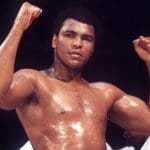






How did Emile Griffith build this fortune?
The answer unfolds through the career, earnings, deals and assets behind the headline estimate.
Before the fame
The background and early turning points that shaped Emile Griffith’s route to prominence.
Griffith was born on February 3, 1938, in Saint Thomas, U.S. Virgin Islands, and was of Afro-Caribbean descent (African American Registry). He moved to New York City as a teenager and took a stock boy job at a Garment District millinery owned by Howard “Howie” Albert, where his actual ambition was to become a hat designer rather than a fighter (British Vintage Boxing). Albert, a former amateur boxer himself, noticed Griffith’s physique while he worked and introduced him to trainer Gil Clancy’s gym, a chance meeting that redirected Griffith from millinery into boxing (British Vintage Boxing).
Griffith began amateur training under Clancy in 1957 and had an immediate impact, winning the New York Daily News Golden Gloves Championship, the Intercity Golden Gloves Championship and the New York Golden Gloves Tournament of Champions all in 1958 (British Vintage Boxing). He turned professional on June 2, 1958, defeating Joe Parkham on points at St. Nicholas Arena in New York, and later described the competitive drive that carried him through his early bouts: “If I lost, I was determined to get them back and beat them” (British Vintage Boxing). Albert and Clancy managed and trained him throughout this rapid rise from the Golden Gloves to title contention in under three years.
The breakthrough years
The career decisions and defining moments that turned recognition into sustained earning power.
Griffith’s breakthrough came on April 1, 1961, when he stopped Benny “Kid” Paret in the thirteenth round at Madison Square Garden to win the world welterweight championship for the first time (Wikipedia). He lost the title back to Paret by decision that September, setting up a rubber match the following spring that would define the rest of his life and career (African American Registry).

What the work can earn
Reported pay, contracts, royalties and performance income reveal how the fortune was funded.
Over a career that ran from 1958 to 1977, Griffith compiled a professional record of 85 wins, 24 losses and 2 draws in 112 fights, with 23 by knockout, and headlined 23 main events at Madison Square Garden alone (African American Registry). He won the world welterweight title three times and the world middleweight title twice, taking the middleweight championship from Dick Tiger by unanimous decision on April 25, 1966, and later trading it with Nino Benvenuti across a three-fight rivalry in 1967 and 1968 (Wikipedia). He also fought two-division champion Carlos Monzon twice near the end of his career, losing both bouts, in a stretch that closed out one of the most active championship careers of his generation (ESPN).
Griffith was named Fighter of the Year by both The Ring magazine and the Boxing Writers Association of America in 1963 and again in 1964, recognition that reflected his standing as the sport’s dominant welterweight through the middle of the decade (Wikipedia). He was inducted into the International Boxing Hall of Fame’s inaugural class in 1990 (ESPN). His life later became the subject of the acclaimed 2005 documentary “Ring of Fire: The Emile Griffith Story” and of Terence Blanchard’s opera “Champion: An Opera in Jazz,” which premiered in 2013 and was staged at the Metropolitan Opera a decade later, introducing his story to an entirely new audience (Chicago Sun-Times).

The business beyond the main career
Endorsements, ownership interests and investments can keep compounding long after the initial breakthrough.
No endorsement or sponsorship deal tied to Griffith was found in the sourcing for this profile. Boxing in the 1960s and 1970s rarely carried the personal brand sponsorships common in the sport today, and a fighter’s income in that era came almost entirely from fight purses and a promoter-negotiated split of gate and broadcast revenue rather than outside endorsement income; none of the financial terms of Griffith’s own fight contracts were made public in detail.
No publicly documented company, ownership stake or commercial venture outside boxing was found in the sourcing for this profile. Griffith’s working life centered entirely on the sport: after retiring from the ring in 1977 he became a trainer, working with future champions Wilfred Benitez and Juan Laporte, and he also worked for a period as a corrections officer at a juvenile detention facility in New Jersey (Wikipedia). His original ambition in millinery, the hat design work that first brought him to Howard Albert’s attention, never became a business of his own and stayed a personal pastime he returned to on and off for the rest of his life (Chicago Sun-Times).

Notable luxury item
A reported property or major asset offers a tangible glimpse of the wealth behind the public estimate.
No reliable public record of real estate holdings, vehicles or other major personal assets tied to Griffith exists in the sourcing for this profile. In his final years, after a decline caused by dementia pugilistica, he lived not in a home of his own but at an extended-care facility in Hempstead, New York, where he was cared for by his adopted son, Luis Rodrigo Griffith, until his death (Boston Globe).
Emile Griffith’s estimated net worth
Public estimates vary because private contracts, investments, taxes and liabilities are not fully disclosed.
How this estimate is calculated
No individual purse figures from Griffith’s championship fights in the 1960s and 1970s were found in the public record; unlike modern boxing, newspaper and broadcast coverage of that era rarely disclosed exact fighter pay, and the promoter-driven financial structure of the time made purses for even major title fights difficult to verify decades later. What is documented is the scale of his activity: 112 professional fights over nineteen years, five reigns as a world champion, and 23 main events at Madison Square Garden, which together would have generated meaningful earnings during his peak years from 1961 to 1968 (African American Registry). That earning power has to be weighed against equally well-documented reporting on what happened to it afterward. Griffith’s income after retiring in 1977 came from a trainer’s fees and, for a period, a corrections officer’s salary rather than further ring earnings, and professional boxing in his era had no pension system to preserve what fighters made in their prime (Wikipedia). His own obituary in the Boston Globe described his “boxing earnings and his memory long gone” by the time of his death in 2013, and documentarian Dan Klores, who spent years researching Griffith’s life, said publicly that neither Griffith nor Paret’s widow “had a penny, really, in the last twenty or thirty years” (Boston Globe). Given that record, a modest estimate for his final estate is most consistent with the documented facts, well below the unsourced multimillion-dollar figures that circulate on some celebrity net worth aggregator sites without disclosed methodology; those figures are treated here only as a rough, secondary cross-check and are not the basis for this estimate.
No dedicated charitable foundation or ongoing philanthropic cause tied to Griffith was found in the sourcing for this profile. His public image instead came to rest on the honesty with which he discussed the Paret fight and his own identity for the rest of his life, cooperating with the 2005 documentary “Ring of Fire” and, in a 2005 Sports Illustrated interview, stating plainly, “I’ve chased men and women. I like men and women both” (Boston Globe). That candor, decades ahead of most professional athletes, is a central reason his story was later chosen as the basis for a Metropolitan Opera production (Chicago Sun-Times).
The defining and most serious controversy of Griffith’s career is the death of Benny “Kid” Paret. At the weigh-in for their third fight on March 24, 1962, at Madison Square Garden, Paret directed an anti-gay slur at Griffith, an incident contemporary reports described Griffith reacting to with visible anger (Wikipedia). In the twelfth round of the fight itself, Griffith cornered Paret against the ropes and landed a rapid, sustained barrage of punches before referee Ruby Goldstein stopped the contest; Paret never regained consciousness and died ten days later from a brain hemorrhage (Wikipedia). Griffith later spoke candidly about the moment, recalling, “When I had him in the corner in the twelfth round, I was very angry. Nobody never called me no faggot before,” and described being haunted by nightmares about the fight for the rest of his life (The Fight City). New York Governor Nelson Rockefeller commissioned an official investigation into the bout, and the fallout contributed to a broader retreat by television networks from broadcasting live boxing through the 1960s (Wikipedia). Griffith’s private life brought further scrutiny and, eventually, violence: in 1992 he was severely beaten by a group of men outside a gay bar near the Port Authority Bus Terminal in New York, an attack that caused kidney damage and required a lengthy hospitalization, and which he and those close to him later connected to the physical decline of his final years (Boston Globe). This profile treats the Paret fight and its aftermath as a documented and historically significant part of Griffith’s life, not as a source of entertainment value.