
 How Much Are They Worth?
Celebrity fortunes, explained
How Much Are They Worth?
Celebrity fortunes, explained

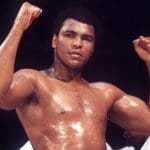








How did Manny Pacquiao build this fortune?
The answer unfolds through the career, earnings, deals and assets behind the headline estimate.
Manny Pacquiao before the fame
The background and early turning points that shaped Manny Pacquiao’s route to prominence.
Manny Pacquiao rose from poverty in the Philippines to become boxing’s only champion across eight weight divisions, then served in the House of Representatives and Senate. Forbes’ athlete profile records both the eight-division achievement and the scale of his pay-per-view business: 24 events, about 20 million buys and roughly $1.25 billion in consumer revenue by 2019. Event revenue belongs to many parties, so it is evidence of bargaining power rather than personal wealth.
Pacquiao began fighting professionally at 16 after leaving home for Manila. His professional bout ledger records the WBC flyweight title in 1998 and his American breakthrough against Lehlo Ledwaba in 2001. Britannica’s career account documents his movement through the divisions and the partnership with trainer Freddie Roach. Those early bouts built his record, but the material income arrived only after victories over Marco Antonio Barrera, Erik Morales and other established attractions.
Manny Pacquiao’s breakthrough years
The career decisions and defining moments that turned recognition into sustained earning power.
The 2003 stoppage of Barrera changed Pacquiao from an Asian champion into a US television headliner. Wins over Oscar De La Hoya, Ricky Hatton and Miguel Cotto then made him a pay-per-view A-side. Unlike a salary, a boxing purse can include a guarantee, a share of broadcast receipts and territory-specific income. Because public reports often mix those categories, HMW uses annual earnings estimates from established financial reporting rather than adding every rumored purse.

What Manny Pacquiao’s work can earn
Reported pay, contracts, royalties and performance income reveal how the fortune was funded.
Pacquiao’s defining commercial event was the Mayweather fight in May 2015. It sold 4.6 million US pay-per-views, and Pacquiao reportedly earned about $125 million before endorsements. GMA’s report on Forbes’ 2015 list put his total annual earnings at $160 million: $148 million from sport and $12 million from endorsements. That one-year number is gross income, subject to US and Philippine tax, promoter shares, camp expense and advisers.
Forbes ranked Pacquiao among the decade’s top-paid athletes with approximately $435 million earned during the 2010s alone. The Philippine Star’s report of that Forbes ranking provides a useful cross-check against the $160 million peak year. Later fights, including Keith Thurman and Yordenis Ugás, added substantial purses. His 2025 return also generated income, but HMW assigns no speculative amount without reliable settlement reporting.

Manny Pacquiao’s business beyond the main career
Endorsements, ownership interests and investments can keep compounding long after the initial breakthrough.
Pacquiao endorsed Nike before that relationship ended in 2016, and worked with Foot Locker, Nestlé’s Butterfinger and numerous Philippine brands. The $12 million endorsement estimate in 2015 is the most concrete annual benchmark. Music, films, television and appearance fees added smaller flows. Because some partnerships are local campaigns rather than multi-year global contracts, the estimate does not project the peak endorsement year across his entire career.
Pacquiao’s official platform presents the work around his boxing and public brand, while MP Promotions developed Filipino fighters and allowed him to participate on the promotional side of selected events. He has also been associated with the Maharlika Pilipinas Basketball League, property development and hospitality ventures. These businesses are private and do not publish audited profit or ownership data. HMW therefore recognizes a restrained operating-business contribution rather than applying a revenue multiple to every company bearing “Pacman” branding.

Manny Pacquiao’s notable luxury item
A reported property or major asset offers a tangible glimpse of the wealth behind the public estimate.
Philippine public-asset declarations have historically identified Pacquiao as one of the wealthier legislators and have listed real estate, vehicles and business interests. However, declarations from different years use Philippine pesos, acquisition costs and family ownership structures that are not directly comparable to market value. Pacquiao has also funded housing and other philanthropy. Reuters’ Hall of Fame profile confirms the breadth of his post-boxing public activity but does not supply a private balance sheet.
Manny Pacquiao’s estimated net worth
Public estimates vary because private contracts, investments, taxes and liabilities are not fully disclosed.
How this estimate is calculated
HMW uses the Forbes decade total as the core ledger, adds only non-overlapping earnings before 2010 and after 2019, and applies deductions for taxes, promoter and training costs. A further consumption-and-philanthropy allowance reflects Pacquiao’s documented support of housing projects and an extended family. Conservative values are then assigned to identifiable property and MP Promotions, without inventing stakes in businesses whose ownership is unclear. The result is an evidence-based retained-assets estimate, not a percentage copied from a celebrity list.
Pacquiao’s audience extends beyond boxing because he has been a singer, actor, basketball participant, legislator and presidential candidate. The Philippine Senate’s official biography confirms his elected service and charitable priorities. Political visibility can support a brand, but public office salary is small beside elite purses, and campaign funds cannot be treated as personal assets. The calculation excludes political donations entirely.
The best anchors are the $160 million 2015 year, the $435 million 2010s total and Forbes’ $1.25 billion PPV-revenue figure. They overlap, so adding them would be a serious error. Career-earnings claims above $500 million are plausible when the earlier and later years are included, but remain gross. The estimate must allow for dual-jurisdiction tax, promoter and manager shares, large training camps, family support, philanthropy, political activity and the uncertain present value of private businesses.