 How Much Are They Worth?
Celebrity fortunes, explained
How Much Are They Worth?
Celebrity fortunes, explained

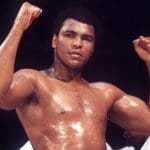







How did Ruben Olivares build this fortune?
The answer unfolds through the career, earnings, deals and assets behind the headline estimate.
Before the fame
The background and early turning points that shaped Ruben Olivares’s route to prominence.
Olivares was born on January 14, 1947, in Mexico City, growing up in the working-class Bondojito neighborhood of the city’s Gustavo A. Madero borough (El Universal). His full name is Rubén Olivares Ávila, and he took the nickname "El Púas," meaning "The Spikes," for the sharp, relentless way he attacked opponents in the ring (The Grueling Truth). Before boxing offered a way out, he helped support his family by selling newspapers and shining shoes on the streets of Mexico City (The Grueling Truth).
Olivares built an amateur record reported at 82 wins against just 3 losses before turning professional in 1965 at age 17, opening his career with a first-round knockout of Freddy García in Cuernavaca (The Grueling Truth). His trademark from the start was a devastating left hook, a punch that produced knockout after knockout and quickly made him one of the most feared action fighters in Mexican boxing (Wikipedia). He won each of his first 22 professional fights by knockout, a run that ended only when Felipe González became the first man to take him the distance, on March 8, 1967 (Wikipedia).
The breakthrough years
The career decisions and defining moments that turned recognition into sustained earning power.
Olivares’s rise culminated on August 22, 1969, when he knocked out Australian champion Lionel Rose in the fifth round at the Fabulous Forum in Inglewood, California, to capture the undisputed WBA and WBC world bantamweight titles (Wikipedia). By that point his record stood at roughly 51 wins, no losses and a draw, and the victory instantly made him one of the biggest stars in Mexican sport, a fighter capable of selling out arenas on both sides of the border (The Fight Site).

What the work can earn
Reported pay, contracts, royalties and performance income reveal how the fortune was funded.
Olivares’s title reign set off one of the great rivalries in Mexican boxing history, a three-fight series with Jesús "Chucho" Castillo that included a 15-round decision win for Olivares in April 1970, a 14th-round stoppage loss that cost him the title that October, and a 15-round decision win to reclaim the belt in April 1971 (Wikipedia). He lost the bantamweight title for good to Rafael Herrera by eighth-round knockout in March 1972, then moved up to featherweight, where he knocked out Zensuke Utagawa in seven rounds to win the vacant WBA title in July 1974, lost that belt to Alexis Arguello by 13th-round knockout that November, then won the WBC featherweight title with a second-round knockout of Bobby Chacon in June 1975 before losing it on a 15-round decision to Ghana’s David Kotey that September (Wikipedia). He retired in 1988 with a professional record of 89 wins, 13 losses and 3 draws from 105 fights, and was inducted into the International Boxing Hall of Fame in 1991 (International Boxing Hall of Fame).
In a 1999 Associated Press poll, Olivares was voted the top bantamweight of the 20th century, and Ring magazine later ranked him twelfth on its list of the greatest punchers in boxing history (Wikipedia). Boxing historians have gone further still, with The Fight Site ranking him the single greatest bantamweight of all time, ahead of other legends of the division (The Fight Site). He remains one of the most celebrated fighters to come out of Mexico City, a status still visible decades after his final fight in the warmth of his reception at public events and in his home neighborhood (El Universal).

The business beyond the main career
Endorsements, ownership interests and investments can keep compounding long after the initial breakthrough.
No modern endorsement or sponsorship deal tied to Olivares was found in the sourcing for this profile. He fought in an era, the 1960s and 1970s, when Mexican boxing stars earned almost entirely from fight purses and gate receipts rather than outside brand partnerships, and his financial history in the decades since, marked by reported losses rather than new income streams, is consistent with there being no ongoing endorsement business to document (Heraldo Deportes).
Outside the ring, Olivares appeared in roughly a dozen Mexican films, most notably starring as himself in the 1984 biographical picture "Las Glorias del Gran Púas," though this functioned as an entertainment credit rather than a business venture (SDPnoticias). As of the early 2020s he was still collecting royalty payments from those film appearances, reported at roughly 2,000 Mexican pesos, a little over $100, per month (SDPnoticias). No other company, restaurant, gym or commercial venture bearing his name is documented in reliable sourcing for this profile.

Notable luxury item
A reported property or major asset offers a tangible glimpse of the wealth behind the public estimate.
No reliable public record of real estate, vehicles or other major assets currently owned by Olivares exists in the sourcing for this profile. Mexican outlets have reported that he once had a fortune described as more than two million dollars, along with houses, cars and restaurants, but lost virtually all of it to years of heavy drinking and poor investments, and by his 70s had resorted to selling personal items, including at one point offering his WBC championship belt for sale at Mexico City’s La Lagunilla flea market (Heraldo Deportes; La Silla Rota).
Ruben Olivares’s estimated net worth
Public estimates vary because private contracts, investments, taxes and liabilities are not fully disclosed.
How this estimate is calculated
Olivares earned genuinely large purses at his peak in the late 1960s and 1970s as a two-division, multi-time world champion and one of the biggest draws in Mexican boxing, and Mexican press reports describe a fortune once worth more than two million dollars, along with houses, cars and restaurants (Heraldo Deportes). That peak has to be weighed against extensive, consistent reporting that nearly all of it was lost to alcoholism and poor investment decisions in the decades that followed, leaving him by his 70s without documented property or business assets, dependent on roughly 2,000 pesos a month in film royalties, and reportedly willing to sell both his WBC championship belt and the rights to his own funeral to get by (La Silla Rota; SDPnoticias). No reliable, sourced net worth figure for Olivares was found on any established outlet; a handful of low-quality aggregator sites list unsourced figures in the low millions, but those numbers directly contradict the well-documented Mexican-press reporting on his finances and are treated here only as a rough, secondary cross-check rather than the basis for this estimate. Given that documented arc from a multi-million-dollar peak to a currently modest, hand-to-mouth financial reality, a low estimate consistent with the facts is used here rather than an inflated figure.
Despite his financial struggles, Olivares is consistently described in Mexican sports media as warm, generous and easygoing, a fighter who still walks his old Mexico City neighborhood greeting fans and posing for photos, at times charging a modest fee of around 100 pesos to help make ends meet (SDPnoticias). No dedicated charitable foundation tied to Olivares was found in the sourcing for this profile, but his enduring popularity and willingness to engage directly with fans has kept him a beloved figure in Mexican boxing culture even during his hardest years (ESPN Deportes).
Olivares’s public story carries no scandal in the traditional sense of doping or legal trouble; instead, its most scrutinized chapter is a long and openly acknowledged struggle with alcohol that he has said left him fighting "in deplorable condition" on more than one occasion, and that he has credited with destroying the fortune he built in the ring (El Universal). That decline became a very public story again around his 75th birthday in January 2022, when Mexican outlets reported he was living in poverty, relying on a small film-royalty check and market-stall memorabilia sales, and had said he would be open to selling the rights to his own funeral (La Silla Rota; SDPnoticias).