 How Much Are They Worth?
Celebrity fortunes, explained
How Much Are They Worth?
Celebrity fortunes, explained

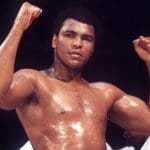








How did Ryan Garcia build this fortune?
The answer unfolds through the career, earnings, deals and assets behind the headline estimate.
Before the fame
The background and early turning points that shaped Ryan Garcia’s route to prominence.
Ryan Garcia was born on August 8, 1998, in Victorville, California, to Mexican American parents Henry and Lisa Garcia. According to Wikipedia’s biography of Garcia, his father Henry began training him in the family garage at age seven, laying the foundation for a boxing career built around blinding hand speed rather than raw power. Garcia grew up alongside his brother Sean, who also turned professional as a boxer, and the two siblings pushed each other through the same amateur gyms in California’s High Desert region. That early, family-run training environment shaped both his fighting style and the tight inner circle that has managed his career and image ever since.
Garcia compiled an amateur record of 215 wins against 15 losses and won 15 national amateur titles, chasing a spot on the 2016 U.S. Olympic team that ultimately did not materialize. He turned professional in 2016 as a teenager, signing with Golden Boy Promotions and building a following as much through social media as through his results in the ring. Bloomberg’s profile of Garcia’s rise described how he used Instagram and YouTube to build a fan base years before he ever fought for a world title, a strategy almost unheard of in boxing at the time. By his early twenties he was already one of the most-followed active boxers in the world, with an audience that dwarfed many champions with far longer resumes.
The breakthrough years
The career decisions and defining moments that turned recognition into sustained earning power.
Garcia’s signature breakthrough came on January 2, 2021, when he stopped Luke Campbell in the seventh round to win the interim WBC lightweight title, despite being dropped by a Campbell left hook earlier in the fight. Golden Boy Promotions’ recap of the win described the come-from-behind body-shot knockout as the moment Garcia proved he belonged among the sport’s elite rather than just its most-followed prospects. The win set up years of anticipation for a superfight against reigning lightweight champion Gervonta Davis, a matchup that would eventually become the biggest payday of Garcia’s career.

What the work can earn
Reported pay, contracts, royalties and performance income reveal how the fortune was funded.
Garcia has held the WBC interim lightweight title, the WBC silver lightweight title and the NABF and NABO super featherweight titles across his career. On February 21, 2026, he added a full world title, dominating Mario Barrios by lopsided unanimous decision to capture the WBC welterweight championship at T-Mobile Arena in Las Vegas. ESPN’s report on the Barrios fight credited Garcia with dropping Barrios within the first 25 seconds and controlling every round that followed, framing the win as a genuine career resurgence after two turbulent years outside the ring.
Garcia’s public profile has long outpaced his title count, built on a social media following that ranks among the largest of any active combat sports athlete. Reporting on his online following has put his Instagram audience at well over ten million, a number that grows by millions in the days around a major fight. That reach has made him a regular presence on podcasts, YouTube shows and mainstream sports broadcasts, and it is a major reason promoters have been willing to pay him purses that outstrip fighters with more decorated records. Garcia is widely recognized, for better and worse, as one of the defining faces of boxing’s social-media era.

The business beyond the main career
Endorsements, ownership interests and investments can keep compounding long after the initial breakthrough.
In 2020, Garcia became the first American professional boxer to sign a national endorsement deal with Gatorade, a milestone CBS Sports covered as a sign of his crossover appeal beyond the sport’s traditional fan base. He has since carried sponsorships from Nike, Monster Energy, Everlast and PSD Underwear, along with smaller partnership deals tied to his personal brand. These arrangements sit on top of his fight purses as a separate and steady revenue stream, one that has largely persisted even through the more turbulent stretches of his public image.
Garcia has built commercial ventures around his King Ry persona, including a streetwear and merchandise line sold directly to his large online following. He has also described treating his social platforms themselves as a business, using them to build and monetize an audience independent of his fight purses. Sportslens’ breakdown of his career earnings references early-stage investments and stakes in digital assets alongside his merchandise income, diversifying his earnings beyond boxing purses and licensing deals.

Notable luxury item
A reported property or major asset offers a tangible glimpse of the wealth behind the public estimate.
Garcia made his first major real estate purchase in September 2022, buying a two-story home in the Porter Ranch neighborhood of Los Angeles for just over 3.1 million dollars. TMZ’s report on the purchase described the roughly 3,680-square-foot property as featuring five bedrooms, six bathrooms, a pool, a spa and sweeping views over the San Fernando Valley. He has since been linked to additional Southern California property, including time spent training out of the San Diego area, adding to a real estate footprint built directly from his early fight purses and endorsement income.
Ryan Garcia’s estimated net worth
Public estimates vary because private contracts, investments, taxes and liabilities are not fully disclosed.
How this estimate is calculated
HMW’s estimate starts with Garcia’s documented fight purses, led by the roughly 30 million dollars he has said he earned from his 2023 bout with Gervonta Davis, plus his purse from the 2024 Haney fight before its forfeiture and an eight-figure payday for beating Mario Barrios in February 2026, among more than a dozen other professional paydays since 2016. It adds his endorsement income from Gatorade, Nike, Monster Energy and other sponsors, along with merchandise and digital revenue from his large social media following, then layers in his Porter Ranch home and other real estate. From that gross figure the estimate subtracts taxes, training and promotional costs, the purse and fine forfeited over the Haney ruling, and the type of legal and reputational costs that have followed his public controversies. Celebrity Net Worth’s figure is used only as a secondary check against this build, not as the source of the estimate itself.
Garcia has periodically used his platform for community giving, including a hometown visit where he and his backers presented the High Desert Boxing Club with new equipment and a cash donation to support young fighters coming up through the same gyms he once trained in. He has also made appearances at Boys and Girls Club events, telling reporters he prefers to give back “in silence” rather than turn every donation into a public moment. His public image, however, has been defined less by that quieter giving than by the volatility of his personal life, a tension that has made him one of the more polarizing figures in modern boxing.
Garcia’s biggest controversy centers on his April 20, 2024 fight against Devin Haney, which he won by majority decision before testing positive for the banned substance ostarine. ESPN’s coverage of the ruling detailed how the result was changed to a no contest, restoring Haney’s unbeaten record, while Garcia was suspended for one year, forfeited his 1.1 million dollar purse and was fined by the New York State Athletic Commission. Weeks later, in June 2024, he was arrested and later charged with misdemeanor vandalism after causing an estimated 15,000 dollars in damage to a Beverly Hills hotel room. That same summer, the World Boxing Council expelled him from the organization after he used racial slurs and disparaged Muslims during a livestreamed rant. ESPN’s report on the expulsion quoted WBC president Mauricio Sulaiman saying Garcia had declined multiple offers of help for mental health and substance abuse before the ban, which was later lifted as Garcia worked to rebuild his standing in the sport.