
 How Much Are They Worth?
Celebrity fortunes, explained









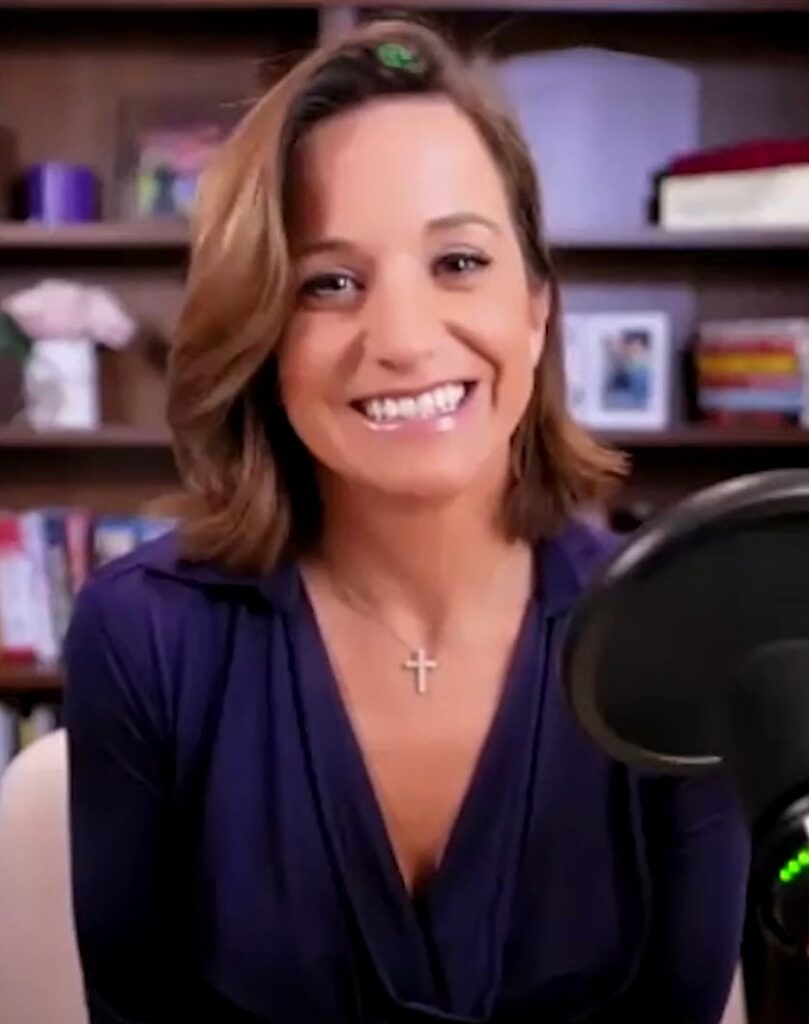
How did Dianna Russini build this fortune?
The answer unfolds through the career, earnings, deals and assets behind the headline estimate.
Dianna Russini before the fame
The background and early turning points that shaped Dianna Russini’s route to prominence.
Dianna Marie Russini was born on 11 February 1983 in New York City and grew up in Norwood, New Jersey, in the commuter belt across the state line from Manhattan. She was an all-state athlete in four sports at high school: soccer, basketball, softball and track.
Soccer took her to George Mason University in Virginia, where she played four years of Division I football as a goalkeeper and studied communications. Playing at that level is the credential she has leaned on most in a beat where almost nobody has it.
She started in local television, which in American broadcasting means small markets and long hours: News 12 Westchester and the Hudson Valley first, then NBC’s Connecticut station, then NBC Sports Northwest in Seattle.
From there she moved to WRC-TV, the NBC station in Washington, covering the Redskins and the Capitals, and then to WNBC in New York, where she was the youngest reporter the station had hired. Local sports anchoring in a top-five market pays in the low hundreds of thousands; the years before it pay considerably less, and our working treats the whole 2007-to-2015 stretch as about $900,000 gross.
Dianna Russini’s breakthrough years
The career decisions and defining moments that turned recognition into sustained earning power.
ESPN hired her in July 2015, initially as a SportsCenter anchor. Within a few years she had moved onto the National Football League beat full time and become one of the network’s reporting voices on it, appearing across its NFL programming and breaking news on air and on social media.
The move that put a number on her worth came in 2023. Sports Illustrated reported on 11 August that she was leaving ESPN for The Athletic as its lead NFL insider, and that ESPN had offered her a raise to stay, in a year when the network was making layoffs. She went anyway.
What The Athletic paid eventually reached print. NBC Sports, citing The New York Times, reported an annual salary of close to $800,000 — which would have made her one of the best-paid journalists at the company, and is the clearest figure that exists for what her craft has been worth. Our estimate of her eight ESPN years, working back from a salary she left for $800,000, is $2.8 million to $3.6 million gross.

What Dianna Russini’s work can earn
Reported pay, contracts, royalties and performance income reveal how the fortune was funded.
The lead national insider job on the football beat is held by a handful of reporters at any time, and women have held it only rarely. Getting there meant building a source network across thirty-two front offices from a standing start, on a beat where access is guarded and largely inherited.
She anchored SportsCenter, reported from Super Bowls and drafts, hosted podcasts and wrote a regular column, and her reporting was routinely cited by the rest of the league’s press. Across eighteen years her career gross salaries come to $5.5 million to $7 million on our working, of which roughly $2.1 million was earned in the last three years alone.
Her profile was unusual for a print-and-digital insider because she had come from television: she was recognised on sight, and her arrival at The Athletic was treated as a significant hire rather than a transfer of a byline.
She has been a regular speaker at industry events on women in sports media, and the fact that a woman held one of the beat’s senior jobs was itself a recurring subject in coverage of the industry.

Dianna Russini’s business beyond the main career
Endorsements, ownership interests and investments can keep compounding long after the initial breakthrough.
Sports journalists carry far fewer endorsements than the athletes they cover, because most employers restrict them. Hers have been occasional and consumer-facing rather than long-running ambassadorships.
Speaking fees are the larger part of the non-salary income. A recognised national sports broadcaster commands $15,000 to $40,000 an engagement, and on a handful of bookings a year that is a useful addition to a salary rather than a second career.
Her business is her byline, and the estimate is built that way. What it counts is employment income — the salaries the beat paid her, station by station and then network by network — together with the speaking, podcast and panel work that sits alongside a staff contract. The asset underneath those salaries is a source network across thirty-two front offices and an audience that moved with her when she changed employer, which is what let her command pay at that level.
Around the salary she has run the usual auxiliary income of a national broadcaster: podcast appearances, paid speaking engagements, conference panels and a small number of brand partnerships. Our working puts all of it at $500,000 to $1.5 million across the career.

Dianna Russini’s notable luxury item
A reported property or major asset offers a tangible glimpse of the wealth behind the public estimate.
The ESPN years meant living in Connecticut, near the network’s Bristol campus; the Washington and New York postings meant expensive rental markets before that. Since joining The Athletic she has been based in the New York area.
Our estimate puts her property at $1.5 million to $3 million, on prices for family houses in the northern New Jersey and Fairfield County commuter towns that broadcasters at her level buy in. There is no reported collection or second home of note.
Dianna Russini’s estimated net worth
Public estimates vary because private contracts, investments, taxes and liabilities are not fully disclosed.
How this estimate is calculated
One salary is documented. NBC Sports, citing The New York Times, put her pay at The Athletic at close to $800,000 a year, and she held the job from August 2023 to April 2026, which gives about $2.1 million gross from that contract.
The rest is our working, anchored on that figure. Eight ESPN years from 2015, starting as a SportsCenter anchor and finishing as a lead NFL reporter who was offered a raise against an $800,000 outside offer, imply a rising salary averaging $350,000 to $450,000: $2.8 million to $3.6 million gross. The eight local-television years before that, from small markets up to WNBC in New York, come to about $900,000. Career gross salaries are therefore $5.5 million to $7 million, with speaking and auxiliary income adding $500,000 to $1.5 million.
United States federal and state income tax on employment income at those levels, plus an agent’s commission of about 4 per cent, leave roughly 55 per cent. That gives $3.3 million to $4.7 million retained across eighteen years, most of it in the last five, with limited time for it to compound and a family home inside the total. Allowing for savings and investment on the recent high-earning years, the working supports a range of $2.5 million to $6.5 million. The figure we publish is its midpoint. It assumes ordinary savings behaviour on a salary earned in expensive housing markets, and that her earning capacity on the beat is not reflected in current assets.
Confidence: Partly documented — her salary at The Athletic was reported by The New York Times, but the ESPN and local-television pay, the auxiliary income and the retention rate are our own working.
Her public contribution has been mentoring rather than money: speaking at universities and industry conferences, and advising women entering sports broadcasting, a field where the senior reporting jobs remain overwhelmingly male.
The image she built was of an insider who had played the sport and would say so, direct on air and unusually visible on social platforms, which made her one of the more recognisable figures on a beat whose practitioners are usually known only to its followers.
Insider journalism attracts a standing criticism that Russini has had her share of: that reporters who depend on club and agent access end up carrying messages for their sources. She has argued the opposite case, that the sourcing is what makes the reporting worth anything.
In April 2026 the New York Post published photographs of her with the New England Patriots head coach Mike Vrabel at a hotel in Arizona. NBC News reported that The Athletic’s executive editor first described the photographs as misleading and lacking essential context, that the publication then opened an investigation, and that Russini resigned on 15 April, saying she refused to lend the inquiry further oxygen or to let it define her career. The Athletic said its investigation would continue.