 How Much Are They Worth?
Celebrity fortunes, explained







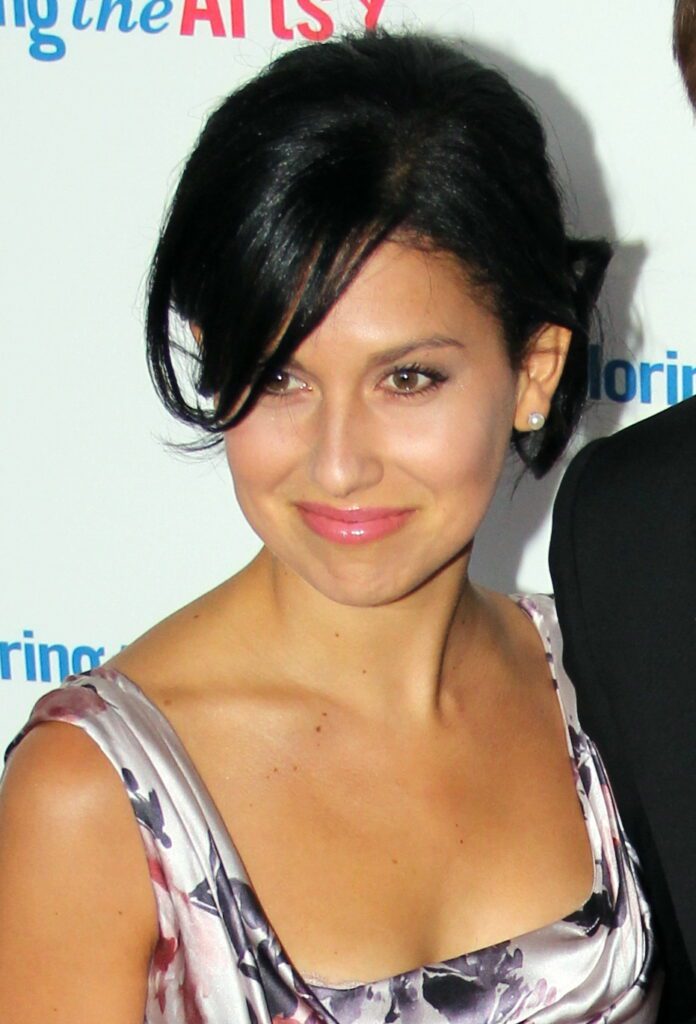
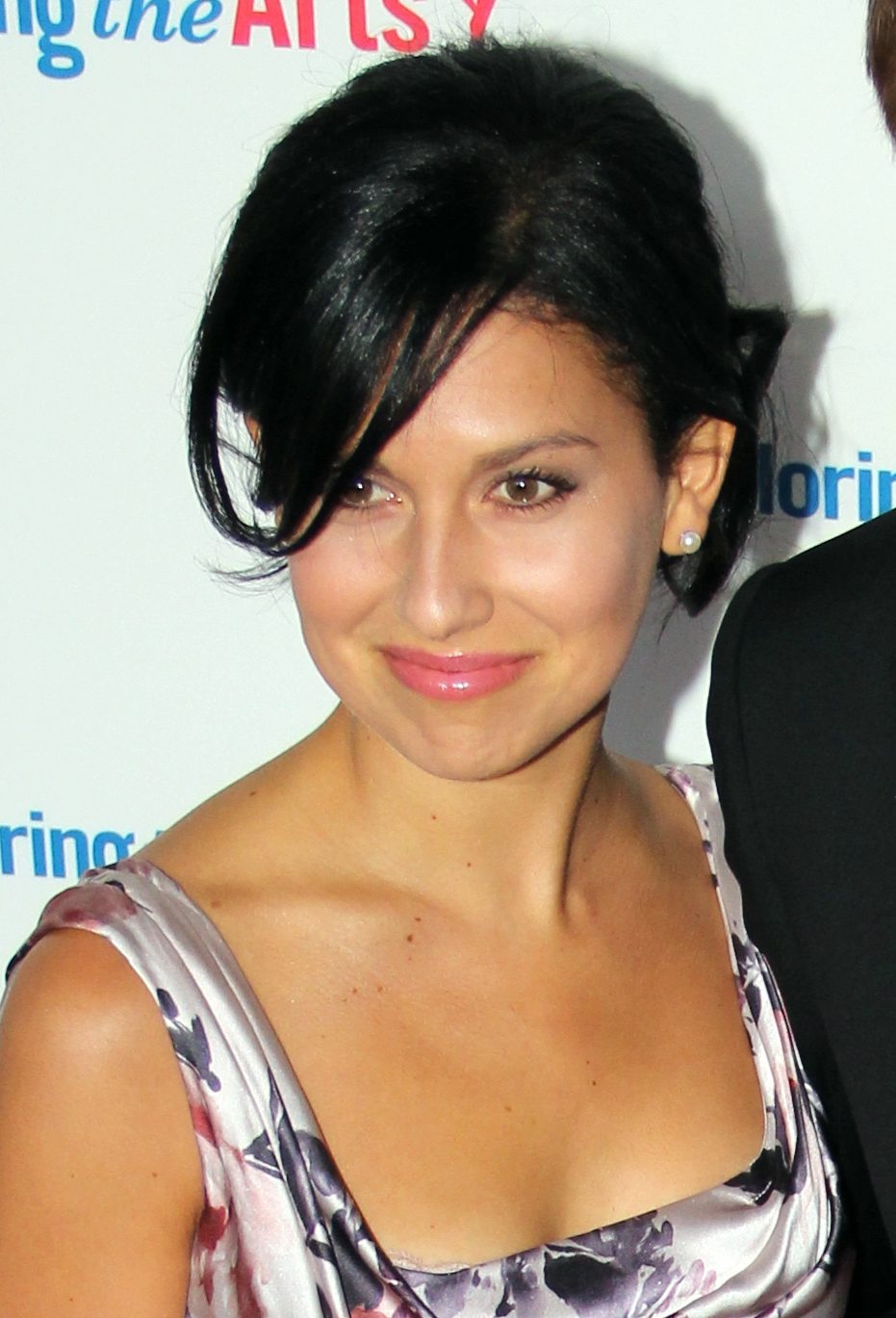
How did Hilaria Baldwin build this fortune?
The answer unfolds through the career, earnings, deals and assets behind the headline estimate.
Hilaria Baldwin before the fame
The background and early turning points that shaped Hilaria Baldwin’s route to prominence.
She was born Hillary Hayward-Thomas on 6 January 1984 in Boston, Massachusetts, to a lawyer father and an academic physician mother, and spent part of her childhood between the United States and Spain, where her parents later settled. She studied at New York University.
Yoga, not television, was the first career. She qualified as an instructor in her early twenties and was teaching in Manhattan studios before she met her husband, which matters here because the business she built predates the marriage and is the part of her balance sheet that is unambiguously hers.
In 2009 she co-founded the yoga studio Yoga Vida in the West Village of New York with Michael Patton. It grew to four locations, adding Noho, Dumbo and Tribeca, on a low-cost, high-volume model that undercut the city’s established studios.
Instructors in New York earn $40 to $120 a class and a studio owner-operator in her position draws a modest salary alongside any profit share. We put her teaching income and her share of the business across the first five years at $350,000 to $900,000.
Hilaria Baldwin’s breakthrough years
The career decisions and defining moments that turned recognition into sustained earning power.
The studios are the core of her own earnings, and the arithmetic is the arithmetic of a small chain rather than of a celebrity brand. Four New York yoga studios of that size turn over $2 million to $4 million a year between them, on operating margins of 8 to 15 per cent after rent, and her stake was a founder’s share alongside at least one partner.
On that basis we put her total return from Yoga Vida — salary, profit distributions and whatever she realised on standing back from the ownership — at $1 million to $3 million across fifteen years. She is now described as a co-founder rather than an owner, having stepped away from the business. Alongside it she worked as a television correspondent for the entertainment programme Extra in the early 2010s, a staff contributor’s job paying $80,000 to $200,000 a year, or $200,000 to $450,000 in all.

What Hilaria Baldwin’s work can earn
Reported pay, contracts, royalties and performance income reveal how the fortune was funded.
Three books carry her name. Penguin Random House published The Living Clearly Method in December 2016, a five-principle wellness guide; Manual Not Included, a memoir, followed from Gallery Books in May 2025 and was reviewed by Kirkus Reviews; and Glowing Up, a beauty and recipe book written with her daughter Carmen, came from DiAngelo Publications. A wellness guide of the first kind commands an advance of $100,000 to $250,000, a memoir at her level of recognition $250,000 to $600,000, and a co-written illustrated title $20,000 to $60,000, which puts the three together at $370,000 to $910,000 including royalties.
Television then compressed a great deal of income into two years. the network’s own announcement set the premiere of The Baldwins, an eight-episode TLC series about the household, for 23 February 2025; family-led reality series pay their principals $40,000 to $120,000 an episode collectively, and we put her share of the season at $200,000 to $600,000. ABC listed her among the cast of the thirty-fourth season of Dancing with the Stars, partnered with Gleb Savchenko, where she finished eleventh; the show’s base fee plus early-elimination weeks is worth $125,000 to $160,000.
Her public profile rests on a large social following built around yoga, pregnancy and family life, and it is that following rather than any single credit which brings the book deals and the television commissions.
It is also a profile with a ceiling. Recognition acquired through marriage and reality television sells books and casts a dancer; it does not command the endorsement rates paid to performers whose fame rests on their own work, which is why her commercial income has stayed in the hundreds of thousands rather than the millions.

Hilaria Baldwin’s business beyond the main career
Endorsements, ownership interests and investments can keep compounding long after the initial breakthrough.
Her sponsorship work has run through social media rather than through campaigns: maternity and baby brands, wellness products, household names looking for a parenting audience. Sponsored posts at her follower count pay $5,000 to $20,000 each.
Taken across a decade of that work, and allowing for the periods when she withdrew from posting altogether, we put her endorsement income at $500,000 to $1.5 million gross. It is the second-largest line in her own accounts after the studios.
Yoga Vida is the only business of substance she has built, and its structure explains a lot. A multi-site studio chain is a working business with leases, payroll and thin margins, not an equity story: it produced a steady income for years rather than a windfall at the end.
Around it she has run the smaller ventures that a wellness audience supports — the Mom Brain podcast she co-hosted with Daphne Oz, paid online classes, and licensed content. We put the whole of that strand at $200,000 to $550,000 gross across the period.

Hilaria Baldwin’s notable luxury item
A reported property or major asset offers a tangible glimpse of the wealth behind the public estimate.
This is where the two fortunes have to be kept apart. The family’s Manhattan apartment and the Long Island property were acquired on her husband’s earnings across a film career that began two decades before they met, and neither forms any part of the figure below.
What she holds in her own right is the retained proceeds of the studios, the books and the television work, held as savings and investments rather than as real estate. We credit her with no independent property equity, which is the honest reading of a household where the houses were bought with someone else’s money.
Hilaria Baldwin’s estimated net worth
Public estimates vary because private contracts, investments, taxes and liabilities are not fully disclosed.
How this estimate is calculated
The documented facts here are the publications, their publishers and dates, the eight-episode TLC season and its premiere date, and her place in the Dancing with the Stars cast. The money attached to each is our own estimate from what publishers, networks and New York studios pay at her level. Her husband’s assets and income are excluded entirely, and no jointly held property is counted.
The arithmetic. Teaching and her share of Yoga Vida, 2009 to date: $1 million to $3 million. Television correspondent work: $200,000 to $450,000. Books: $370,000 to $910,000. The Baldwins: $200,000 to $600,000. Dancing with the Stars: $125,000 to $160,000. Podcast, online classes and licensed content: $200,000 to $550,000. Sponsored social media: $500,000 to $1.5 million. Her own gross earnings: roughly $2.5 million to $7 million.
Representation takes about 12 per cent of the media and publishing income, and a combined federal, New York State and city rate near 42 per cent applies throughout, leaving about 46 per cent retained, or $1.2 million to $3.2 million, with investment growth on the earlier years lifting the top of that. The working supports $1.5 million to $4.5 million and we publish its midpoint. What this number turns on is the yoga business: she is described as a co-founder who no longer owns it, and the terms on which she parted from four Manhattan leases are the largest single variable in her own accounts — a filed share transfer would move this figure more than any book deal.
Confidence: Indicative — the books, the television season and the studio’s history are all on the record, while every fee, advance and distribution behind the figure is our own estimate, and her husband’s wealth is excluded.
Her charitable work has run through children’s and maternal health causes, including hospital and paediatric fundraising in New York, and she has used her platform for miscarriage awareness after speaking publicly about her own experience.
The public image is the business. A following assembled around family life is what the publishers and the network bought, and the same following is what made the 2020 episode below so costly: the asset she sells is credibility about her own story.
In December 2020 the way she had described her background came under sustained public examination, after it emerged that she had been born and raised in Boston rather than in Spain, as her public account had implied. She apologised on Instagram in February 2021, saying the way she had spoken about her connection to two cultures could have been better explained and that she should have been clearer, as Today reported.
The episode cost her commercial work for a period and remains the reference point in most coverage of her. There has been no legal or regulatory consequence attached to it, and her publishing and broadcasting work resumed from 2025 onwards.