
 How Much Are They Worth?
Celebrity fortunes, explained









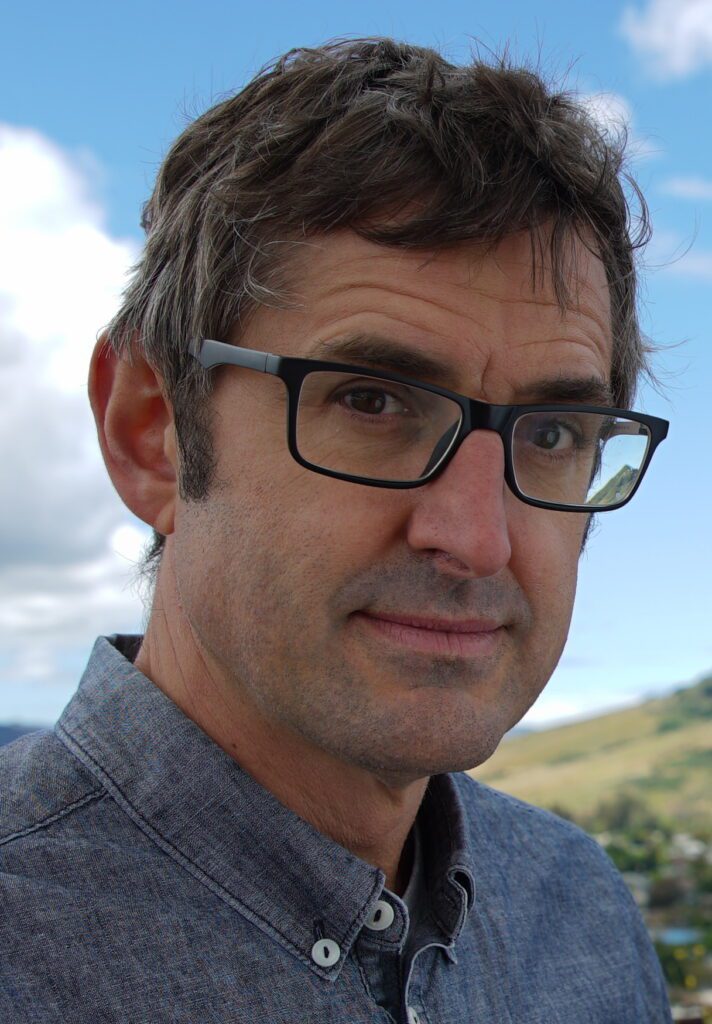
How did Louis Theroux build this fortune?
The answer unfolds through the career, earnings, deals and assets behind the headline estimate.
Louis Theroux before the fame
The background and early turning points that shaped Louis Theroux’s route to prominence.
Louis Sebastian Theroux was born on 20 May 1970 in Singapore, the son of the American travel writer Paul Theroux and the British producer Anne Castle. The family settled in London, and he was educated at Westminster School and then Magdalen College, Oxford, where he read modern history.
A literary household gave him a trade and a byline early. His first paid work was in print, not television, and the move to the screen came through American cable rather than the BBC — a route that shaped the way he was later contracted and paid.
He wrote for the Californian weekly Metro Silicon Valley and the satirical magazine Spy before joining Michael Moore’s TV Nation as a correspondent in 1994. Junior correspondent work on a network magazine show of that period paid in the region of $40,000 to $70,000 a year, and his three seasons there we put at $120,000 to $200,000 in total.
The BBC gave him his own strand in 1998. Louis Theroux’s Weird Weekends ran for three series to 2000 and established the manner — patient, deadpan, unhurried — that every later commission has been bought for. A single-strand BBC Two presenter in that era earned roughly £60,000 to £120,000 a series.
Louis Theroux’s breakthrough years
The career decisions and defining moments that turned recognition into sustained earning power.
When Louis Theroux Meets began in 2000 and the longer BBC Two specials followed, he became a fixture rather than a series. The run from 2003 onwards — The Most Hated Family in America, Under the Knife, Law and Disorder, America’s Medicated Kids — moved him into the band of presenters whose names carry a commission.
The BBC now publishes what that is worth. According to Prolific North, the corporation’s annual report put him in the £200,000 to £204,999 band for 2023/24, unchanged from the previous year, for a range of programmes, podcasts and series. Working back from that band gives the shape of the whole career: we put his fees at an average of £120,000 a year from 1998 to 2009, £200,000 from 2010 to 2016, and the published £200,000 or so from 2017 to 2024, which is roughly £4 million to £5.5 million of presenting income gross across twenty-six years.

What Louis Theroux’s work can earn
Reported pay, contracts, royalties and performance income reveal how the fortune was funded.
Three books sit alongside the films, all published by Pan Macmillan: The Call of the Weird in 2005, the memoir Gotta Get Theroux This in 2019 and Theroux the Keyhole in 2021. A memoir of that standing commands an advance of £250,000 to £500,000, and with paperback and audio royalties on a Sunday Times bestseller we put the three titles at £800,000 to £1.8 million.
He has also won three British Academy Television Awards, and the National Film and Television School made him an Honorary Fellow in March 2025, as the National Film and Television School records. The Louis Theroux Podcast, launched in 2023 and made by his own company, plus live theatre dates and voice work, we put at a further £500,000 to £1.5 million. One unexpected line is music: he is a credited writer on “Jiggle Jiggle”, the 2022 Duke & Jones single built on a rap from a Weird Weekends episode, covered by PRS for Music; a writer’s share of a viral hit of that kind returns £30,000 to £120,000.
The NFTS fellowship recognised a body of work rather than a single film, which is the clearest signal of standing a British documentary maker receives. His name functions as a strand title in its own right, and streaming platforms have bought back catalogues on that basis.
Recognition of that sort is commercially real for him in a way it is not for most presenters: because he now owns the company that makes the programmes, prestige converts into commissions he has an equity interest in, not simply into a higher fee.

Louis Theroux’s business beyond the main career
Endorsements, ownership interests and investments can keep compounding long after the initial breakthrough.
He has stayed almost entirely clear of the endorsement market, and that is a financial choice rather than an oversight: a documentary maker whose method depends on being trusted by people with something to lose cannot easily also be selling them something.
What advertising income he has taken comes through the podcast, where host-read sponsorship at his download level pays roughly £25 to £40 per thousand listens. Across its run we put his share at £150,000 to £450,000, counted inside the podcast figure above rather than added again.
In October 2019 he left BBC Studios to set up his own production company, as Deadline reported, and in April 2020 Mindhouse signed a two-year first-look arrangement with BBC Studios, which the same outlet also covered. Companies House records Mindhouse Productions Limited as company number 12243906, incorporated on 4 October 2019, with television programme production as its filed activity and accounts made up to 31 December 2025.
His ownership is on the public record too: the register of persons with significant control lists him as a person with significant control holding more than 25 per cent but not more than 50 per cent of the shares and voting rights, a band consistent with the 40 per cent stake reported at launch. Televisual reported Sophie Ardern becoming a co-owner in 2022. A London indie of that size — a BBC Studios relationship, a slate running to Netflix and Channel 4, two dozen staff — we value at £5 million to £12 million, so his share is £2 million to £4.8 million.

Louis Theroux’s notable luxury item
A reported property or major asset offers a tangible glimpse of the wealth behind the public estimate.
He has lived and filmed in north-west London for most of his career, and his Companies House entry gives his place of residence as England. A family house of the type he has described, in that part of London, runs to £2.5 million to £4 million.
Net of a mortgage taken out at the sort of loan-to-value a self-employed broadcaster can support, we carry his property equity at £2 million to £3.5 million. His balance sheet is three lines: the house, the Mindhouse stake and savings.
Louis Theroux’s estimated net worth
Public estimates vary because private contracts, investments, taxes and liabilities are not fully disclosed.
How this estimate is calculated
Two inputs here are documented rather than reasoned. The BBC’s annual report puts his talent pay at £200,000 to £204,999 for 2023/24 and the same band the year before. Companies House records the incorporation date, the filed activity, the accounts to 31 December 2025 and his own holding of more than 25 but not more than 50 per cent of Mindhouse. The fee history, the book income and the company’s value are our estimate.
The arithmetic. Presenting fees, 1998 to 2024: £4 million to £5.5 million gross. American correspondent years: about £100,000. Books: £800,000 to £1.8 million. Podcast, live dates and voice work: £500,000 to £1.5 million. Songwriting: £30,000 to £120,000. Gross career earnings: £5.4 million to £9 million. An agent takes about 10 per cent and a UK effective rate near 42 per cent applies across those years, leaving about 48 per cent retained, or £2.6 million to £4.3 million. Add his Mindhouse stake at £2 million to £4.8 million.
That gives £4.6 million to £9.1 million, or about $6 million to $12 million at current rates, and we publish the midpoint. The input that could move it most is the stake: Mindhouse files total exemption full accounts, so its profitability is not laid out line by line, and an outside investment or a sale to one of the consolidators buying British indies would reprice his 40 per cent in a single announcement.
Confidence: Partly documented — his BBC pay band and his Mindhouse shareholding band are both published, while the value of that shareholding and the earlier fee history are our own estimate.
His giving has been quiet and tied to the subjects of his films: addiction and mental-health charities whose work he has documented, items auctioned for comic-relief appeals, and his share of the “Jiggle Jiggle” proceeds given away when the single charted.
The public image is the asset. He is among the few British broadcasters whose presence is itself the format, which is why his company can sell a programme on his name and why the fee band published by the BBC understates what the work is worth to him now.
The most-examined part of his record is his 2000 film about Jimmy Savile. After the scale of Savile’s offending became public in 2011, Theroux’s access to him and what the earlier film had and had not caught were scrutinised at length; he returned to the subject in a 2016 BBC documentary and has spoken about it repeatedly since.
My Scientology Movie, released in 2015, drew sustained objection from the Church of Scientology, which disputed his methods and the film’s account of the organisation. Both episodes are matters of public record and neither has produced a legal finding against him.