
 How Much Are They Worth?
Celebrity fortunes, explained
How Much Are They Worth?
Celebrity fortunes, explained









How did David Attenborough build this fortune?
The answer unfolds through the career, earnings, deals and assets behind the headline estimate.
David Attenborough before the fame
The background and early turning points that shaped David Attenborough’s route to prominence.
Attenborough was born in London and raised in College House on the campus of University College, Leicester, where his father was principal. He grew up alongside his older brother, Richard Attenborough, who went on to become a celebrated actor and film director, and a younger brother, John. As a boy David collected fossils, stones, and specimens, an early enthusiasm for the natural world that never left him. He studied natural sciences at Clare College, Cambridge, and after national service in the Royal Navy joined a publishing house before moving into television. He married Jane Elizabeth Ebsworth Oriel in 1950; the couple had two children, Robert and Susan, and remained together until Jane’s death in 1997.
Attenborough joined the BBC in 1952 and found his calling with “Zoo Quest” (1954), a series that combined animal-collecting expeditions with then-novel wildlife filming. He rose through BBC management in the 1960s and 1970s, serving as Controller of BBC Two and later Director of Programmes for the whole BBC — a period in which he greenlit landmark series including “Fawlty Towers” and “Monty Python’s Flying Circus.” He gave up the executive track in 1973 to return to filmmaking, a decision that led directly to “Life on Earth” (1979), a thirteen-part series that redefined natural history television and made him a household name worldwide.
David Attenborough’s breakthrough years
The career decisions and defining moments that turned recognition into sustained earning power.
Following “Life on Earth,” Attenborough presented a string of major BBC series that became the backbone of the genre: “The Living Planet” (1984), “The Trials of Life” (1990), “The Private Life of Plants” (1995), “The Blue Planet” (2001), “Planet Earth” (2006), “Frozen Planet” (2011), and “Blue Planet II” (2017), among many others. He continued working into his nineties and beyond, presenting “Seven Worlds, One Planet” (2019), the feature documentary “David Attenborough: A Life on Our Planet” (2020), and “Frozen Planet II” (2022), while also lending his voice to Netflix’s “Our Planet” series. His decades of continuous, high-profile broadcasting work are the foundation of his income.

What David Attenborough’s work can earn
Reported pay, contracts, royalties and performance income reveal how the fortune was funded.
Attenborough’s income has never approached the scale of a Hollywood star’s, reflecting both the BBC’s public-service pay structure and his own famously modest lifestyle. Reporting on BBC talent pay in recent years has placed his annual earnings from broadcasting in the hundreds of thousands of pounds, supplemented by fees for Netflix and other streaming collaborations, plus ongoing royalties from his many books. Over a seven-decade career, these relatively modest but consistent annual sums have compounded into a solid, if unglamorous by celebrity standards, personal fortune.
As a long-serving BBC presenter, Attenborough has generally been paid under standard BBC talent arrangements rather than the type of blockbuster deals seen in film or sport, though his later-career agreements with Netflix and Silverback Films for projects such as “Our Planet” and “A Life on Our Planet” are understood to have been considerably more lucrative than his historic BBC fees. He has also periodically been named in BBC executive pay disclosures during his years as a senior manager in the 1960s and 1970s, though those roles predate modern disclosure requirements.

David Attenborough’s business beyond the main career
Endorsements, ownership interests and investments can keep compounding long after the initial breakthrough.
Attenborough has largely avoided conventional commercial endorsements, a choice consistent with his standing as a trusted, impartial voice on conservation and science. His public-facing commercial activity is limited almost entirely to his broadcasting and publishing work rather than product sponsorships, which distinguishes his earnings model sharply from most celebrities of comparable global fame.
Attenborough has authored numerous bestselling books tied to his television series, including “Life on Earth,” “The Living Planet,” and “A Life on Our Planet,” which continue to generate royalty income. He has no known business ventures or investment portfolio in the mold of celebrity entrepreneurs; his income streams remain concentrated in broadcasting fees, book royalties, and, in recent years, streaming-platform deals. He has lent his name and support to numerous conservation causes and organizations, including the World Wildlife Fund and Fauna & Flora International, in an advocacy rather than commercial capacity.

David Attenborough’s notable luxury item
A reported property or major asset offers a tangible glimpse of the wealth behind the public estimate.
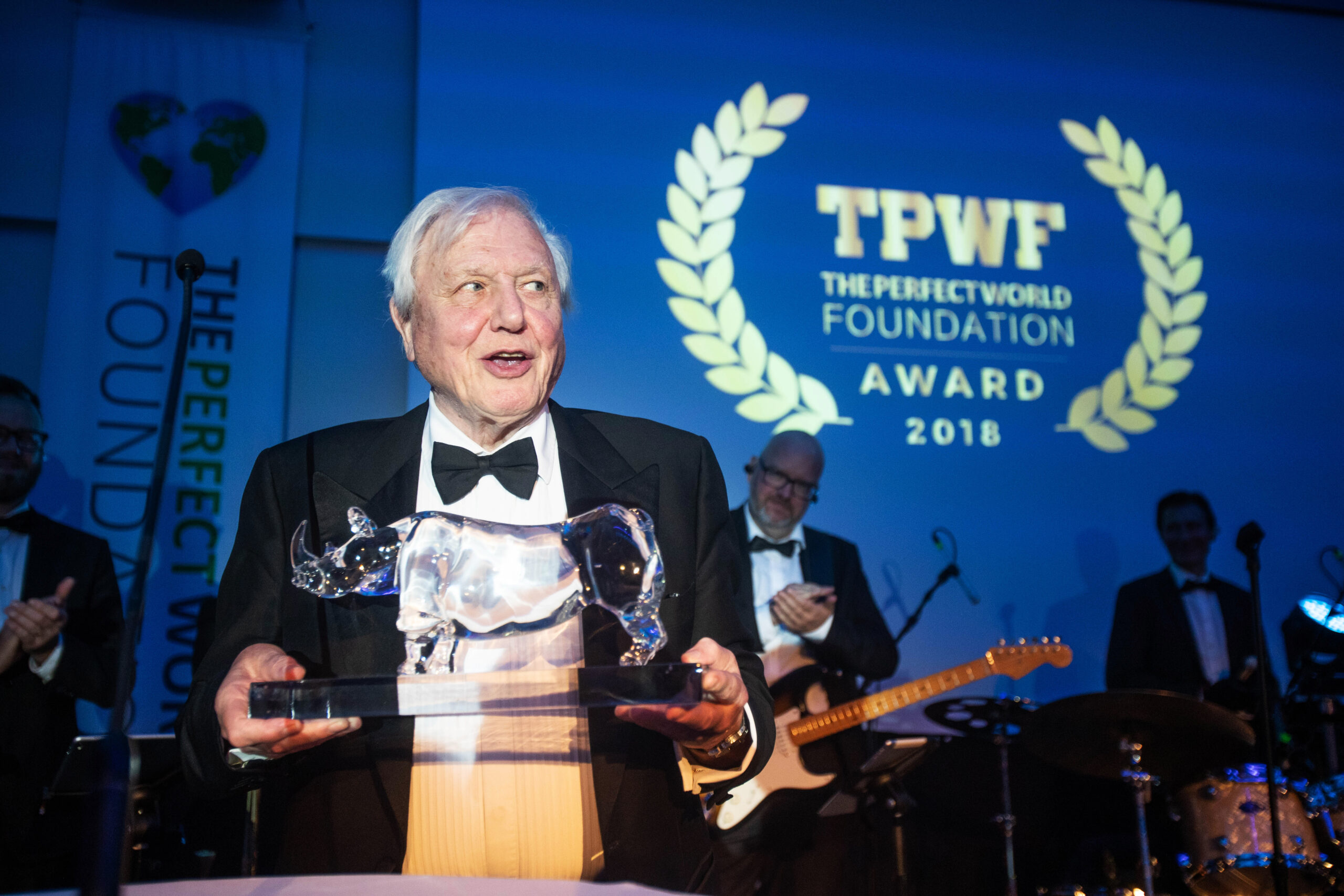
Attenborough has lived for decades in the same house in Richmond, southwest London, that he and his wife Jane bought in 1957 — a detail he has referenced publicly as evidence of his non-materialistic outlook. He has not been reported to own significant additional real estate, luxury vehicles, or other high-value asset collections typical of entertainment figures with comparable global recognition. In 2020, a British Antarctic Survey polar research ship, the RRS Sir David Attenborough, was named in his honour — a reflection of his cultural standing rather than a personal asset.
Photo: Rodhullandemu via Wikimedia Commons (CC BY-SA 4.0)
David Attenborough’s estimated net worth
Public estimates vary because private contracts, investments, taxes and liabilities are not fully disclosed.
| 1954 | Joins the BBC and creates “Zoo Quest,” his first major series |
| 1965-1973 | Serves as Controller of BBC Two, then BBC Director of Programmes |
| 1979 | “Life on Earth” airs, establishing him as a global broadcasting figure |
| 2001-2011 | “The Blue Planet,” “Planet Earth,” and “Frozen Planet” cement his status as the genre’s defining voice |
| 2019-2020 | Netflix’s “Our Planet” and the feature documentary “A Life on Our Planet” bring new streaming-era income |
| 2026 | Estimated net worth widely reported in the $15m-$35m range after more than 70 years in broadcasting |
Attenborough’s net worth is modest compared to entertainment figures with similar global recognition, a gap that reflects his career inside public-service broadcasting rather than commercial film or television. Fellow British broadcaster and naturalist Steve Backshall and BBC colleague Chris Packham operate on a smaller financial scale still, while American nature-documentary narrators tied to commercial networks have sometimes earned more per project. Within the specific niche of globally famous natural-history broadcasters, Attenborough’s decades of consistent work make him the standout figure by reputation, even though his estimated wealth trails most Hollywood actors or musicians of similar fame.
Sources and references
Sources referenced for this article include BBC talent pay disclosures, reporting from The Guardian and BBC News on Attenborough’s career and finances, and public biographical material published alongside his BBC and Netflix documentary series. Net worth figures are estimates compiled from public reporting. Last updated: August 2026.
Seven decades after “Zoo Quest” first put him in front of a camera, David Attenborough remains the most recognisable voice in natural history broadcasting — a career built on longevity, trust, and a famously unglamorous relationship with money rather than the blockbuster paydays of Hollywood’s biggest names.
Answer 5 questions about David Attenborough and get a free offer
Take the Quiz