
 How Much Are They Worth?
Celebrity fortunes, explained










How did Vozinha build this fortune?
The answer unfolds through the career, earnings, deals and assets behind the headline estimate.
Vozinha before the fame
The background and early turning points that shaped Vozinha’s route to prominence.
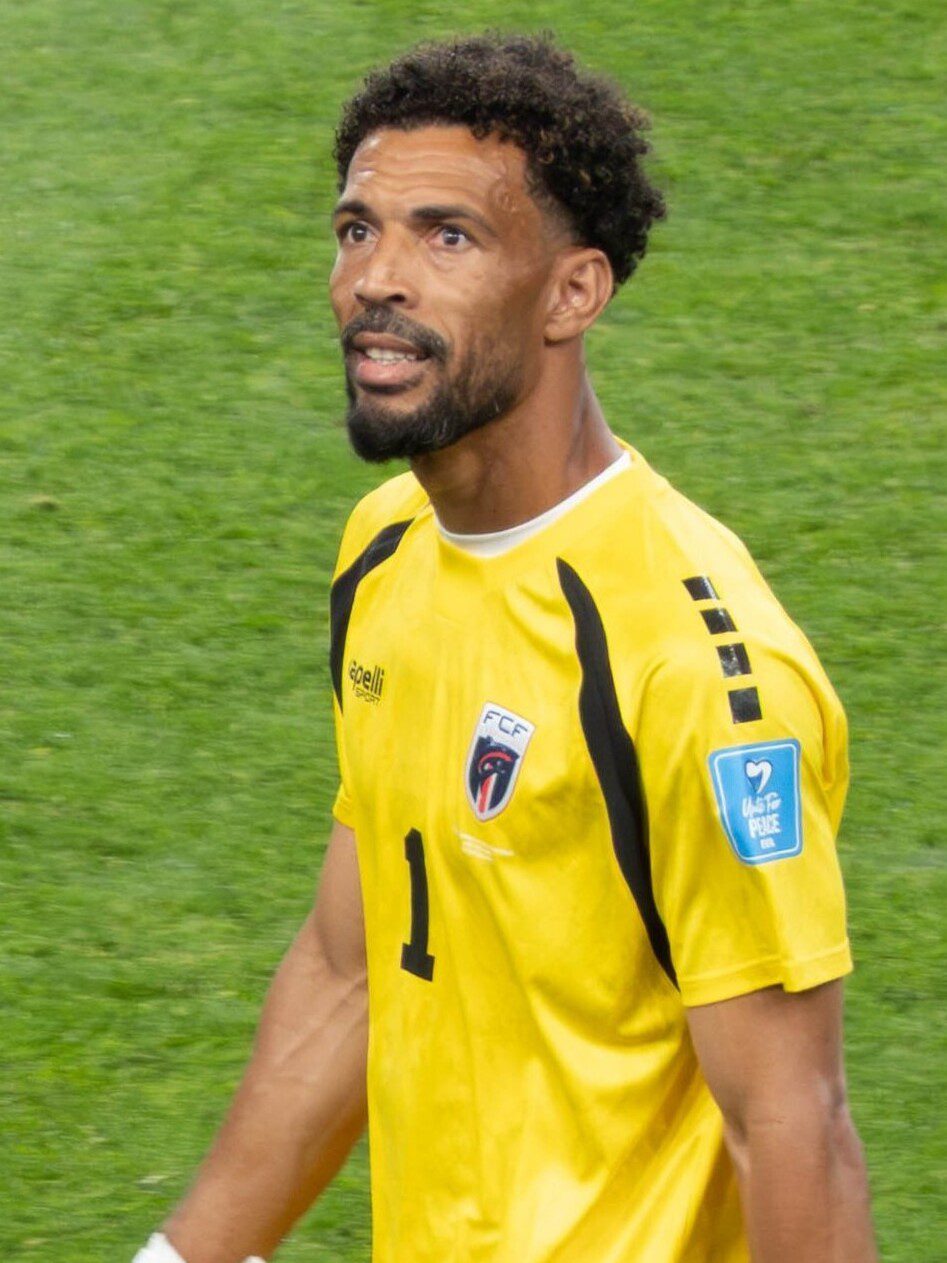
Josimar José Évora Dias, known to every Cape Verdean supporter simply as Vozinha, was born in Mindelo on the island of São Vicente on 3 June 1986. Mindelo is the archipelago’s cultural capital, a port town of music and football, where the professional game runs on a scale Europeans would barely call professional.
The nickname translates roughly as “granny”, dressing-room humour he picked up as a teenager and never shook off. By 2026 it was well enough known that Chilean football granted him a dispensation to wear it on his shirt instead of his legal surname, as ESPN reported. He is a goalkeeper, and for most of his adult life he was a working footballer rather than a famous one.
He began in Cape Verde’s domestic game with Batuque FC and then CS Mindelense, the most decorated club on his home island. From there he took the route almost every Cape Verdean footballer of his generation took, which is outwards: Angola with Progresso do Sambizanga, Moldova with Zimbru Chișinău, Cyprus with AEL Limassol.
Later came Portugal with Gil Vicente, Slovakia with AS Trenčín and a final Portuguese stop at Chaves in the second tier. Seven countries in two decades reads as restlessness but is simply what a keeper from a small island does to keep being paid to play. He debuted for Cape Verde in 2012 and became its first choice, passing eighty caps while the national side grew from curiosity into qualifier.
Vozinha’s breakthrough years
The career decisions and defining moments that turned recognition into sustained earning power.
On 15 June 2026, aged forty, Vozinha kept a clean sheet against Spain in Cape Verde’s first World Cup, denying Ferran Torres, Pedri and Aymeric Laporte, and was named player of the match. Al Jazeera described the aftermath: a man in tears on the pitch, and an Instagram following that leapt from around 500,000 to close to five million within hours. ESPN later put the eventual total in the tens of millions.
What the goalkeeping paid is our estimate, built league by league. On plausible rates for the divisions he actually played in — low five figures a year in Cape Verde, Angola and Moldova, roughly $110,000 a year in Cyprus, around €220,000 in Portugal’s top flight, near €90,000 in Slovakia and about €140,000 in the Portuguese second tier — his gross career wages come to roughly $2 million across twenty-two seasons. That is the whole of what the goalkeeping paid: every one of his moves was a free transfer, and a free transfer pays a player his salary alone.

What Vozinha’s work can earn
Reported pay, contracts, royalties and performance income reveal how the fortune was funded.
Cape Verde drew with Spain, Uruguay and Saudi Arabia, came through their group and went out to Argentina in the round of 32. Vozinha was named in the FIFA World Cup Best XI, which for a forty-year-old second-division goalkeeper is the most improbable line on any team sheet from the tournament.
The money that followed is the most lucrative stretch of his working life. His Chaves contract had run out, so he reached the market as a free agent and told ESPN he was weighing offers, Brazil among them. Colo-Colo, Chile’s most successful club, announced him in late July 2026. A marquee short-term signing at that level plausibly carries $350,000 to $600,000 a year, so we take about $450,000 for his first season — our estimate, and on its own a quarter of what the previous twenty years paid him.
Recognition arrived all at once and from outside football as much as inside it. Paul Pogba posted about him. Brazilian influencers campaigned for a club there to sign him. Al Jazeera framed the Colo-Colo deal as the arrival of a social-media sensation rather than a squad goalkeeper.
He has been careful about how he describes it. “Despite playing in smaller leagues for clubs that weren’t exactly giants,” he said on signing, “deep down I always told myself I was a ‘big club’ player.” In Cape Verde he is now a national figure of a kind the islands have produced in music far more often than in sport.

Vozinha’s business beyond the main career
Endorsements, ownership interests and investments can keep compounding long after the initial breakthrough.
For most of his career the commercial side amounted to club kit and whatever a glove manufacturer supplies free to a Primeira Liga squad member, which is product rather than payment. The World Cup changed the category he sits in without changing the money available to him; brands buy Lusophone reach cheaply next to a Premier League name.
Our reckoning is that the post-tournament window is worth roughly $150,000 to him in total rather than the millions a viral moment is assumed to generate. The reason is structural: he was forty when it happened, he plays in Chile, and endorsement value tracks future years of visibility more than past weeks of it.
Vozinha’s commercial asset is an audience: millions of followers acquired in a fortnight, late in his career and perishable, in a market where Lusophone brands have little access to sporting celebrity of that size.
Treated as an asset, that audience is worth something concrete. A footballer with his reach can clear $50,000 to $150,000 a year from regional partnerships while the attention lasts. We carry about $80,000 a year for two years, deliberately conservative, because follower counts of this kind decay quickly.

Vozinha’s notable luxury item
A reported property or major asset offers a tangible glimpse of the wealth behind the public estimate.
The asset side of a career like this is modest and mostly domestic. A professional who has earned steadily across seven countries typically holds a family property at home, a second for relatives, a car, and whatever has accumulated in pension arrangements.
We carry $350,000 to $500,000 of property in Mindelo and Praia at Cape Verdean prices, where a good family house costs a fraction of its European equivalent, plus a low six-figure cash and pension position. That property and that cash position are what the figure rests on.
Vozinha’s estimated net worth
Public estimates vary because private contracts, investments, taxes and liabilities are not fully disclosed.
How this estimate is calculated
The arithmetic starts with wages, because that is what he was paid for. Our league-by-league build gives roughly $2 million gross over twenty-two seasons, more than half from the Portuguese and Cypriot years. Tax at a blended 30 per cent plus agent costs leaves near $1.35 million net; two decades of living on that income consumes most of it, and we assume he retained 35 to 50 per cent, or $470,000 to $675,000.
To that we add the 2026 step change: a Colo-Colo season at about $450,000 gross, knockout bonuses in the low six figures, and commercial income of roughly $150,000 over two years, contributing $400,000 to $550,000 after tax. Property in Cape Verde at $350,000 to $500,000 and a low six-figure cash and pension position complete it. The working supports a range of $1.2 million to $1.8 million, and we publish its middle.
The softest input by a distance is the Colo-Colo contract, because its length decides whether 2026 was one well-paid season or three. If Vozinha plays into 2028 on similar terms the figure moves to the top of the band on wages alone; if the club treats him as a one-season attraction, the journeyman arithmetic is most of the answer and the number barely rises.
Confidence: Indicative — the figure is our reasoned build from the pay levels of the leagues he actually played in, plus his 2026 Colo-Colo move and the commercial window that followed the World Cup.
His standing in Cape Verde rests on having stayed identifiably ordinary. He has credited the islands’ football structures and his family for the career, and the World Cup run was received at home as a collective achievement.
Giving, at his level, is practical rather than institutional: equipment for island clubs, support for youth goalkeeping, help for relatives. The image he has is the one he earned on the pitch at forty, and it has needed no management.
There is very little here, which is notable for a player who became globally famous overnight. The nearest thing to a dispute was administrative: Chilean rules require a legal surname on the shirt, so the federation granted an exemption before he could play as Vozinha, and his arrival was delayed by registration paperwork.
Beyond that, the scrutiny has been of the fondest sort — whether a forty-year-old signed on a fortnight’s publicity could hold a place at Chile’s biggest club, a question asked of the signing rather than the man. No disciplinary, financial or legal matter of substance attaches to his name.