 How Much Are They Worth?
Celebrity fortunes, explained

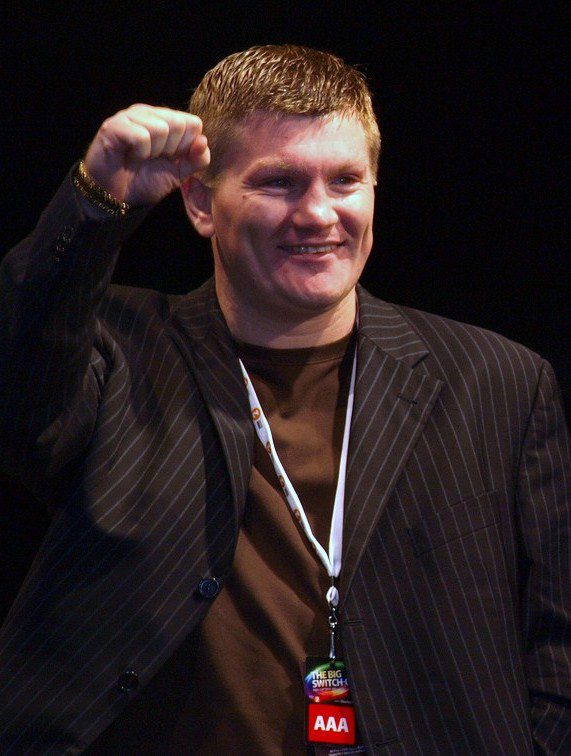
How did Ricky Hatton build this fortune?
The answer unfolds through the career, earnings, deals and assets behind the headline estimate.
Ricky Hatton before the fame
The background and early turning points that shaped Ricky Hatton’s route to prominence.
Richard John Hatton was born on 6 October 1978 in Stockport and grew up in Hattersley, on the eastern edge of Greater Manchester. His father Ray had played for Manchester City’s reserves and ran a carpet business in which Ricky worked as a teenager.
He walked into a local gym at ten and stayed. As an amateur he won national titles and boxed around seventy-five times, and the style was set early: pressure, body punches and a crowd that travelled. He remained a Manchester City supporter and lived within a few miles of where he grew up.
He turned professional in September 1997 on a small bill in Widnes and spent four years building a record in British halls, most of them in Manchester. ESPN records the career total at 45 wins and 3 defeats with 32 knockouts.
In 2001 he took the WBU light-welterweight title and then defended it fifteen times, almost entirely at the Manchester Evening News Arena. The belt itself carried little standing, but the residency did: he was selling out a 20,000-seat arena several times a year before he had fought anyone the American networks recognised.
Ricky Hatton’s breakthrough years
The career decisions and defining moments that turned recognition into sustained earning power.
On 4 June 2005 he met Kostya Tszyu, the long-reigning IBF light-welterweight champion, in Manchester in front of about 22,000 people. Tszyu’s trainer pulled him out at the end of the eleventh round. Hatton was named fighter of the year, and the fight is the one he always said he rated highest.
It also repriced him. Our estimate puts his purse for Tszyu at about £1.5 million, against perhaps £400,000 for a WBU defence the year before. Two years later he was in Las Vegas against Floyd Mayweather, and the reported terms were $10 million: a $6 million guarantee plus a share of the pay-per-view.
Against Manny Pacquiao in May 2009, BoxingScene reported an $11 million guarantee for Hatton within a 52-48 revenue split. Those two nights alone paid him more than the previous ten years combined, and they are the anchor points for everything in the calculation below.

What Ricky Hatton’s work can earn
Reported pay, contracts, royalties and performance income reveal how the fortune was funded.
He won world titles at light-welterweight and welterweight, taking the IBF belt from Tszyu, beating Luis Collazo for the WBA welterweight title in 2006 and regaining the IBF version from Juan Urango in January 2007. His knockout of Jose Luis Castillo in Las Vegas that June was the performance that persuaded American audiences.
Al Jazeera records a fifteen-year professional career and 45 wins from 48 bouts before his retirement in 2012. In 2024 he was inducted into the International Boxing Hall of Fame at Canastota, which ESPN reported he had never expected. He was appointed MBE in 2007.
His following was the thing that made him commercially valuable, and it was unusual in scale. ESPN put the number who travelled from Britain to Las Vegas for the Mayweather fight at about 20,000, singing in the casinos for days beforehand.
At home he was a fixture of mainstream television, not just the boxing pages, and the affection survived both defeats and the difficult years after them. Manchester stayed with him through all of it.
Ricky Hatton’s business beyond the main career
Endorsements, ownership interests and investments can keep compounding long after the initial breakthrough.
He was a mass-market British sports figure for most of a decade, and the commercial income reflected a domestic rather than a global profile: shorts and ring-walk sponsors, betting and beer brands, sportswear, video-game appearances, two books and a run of DVDs.
Our estimate puts the whole of it at £3 million to £6 million gross across the career. That is a fraction of the purses, which is the normal shape for a boxer whose audience was concentrated in one country.
He built the business while still fighting. Hatton Promotions launched in February 2009 at the same press conference that announced the Pacquiao fight, based at a gym complex in Hyde with two full-size rings, a fitness suite and offices. By that July it had a Sky deal for eight shows on the back of only four promotions.
The promotional company managed and trained fighters — Zhanat Zhakiyanov won a world title under it in 2017 — and alongside it he built Hatton Boxing and the Hatton Academy, which licenses boxing-for-fitness courses and branded gym equipment to commercial gyms. That licensing arm is the part with a recurring income rather than an event-by-event one.
Ricky Hatton’s notable luxury item
A reported property or major asset offers a tangible glimpse of the wealth behind the public estimate.
He stayed in Greater Manchester. The family home was in Hyde, a few streets from the gym, and he never moved to the tax-efficient addresses that fighters of his earning power often take.
The Hyde gym complex itself is the more significant asset: a commercial building bought and fitted out for the promotional business. Our estimate puts the property, residential and commercial together, at £2 million to £4 million.
Ricky Hatton’s estimated net worth
Public estimates vary because private contracts, investments, taxes and liabilities are not fully disclosed.
How this estimate is calculated
Start by separating the box office from the pay. ESPN reported the Mayweather fight at 850,000 pay-per-view buys and $47 million in television revenue. That is the event’s money, shared between two promoters, a network, a casino and the other fighter. Hatton’s own take from the night was the reported $10 million, and the $47 million never belonged to him.
On that basis our estimate of career purses runs as follows: about £150,000 across the first four years; £4 million to £6 million over the WBU residency from 2001 to 2004, on rising purses from a six-figure start; £2 million to £2.5 million for Tszyu and Maussa in 2005; £2.5 million to £3.5 million for Collazo and Urango in 2006; about £7 million for Castillo and Mayweather in 2007; £7 million to £9 million for Pacquiao in 2009 on the reported guarantee plus the split; and £1 million to £2 million for the 2012 comeback. That totals £25 million to £32 million gross, with £3 million to £6 million of endorsements on top.
A boxer keeps much less of a purse than the headline suggests. Trainer, manager, promoter shares, sanctioning fees and training-camp costs typically take 30 to 40 per cent before tax, and United Kingdom income tax over this period took 40 to 50 per cent of what was left, with the American purses also taxed at source. Retention of about a third of gross purses gives £8.5 million to £11 million, plus £2 million to £3.5 million kept from endorsements. Add the gym property and the Hatton Boxing licensing business at £4 million to £9 million combined, and allow for fifteen years of investment on money earned largely between 2005 and 2009. The working supports a range of $16 million to $30 million. The figure we publish is its midpoint, and the retention rate is the input that moves it most.
Confidence: Partly documented — his two Las Vegas purses and the event revenue were reported at the time, but the British purses, the value of the gym business and the retention rate are our own working.
His charity work was local and constant rather than institutional: appearances for Manchester hospitals and hospices, fundraising nights at the gym, and support for amateur clubs across the north-west, a good deal of it unpublicised.
He was also, unusually for a fighter of his standing, completely unguarded in public. He talked about his own difficulties in interviews when it would have been easier not to, and the reason he was so widely described as a world champion who was one of us is that he behaved like one throughout.
He lost to Mayweather in 2007 and Pacquiao in 2009, and the second defeat effectively ended his prime. He announced his retirement in 2011, returned once in November 2012 and lost, then retired for good.
In the years after boxing he was candid in public about the difficulties of life after the ring, at a time when few fighters were. He had been preparing for a bout in Dubai in December 2025. Al Jazeera reported that Hatton died on 14 September 2025, at the age of 46.