
 How Much Are They Worth?
Celebrity fortunes, explained
How Much Are They Worth?
Celebrity fortunes, explained






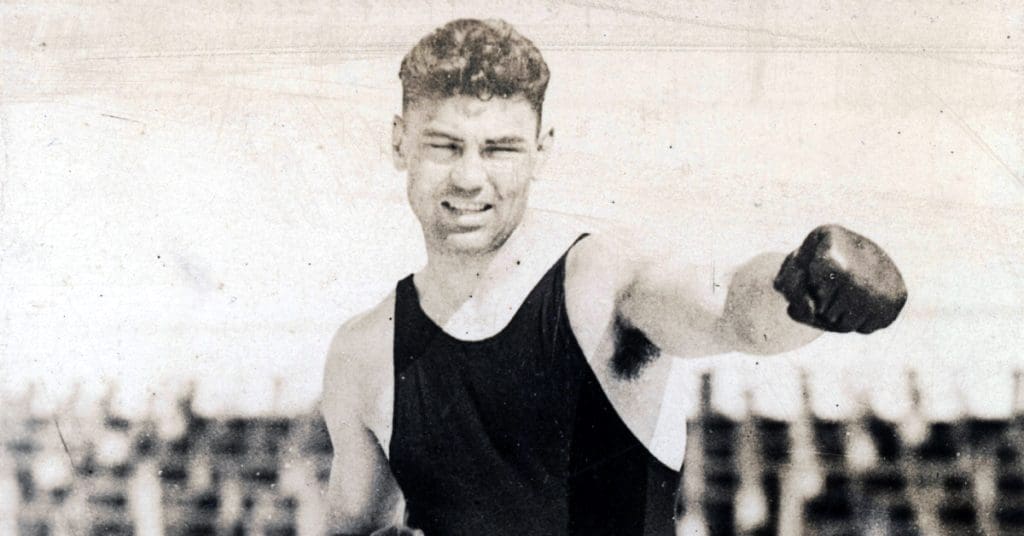
How did Jack Dempsey build this fortune?
The answer unfolds through the career, earnings, deals and assets behind the headline estimate.
Jack Dempsey before the fame
The background and early turning points that shaped Jack Dempsey’s route to prominence.
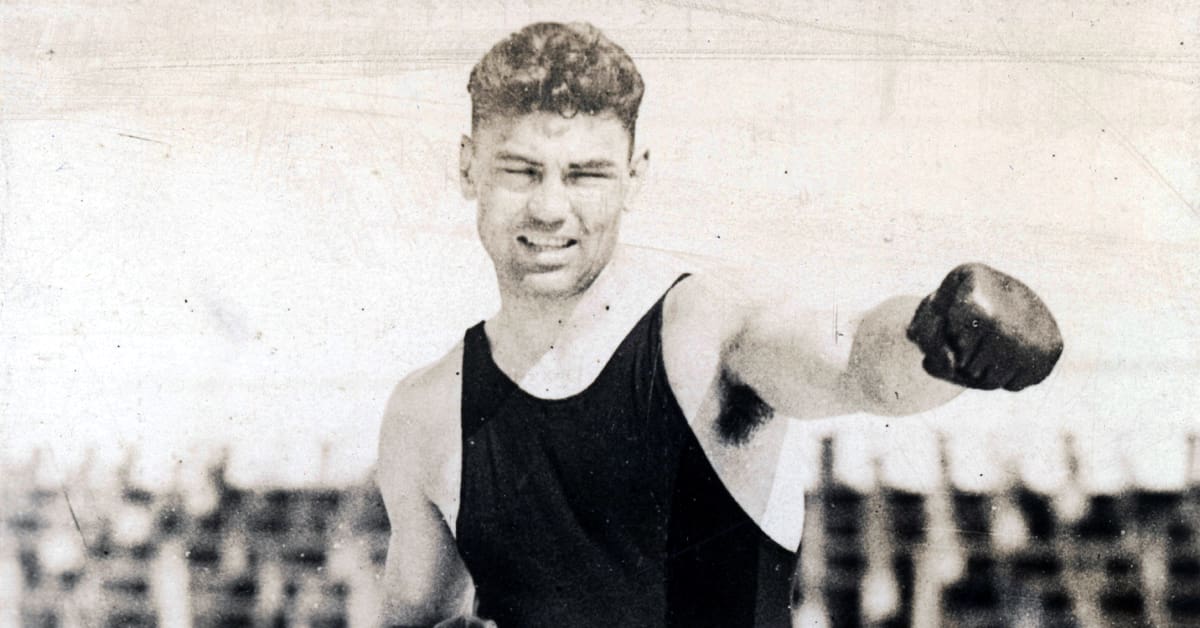
Dempsey was born on June 24, 1895, in Manassa, Colorado, one of 13 children of Hiram and Mary Celia Dempsey, according to his Wikipedia biography. Known as Harry as a boy, he left home at 16 and spent several years as an itinerant laborer, hopping freight trains and working as a ditch digger, fruit picker, timber cutter and circus roustabout, along with a stint as a bodyguard for Salt Lake Tribune president Thomas Kearns. During these years he fought for money in mining camp saloons under the names “Kid Blackie” and “Young Dempsey,” reportedly telling patrons he could “lick any SOB in the house.” He first fought professionally under the name Jack Dempsey in the fall of 1914 in Cripple Creek, Colorado, substituting for his brother Bernie on the fight card.
Dempsey’s first recorded professional purse was just $2.50, for a bout against a fighter remembered only as “One-Punch” Hancock, according to Encyclopedia.com’s profile of his career. He spent the mid 1910s fighting largely undocumented bouts across the western mining towns before moving east, where his punching power began attracting attention. In 1918 alone he fought 17 times, going 15-1 with one no decision, according to his Wikipedia biography, defeating a run of established contenders including light heavyweight champion Battling Levinsky, Fred Fulton, Bill Brennan and Billy Miske. That surge of activity, managed by Jack “Doc” Kearns, built the resume that earned him a title shot the following year.
Jack Dempsey’s breakthrough years
The career decisions and defining moments that turned recognition into sustained earning power.
Dempsey’s breakthrough came on July 4, 1919, in Toledo, Ohio, when the 187 pound challenger faced Jess Willard, the 245 pound reigning champion known as the “Pottawatomie Giant.” Dempsey knocked Willard down seven times in the first round alone, and Willard failed to answer the bell for the fourth, according to his Wikipedia biography. The beating was severe enough that some accounts alleged Dempsey’s gloves had been tampered with, a claim Ring magazine founder Nat Fleischer, who witnessed the hand wrapping, publicly denied. Willard himself later said simply, “Dempsey is a remarkable hitter. It was the first time that I had ever been knocked off my feet.” The fight drew a gate of $452,522 and made Dempsey heavyweight champion of the world at 24.

What Jack Dempsey’s work can earn
Reported pay, contracts, royalties and performance income reveal how the fortune was funded.
Dempsey held the heavyweight title for seven years, compiling an official record of 63 wins, 53 by knockout, against 6 losses and 9 draws from 84 recorded bouts, according to his Wikipedia biography. His July 2, 1921, defense against French war hero Georges Carpentier at Boyle’s Thirty Acres in Jersey City drew boxing’s first million dollar gate, $1,789,238 from an announced crowd of more than 80,000, according to Boxing News. He survived a knockdown to stop Luis Firpo in 1923 and lost his title on points to Gene Tunney in 1926 before their 1927 “Long Count” rematch drew an even larger $2,658,660 gate and a purse of $990,445 for Tunney against $447,500 for Dempsey, according to Wikipedia’s account of the fight. He was an inaugural inductee of the Ring magazine, World Boxing and International Boxing Halls of Fame, and the Associated Press voted him the greatest fighter of the previous 50 years in 1950.
Only Babe Ruth rivaled Dempsey as the most popular athlete in the United States during the 1920s, and author Paul Gallico wrote that he “was the greatest and most beloved sports hero the country had ever known,” according to ESPN’s retrospective on his legacy. He socialized easily across New York high society and Hollywood, counting Charlie Chaplin and Rudolph Valentino among his friends, and later champions paid tribute to his standing: Jack Sharkey said that if Dempsey and Joe Louis ever fought in a phone booth, “I have no doubt Dempsey is the one who would walk out.” Ring magazine has ranked him among the hardest punchers and greatest heavyweights of all time, rankings that have kept his name current with fans generations after his final fight.

Jack Dempsey’s business beyond the main career
Endorsements, ownership interests and investments can keep compounding long after the initial breakthrough.
Dempsey earned much of his outside-the-ring income before the modern sponsorship contract existed, through personal appearances and entertainment deals rather than product endorsement contracts in the current sense. Kearns signed him to a vaudeville contract reportedly worth $15,000 a week at the height of his fame, and to a 15 episode movie serial called “Daredevil Jack,” according to Encyclopedia.com’s profile of his career. He also appeared in the 1933 feature “The Prizefighter and the Lady” playing himself as referee, and on Broadway in “The Big Fight” opposite his second wife, actress Estelle Taylor, according to Biography.com’s profile of his career, income streams that functioned as his era’s version of a champion’s endorsement portfolio.
After retiring from the ring, Dempsey became a fixture of New York hospitality, opening Jack Dempsey’s Restaurant on Eighth Avenue across from Madison Square Garden in 1935 before relocating it to the Brill Building on Broadway in 1938, according to Wikipedia’s history of the restaurant. Racehorse owner Jack Amiel became a co-owner in the early 1950s, and the restaurant, famous for a cheesecake recipe Dempsey had airmailed as far as France, operated for nearly 40 years before closing in October 1974. He also lent his name and money to the Riviera del Pacifico, a casino and resort built in Ensenada, Mexico, in 1930, and co-owned the Howard Manor hotel in Palm Springs, California, according to his Wikipedia biography.

Jack Dempsey’s notable luxury item
A reported property or major asset offers a tangible glimpse of the wealth behind the public estimate.
Dempsey’s most durable asset was not a private residence but his restaurant real estate and its associated leases, first on Eighth Avenue and then in the Brill Building at 1619 Broadway, a location he occupied for roughly 36 years until a rent dispute with the building’s new owners helped force its 1974 closure, according to Wikipedia’s history of the restaurant. His other major documented holdings were his stake in the Riviera del Pacifico resort in Ensenada, Mexico, and his co-ownership of the Howard Manor hotel in Palm Springs, California, both noted in his Wikipedia biography. Unlike some champions of his era, Dempsey held onto commercial property and business interests almost continuously from the 1930s through his death, rather than losing them outright.
Jack Dempsey’s estimated net worth
Public estimates vary because private contracts, investments, taxes and liabilities are not fully disclosed.
How this estimate is calculated
Dempsey’s ring earnings are consistently put at roughly $3.5 million to more than $4 million across his 13 year career, according to Encyclopedia.com and ESPN’s retrospective on his career, built on documented purses that included $300,000 for the 1921 Carpentier fight, $711,000 for the first Tunney fight in 1926 and $447,500 for the 1927 rematch. Both sources agree he lost most of that fortune in the 1929 stock market crash and rebuilt his wealth through the 1930s and beyond via exhibition bouts, wrestling refereeing, and, above all, his Broadway restaurant, which supported him for nearly 40 years. Secondary net worth trackers such as CelebsMoney, used here only as a supplementary reference rather than a primary one, have put his fortune at around $5 million. Unlike several of his Golden Age peers, Dempsey was never reported to have died in financial distress, and HMW estimates his net worth at death within a range built around that documented rebuild and the widely cited aggregator figure.
$4 Million – $8 Million (net worth at death, 1983)
Dempsey served as honorary chairman of a relief fund organized to help fellow heavyweight champion Joe Louis after Louis fell into serious financial trouble later in life, according to his Wikipedia biography. In 1932 he sponsored the “Ride of Champions” rodeo event in Reno, Nevada, with the Dempsey Trophy awarded to top bronc riders, and during World War II he made frequent personal appearances at military hospitals and war bond drives while serving in the Coast Guard. He remained a visible public figure into old age, campaigning for Democrat John V. Tunney, son of his old rival Gene Tunney, during Tunney’s successful run for the U.S. Senate from California.
The defining controversy of Dempsey’s career grew out of World War I, when a 1918 publicity photo arranged by Kearns showed him at a Philadelphia shipyard in overalls and patent leather shoes, fueling accusations he had dodged the draft, according to Veterans Breakfast Club’s account of the episode. He was tried on related charges in San Francisco in June 1920 and acquitted after records showed he had sent his estranged wife more than $2,000 in support, but the “Slacker” and “Draft Dodger” labels followed him for years, and crowds booed him even after he won the title. Dempsey later reflected on the reversal after his celebrated Coast Guard service in World War II: “They branded me a draft dodger in World War I and a hero in World War II. They got it wrong both times.” His 1927 rematch with Gene Tunney also drew lasting scrutiny after he was slow to retreat to a neutral corner following a knockdown, the “Long Count” that helped Tunney survive and retain the title.