
 How Much Are They Worth?
Celebrity fortunes, explained
How Much Are They Worth?
Celebrity fortunes, explained




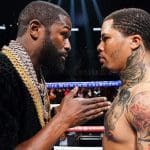


How did Wladimir Klitschko build this fortune?
The answer unfolds through the career, earnings, deals and assets behind the headline estimate.
Wladimir Klitschko before the fame
The background and early turning points that shaped Wladimir Klitschko’s route to prominence.
Wladimir Klitschko won Olympic super-heavyweight gold in 1996 and dominated the professional heavyweight division through a long unified-title reign. The IOC profile documents his amateur foundation. Financially, his case differs from a US PPV superstar: repeated European stadium and television events created dependable annual income, while K2 Promotions and Klitschko Ventures extended his activity beyond purses. HMW uses Forbes year-by-year earnings and specific final-fight reports, not title defenses as a wealth proxy.
Klitschko turned professional after Atlanta and won the WBO heavyweight title in 2000. Defeats to Corrie Sanders and Lamon Brewster interrupted his ascent before trainer Emanuel Steward helped rebuild his style. His BoxRec record verifies 64 wins in 69 professional contests. Early purses were materially below the championship peak and are assigned conservative amounts rather than backfilled using his later eight-figure earning level.
Wladimir Klitschko’s breakthrough years
The career decisions and defining moments that turned recognition into sustained earning power.
Klitschko’s second championship phase began with the 2006 rematch victory over Chris Byrd. He added the WBO belt against Sultan Ibragimov and, together with brother Vitali, helped make heavyweight boxing a major German television property. Britannica’s career account traces that recovery. Long-term broadcaster and stadium economics gave him both reliable guarantees and promotional leverage through the K2 structure.

What Wladimir Klitschko’s work can earn
Reported pay, contracts, royalties and performance income reveal how the fortune was funded.
Klitschko defeated David Haye in 2011, lost his titles to Tyson Fury in 2015 and ended his career after the 2017 Wembley fight with Anthony Joshua. BBC Sport’s Joshua report records the 90,000-capacity event and dramatic stoppage. Published reports place the Fury purse near $22.5 million and Joshua compensation in the high eight figures, but those remain pre-tax event earnings.
Forbes repeatedly placed Klitschko among the highest-paid athletes: reported annual earnings included about $28 million in 2012, $24 million in 2013, $28 million in 2014 and $21.5 million in 2015. The Forbes athlete record provides the most consistent cross-year framework. HMW treats those totals as gross boxing and sponsor income and removes overlap with individual purse reports.
Wladimir Klitschko’s business beyond the main career
Endorsements, ownership interests and investments can keep compounding long after the initial breakthrough.
Klitschko partnered with European brands including Mercedes-Benz, McFit and Hugo Boss and made selected film and media appearances. His long championship tenure made sponsorship more stable than a single upset-driven endorsement cycle. Reuters’ retirement report confirms he declined a lucrative Joshua rematch. Contract values are private, and much commercial income is already embedded in annual figures.
K2 Promotions gave the brothers a role in event promotion, while Klitschko Ventures’ official site documents Wladimir’s post-boxing work in innovation, leadership and corporate transformation. These are genuine operating activities but have no public sale price. HMW values them conservatively as owner-led businesses whose value depends on Klitschko’s continuing participation, rather than applying a technology-company multiple.

Wladimir Klitschko’s notable luxury item
A reported property or major asset offers a tangible glimpse of the wealth behind the public estimate.
Klitschko has lived and invested across Germany, Ukraine, the United States and elsewhere. That creates uncertainty about tax residence, property ownership and currency exposure, so a single assumed national tax rate would be inappropriate. His support for Ukraine and wartime public role may also involve substantial personal commitments. Private-company accounts, mortgages and investment returns are unavailable. The estimate consequently uses a lower asset multiple than gross career earnings alone might suggest and assigns no value to rumored art or startup holdings without documentation.
Wladimir Klitschko’s estimated net worth
Public estimates vary because private contracts, investments, taxes and liabilities are not fully disclosed.
How this estimate is calculated
HMW creates a year ledger from Forbes’ non-overlapping annual estimates, adds conservative values for unlisted championship years and the Joshua event, and checks the result against the reported career total. It deducts tax, training, promotion, management and consumption, then adds restrained net values for property, liquid investments, K2-related rights and Klitschko Ventures. Unverified comeback offers and private-asset stories are excluded. The method rewards documented longevity without assuming every gross dollar remained invested.
Klitschko was a household name across Germany, Ukraine and much of Europe, with title fights broadcast to large international audiences. He speaks multiple languages, holds a doctorate and developed a leadership and resilience platform after boxing. The International Boxing Hall of Fame profile confirms the scale of his reign. Public recognition supports speaking and consulting income, but it is not itself entered as an asset.
The Forbes annual series provides a strong minimum for the peak years, but it does not cover every season and may include endorsements alongside purses. Reports of roughly €150 million in total professional earnings offer a cross-check, not an additional input. Taxes in multiple jurisdictions, K2 promotional costs and long-term spending must be deducted. Post-retirement consulting is real but not publicly quantified.