
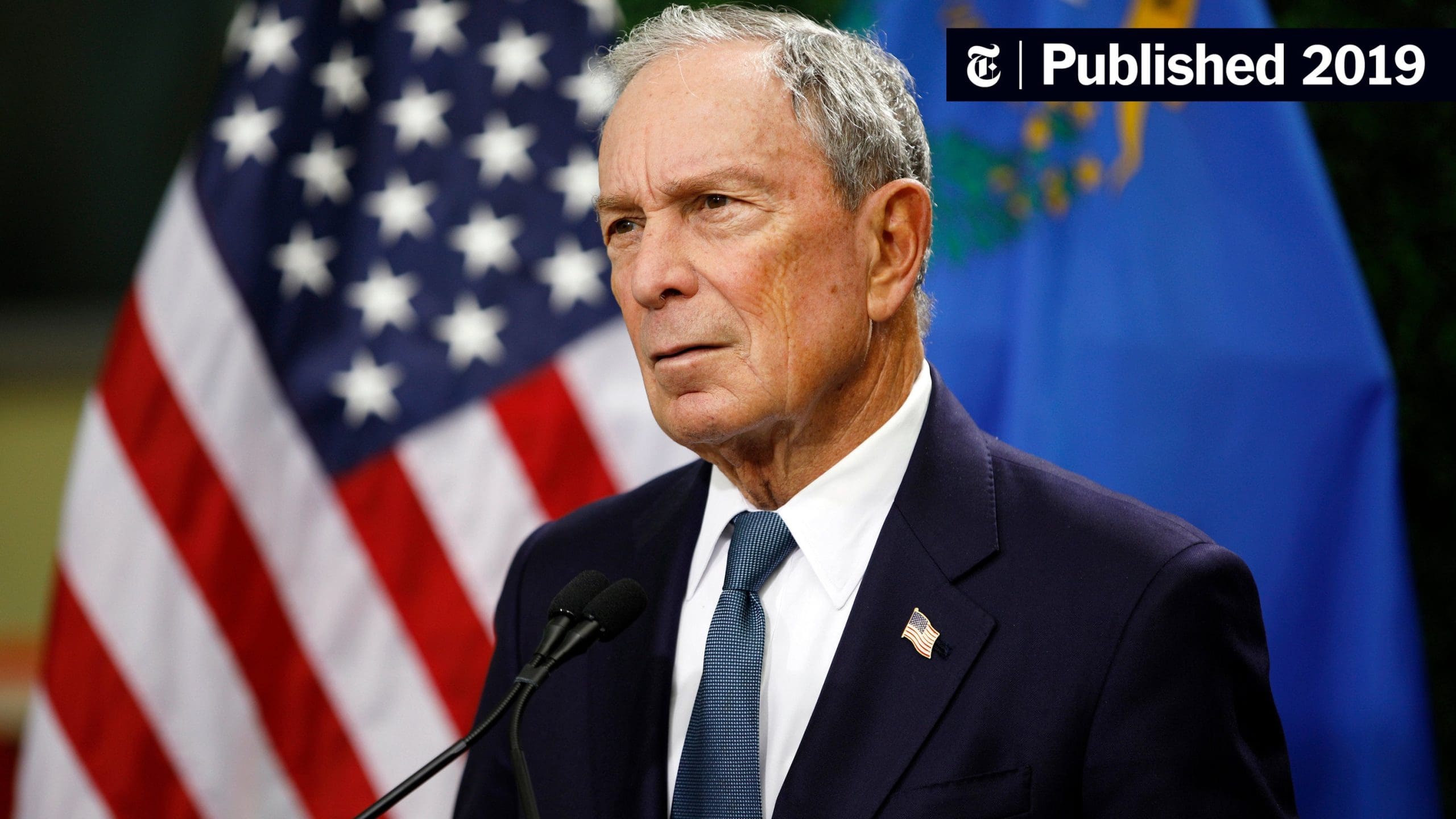
 How Much Are They Worth?
Celebrity fortunes, explained
How Much Are They Worth?
Celebrity fortunes, explained







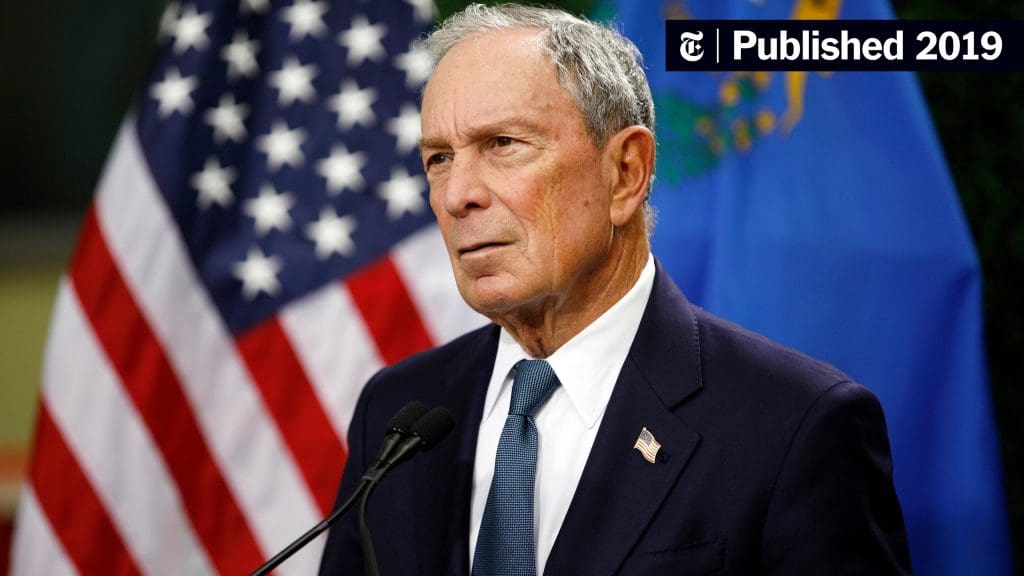
How did Michael Bloomberg build this fortune?
The answer unfolds through the career, earnings, deals and assets behind the headline estimate.
Before the fame
The background and early turning points that shaped Michael Bloomberg’s route to prominence.
Bloomberg was born on February 14, 1942, and grew up in Medford, Massachusetts, just outside Boston. His father, William Henry Bloomberg, worked as a bookkeeper for a local dairy company, and his mother, Charlotte Rubens Bloomberg, was a homemaker; both were children of Russian Jewish immigrants, and the family lived a middle-class life. Bloomberg has said he worked part-time jobs, including as a parking-lot attendant, to help pay his way through Johns Hopkins University, where he earned a bachelor’s degree in electrical engineering in 1964. He went on to earn an MBA from Harvard Business School in 1966, after which he joined Wall Street.
Bloomberg joined the Wall Street investment bank Salomon Brothers in 1966, eventually rising to head the firm’s equity trading and, later, its information systems division over a 15-year career. In 1981, Salomon merged with commodities trader Phibro Corporation, and Bloomberg was pushed out of the newly combined firm; he left with a partnership payout reported at roughly $10 million, which he used to found Innovative Market Systems (IMS) that same year alongside partners Duncan MacMillan, Charles Zegar, and Thomas Secunda. The team built a computerized terminal designed to give traders real-time market data, analytics, and messaging in one system — a radical improvement over the fragmented data sources Wall Street relied on at the time. In June 1983, a demonstration of the prototype impressed Merrill Lynch, which invested $30 million for a 30% stake in IMS and ordered 20 machines, providing the capital that funded the terminal’s development; Bloomberg agreed not to sell the technology to Merrill’s competitors for five years. The “Market Master” terminal, later renamed the Bloomberg Terminal, shipped in December 1983, and the company was renamed Bloomberg L.P. in 1986.
The breakthrough years
The career decisions and defining moments that turned recognition into sustained earning power.
Through the late 1980s and 1990s, Bloomberg L.P. grew from a single-product data terminal business into a full media and information company, launching Bloomberg News in 1990, Bloomberg Television in 1994, and Bloomberg Radio, alongside expansion of the terminal network across banks, hedge funds, and government institutions worldwide. In October 2009, the company agreed to buy BusinessWeek magazine from McGraw-Hill, relaunching it as Bloomberg Businessweek that December. In 2001, in the aftermath of the September 11 attacks, Bloomberg entered politics and was elected mayor of New York City on a largely self-funded campaign, stepping back from day-to-day management of Bloomberg L.P. He served three terms as mayor, from January 2002 to December 2013, taking a symbolic $1 annual salary and pursuing public health initiatives such as the indoor smoking ban, education reforms that shifted control of schools to the mayor’s office, and large-scale urban development and sustainability planning through PlaNYC; his tenure was also marked by controversy over the NYPD’s stop-and-frisk policies and a 2008 push to overturn the city’s term-limits law so he could seek a third term. After leaving office he returned to lead Bloomberg L.P. as CEO. In November 2019, he entered the Democratic presidential primary and spent more than $1 billion of his own money on a three-month campaign, winning only the American Samoa caucus before dropping out in March 2020 and endorsing Joe Biden. Since then he has focused primarily on Bloomberg Philanthropies, which in 2025 alone directed $4.3 billion to public health, education, the arts, and city-government programs, extending his lifetime giving to a reported $25.4 billion and making him, by The Chronicle of Philanthropy’s count, the United States’ single largest individual donor for the third consecutive year.

What the work can earn
Reported pay, contracts, royalties and performance income reveal how the fortune was funded.
Bloomberg has never disclosed a conventional annual salary, and no verified public figure exists for what he draws from Bloomberg L.P. in a given year. As mayor, he famously accepted a token salary of $1 per year for all three terms, funding his own campaigns and mayoral-related expenses personally rather than drawing a public paycheck. As a private company, Bloomberg L.P. does not disclose shareholder distributions, so any specific dollar figure for what Bloomberg personally receives annually from his roughly 88% ownership stake would be speculative. His other disclosed income sources are minor by comparison — a New York City pension from his years as mayor and royalties from books including his 1997 memoir “Bloomberg by Bloomberg” — and none of these approach the scale of his wealth, which is overwhelmingly a function of the estimated value of his equity stake rather than any annual income stream.
Bloomberg has no employment “contracts” in the conventional sense; the defining financial agreements of his career instead relate to ownership of Bloomberg L.P. itself. The foundational deal was Merrill Lynch’s 1983 investment of $30 million for a 30% stake in what was then Innovative Market Systems, the capital injection that funded development of the first Bloomberg Terminal. The largest and most consequential transaction came in 2008, when, amid the global financial crisis, Merrill Lynch agreed to sell its remaining roughly 20% stake in Bloomberg L.P. back to the company for $4.425 billion, a deal completed with only about $110 million paid upfront in cash. Because Bloomberg himself held the large majority of the remaining equity, that transaction — which effectively set a fresh valuation benchmark for the whole company — is reported to have pushed Forbes’ estimate of his personal net worth from roughly $11.5 billion to more than $15 billion in a single step, illustrating how sensitive his fortune is to periodic re-valuations of a company that otherwise never changes hands.

The business beyond the main career
Endorsements, ownership interests and investments can keep compounding long after the initial breakthrough.
Unlike many billionaires with a public consumer profile, Bloomberg has no history of conventional paid product endorsements, and no reliable source documents him accepting a fee to promote a commercial product or brand. His public-facing “endorsement”-style activity has instead run through Bloomberg Philanthropies advocacy campaigns — for example, lending his name and funding to global anti-smoking and anti-obesity public health initiatives — which are philanthropic and policy efforts rather than paid commercial arrangements. No verified endorsement-deal figures should be assumed to exist for Bloomberg, and none are cited here.
Bloomberg’s primary business interest remains his approximately 88% ownership of Bloomberg L.P., a company Forbes estimates generates nearly $15 billion in annual revenue across its core terminal business (used by roughly 325,000 subscribers worldwide) and its media divisions, which today include Bloomberg News, Bloomberg Television, Bloomberg Radio, Bloomberg Businessweek, Bloomberg Government, Bloomberg Tax, Bloomberg Law, and Bloomberg New Energy Finance (BNEF). The company also operates Bloomberg Beta, a venture-capital arm that has invested in early-stage technology startups since 2013. In 2023, Bloomberg publicly confirmed a long-anticipated plan to eventually transfer his entire ownership stake in Bloomberg L.P. to Bloomberg Philanthropies, either at his death or sooner, an arrangement commentators have said could become the single largest private philanthropic gift in history given the company’s scale. Outside of Bloomberg L.P. and its ventures, no comprehensive, independently verified list of his personal investment holdings is publicly available; his wealth is overwhelmingly concentrated in the one company rather than spread across a diversified portfolio, which distinguishes his financial profile from many other billionaires of comparable net worth.

Notable luxury item
A reported property or major asset offers a tangible glimpse of the wealth behind the public estimate.
Bloomberg’s primary residence is a five-story townhouse on East 79th Street in Manhattan, purchased in 1986 for a reported $3.5 million; over subsequent decades he acquired five of six units in the adjoining townhouse, expanding the combined property into a Upper East Side mega-residence that real-estate outlets have estimated is worth at least $50 million today, though no current assessed figure was verified for this article. He also owns an oceanfront estate in Southampton, New York, an 11-bedroom, roughly 22,000-square-foot house on about 35 acres reportedly bought for $20 million in 2011; a seven-bedroom London townhouse purchased in 2015 for a reported $25 million, notable for a ceiling mural by Sir James Thornhill, the artist behind the dome of St. Paul’s Cathedral; a rebuilt oceanfront estate in Bermuda, where he has long spent considerable personal time; a Florida property in an equestrian community reportedly purchased for $8.9 million in 2006; and a condominium at the Mountain Haus building in Vail, Colorado. Reported purchase prices above are drawn from real-estate and lifestyle press coverage rather than confirmed county records and should be read as approximate historical figures rather than current market values; no reliable, itemized public accounting of Bloomberg’s art collection, aircraft, or other personal assets was located, and none is asserted here.
Michael Bloomberg’s estimated net worth
Public estimates vary because private contracts, investments, taxes and liabilities are not fully disclosed.
How this estimate is calculated
This figure comes from Forbes’ Real-Time Billionaires index, which ranks Bloomberg #18 in the world and models his fortune primarily around his roughly 88% ownership of Bloomberg L.P., a company Forbes estimates has close to $15 billion in annual revenue; because the company is privately held, Forbes’ valuation relies on comparable-company revenue and earnings multiples rather than a public share price. A notable wrinkle for this particular billionaire is that the Bloomberg Billionaires Index — run by Bloomberg News, which Michael Bloomberg himself founded and owns — does not rank him at all; Bloomberg News has an explicit, long-standing editorial policy of not covering its own founder’s net worth to avoid a conflict of interest, a gap documented by the Columbia Journalism Review and confirmed on Bloomberg’s own Billionaires Index methodology page. That leaves Forbes as effectively the sole rigorous, methodologically transparent tracker of his wealth, rather than the usual two-source cross-check available for most billionaires on this site. Some aggregator sites, including Celebrity Net Worth, have listed figures tens of billions of dollars lower than Forbes’ current number; that gap is large enough that it likely reflects a stale or differently modeled estimate rather than a genuine second data point, and it is cited here only as a secondary, non-authoritative reference, not as a rigorous alternative to Forbes.
It is also worth separating paper value from realized, spendable wealth in Bloomberg’s specific case. The overwhelming majority of his estimated fortune is the modeled value of an illiquid, privately held stake in a company that does not trade on any public market and has changed hands, in whole or in part, on only a handful of occasions in more than 40 years — meaning the headline number is a considered estimate, not a market price he could realize by selling shares tomorrow. That distinction is sharpened further by his own stated plan to eventually transfer his entire Bloomberg L.P. stake to Bloomberg Philanthropies, either at death or sooner, and by the fact that he has already given away a reported $25.4 billion over his lifetime, including $4.3 billion in 2025 alone. In other words, a meaningful and growing share of the wealth captured in the $109.4 billion headline figure is functionally already earmarked for philanthropy rather than personal use or inheritance, which is an unusually explicit real-world answer to the paper-value-versus-realized-wealth question that this section normally has to leave open for other billionaires.
| Year | Estimated Net Worth / Milestone |
|---|---|
| 2000 | Forbes estimates net worth at approximately $4 billion |
| 2007 | Forbes estimates net worth at approximately $8 billion, while Bloomberg serves his second term as mayor |
| 2008 | Merrill Lynch sells its roughly 20% stake in Bloomberg L.P. back to the company for $4.425 billion; his estimated net worth reportedly jumps from about $11.5 billion to over $15 billion on the resulting revaluation |
| 2010 | Forbes estimates net worth at approximately $18 billion |
| 2013 | Forbes estimates net worth at approximately $27 billion as Bloomberg leaves the mayoralty after a third term |
| 2020 | Forbes estimates net worth at approximately $54.9 billion; Bloomberg spends over $1 billion of personal wealth on an unsuccessful presidential campaign |
| 2023 | Publicly confirms plans to eventually transfer his Bloomberg L.P. stake to Bloomberg Philanthropies |
| 2024 | Forbes estimates net worth at approximately $104.7 billion |
| 2026 | Forbes Real-Time Billionaires lists net worth at $109.4 billion as of August 17, ranking him #18 globally |
Among fellow founder-billionaires who converted a single dominant private company into a fortune approaching or exceeding $100 billion, Bloomberg is often grouped with figures like Netflix’s Reed Hastings, though Hastings’ wealth is tied to a publicly traded, market-priced stock, whereas Bloomberg’s is an estimate of a private company that has never had a public valuation event beyond internal share buybacks. Among wealthy individuals who moved from business into elected office and later self-funded a presidential run, Bloomberg is most directly comparable to Ross Perot, the billionaire who ran self-funded independent presidential campaigns in 1992 and 1996, and, more loosely, to Donald Trump, another New York-based businessman-turned-politician, though Trump’s disclosed net worth is a small fraction of Bloomberg’s and relies heavily on real estate and branding rather than a single operating company. On philanthropy specifically, Bloomberg’s approach and scale place him alongside Giving Pledge signatories such as Bill Gates and Warren Buffett, and his lifetime giving total of roughly $25.4 billion is now large enough to be compared with theirs in absolute dollar terms, even though his overall net worth remains smaller than either of those two.
Sources and references
- Forbes Real-Time Billionaires — Michael Bloomberg profile: forbes.com/profile/michael-bloomberg
- Bloomberg Billionaires Index — Methodology (confirms Michael Bloomberg is excluded from the Index): bloomberg.com/billionaires/methodology
- Columbia Journalism Review — “Bloomberg’s Missing Billionaire”: archives.cjr.org
- CBS News — “It’s Official: Merrill Sells Stake In Bloomberg To Bloomberg LP For $4.425 Billion”: cbsnews.com
- CNBC — “McGraw Hill to Sell Business Week to Bloomberg” (Oct. 2009): cnbc.com
- Forbes — “Michael Bloomberg Spent At Least $876 Million On His Failed Presidential Bid”: forbes.com
- NBC New York — “Mike Bloomberg Spent Over $1 Billion on Presidential Campaign”: nbcnewyork.com
- Yahoo Finance — “Mike Bloomberg plans to leave his company to Bloomberg Philanthropies”: finance.yahoo.com
- Times of Israel — “Billionaire philanthropist Michael Bloomberg is US’s biggest donor of 2025”: timesofisrael.com
- Wikipedia — Innovative Market Systems / early Bloomberg L.P. history: en.wikipedia.org
- Celebrity Net Worth — Michael Bloomberg profile (secondary aggregator, cited only as a cross-check): celebritynetworth.com