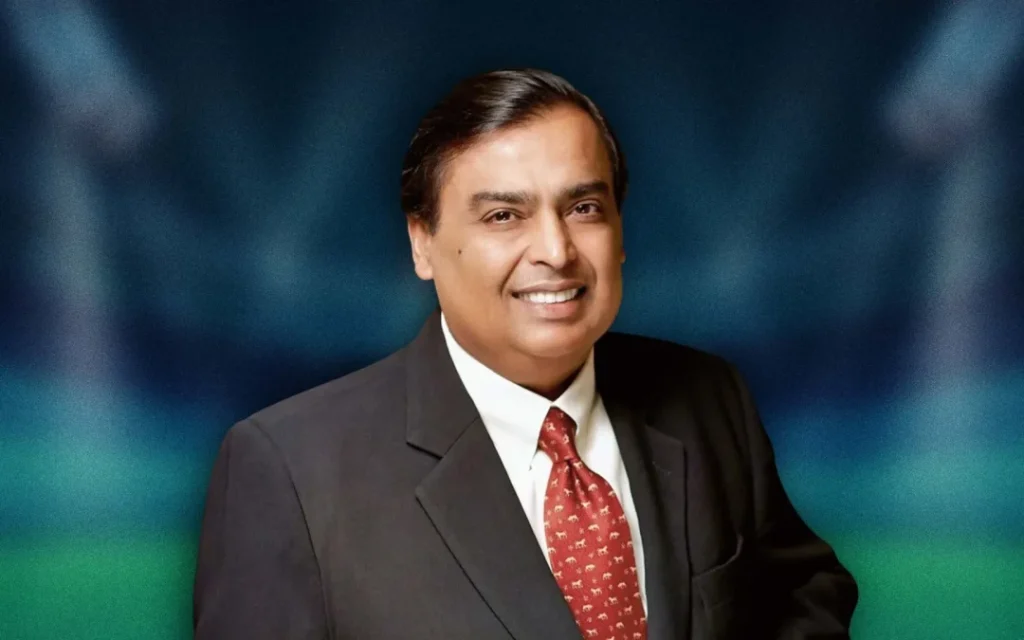
How did Mukesh Ambani build this fortune?
The answer unfolds through the career, earnings, deals and assets behind the headline estimate.
Before the fame
The background and early turning points that shaped Mukesh Ambani’s route to prominence.
Born in Aden and raised in Mumbai, Ambani studied chemical engineering before briefly attending Stanford. Reliance’s official leadership profile describes his return to the family enterprise and long executive tenure. His father founded Reliance, but Mukesh’s present wealth depends chiefly on the branch of the business he leads, not on a simple undivided family inheritance.
He joined Reliance while his father Dhirubhai Ambani was expanding from textiles into petrochemicals. The Britannica biography traces that formative period without treating later family wealth as salary. He entered during construction of the Patalganga petrochemicals project and learned the capital-intensive operating model that later shaped Reliance’s refining and telecom expansion.
The breakthrough years
The career decisions and defining moments that turned recognition into sustained earning power.
Ambani’s decisive breakthrough came through large-scale refining and petrochemicals, followed by a second transformation around Jio. Reliance’s annual report documents the operating businesses behind the listed company. The Jamnagar refining complex established the scale that made Reliance a major listed enterprise; Jio later demonstrated that the same approach could be applied to consumer technology.
What the work can earn
Reported pay, contracts, royalties and performance income reveal how the fortune was funded.
Under his leadership, Reliance added nationwide mobile connectivity, a vast retail network and digital platforms. The company’s Jio overview and retail overview show the breadth of those operations. The rollout of low-cost mobile data altered India’s telecommunications market, while Reliance Retail built reach across grocery, fashion, electronics and digital commerce.
The dominant source is the Ambani family’s economic interest in Reliance Industries, not executive compensation. Market movements in the listed shares can therefore move the estimate materially from one day to the next. Dividends can generate cash, but the much larger component is unrealized equity value. A stock decline can reduce paper wealth without changing the number of shares held.
The business beyond the main career
Endorsements, ownership interests and investments can keep compounding long after the initial breakthrough.
Reliance also controls media and entertainment interests and the family owns the Mumbai Indians franchise. The IPL’s official team page confirms the franchise identity, while the precise family economics are private. Mumbai Indians and entertainment interests extend the family’s visibility, yet franchise valuations reported in league tables are not equivalent to realizable proceeds after ownership splits and taxes.
Strategic partnerships brought outside investors into Jio Platforms and Reliance Retail. Reliance’s investor reporting archive provides primary documents, but those subsidiary valuations should not simply be added to the parent-company stake. Investments by Meta, Google and private-equity firms supplied observable subsidiary valuations. They are useful cross-checks, but Reliance’s listed price already reflects much of that value.
Notable luxury item
A reported property or major asset offers a tangible glimpse of the wealth behind the public estimate.
Highly publicized assets include the Antilia residence, yet ownership costs, debt and asset-level values are not fully disclosed. This profile does not count press descriptions of luxury possessions as cash. Antilia is widely described as one of the world’s most valuable private residences. Without a market sale, financing record or transparent beneficial-ownership statement, any precise value remains speculative.
Mukesh Ambani’s estimated net worth
Public estimates vary because private contracts, investments, taxes and liabilities are not fully disclosed.
How this estimate is calculated
HMW anchors the result to Forbes’ latest named India-list assessment and checks it against the publicly traded Reliance holding. Private investments, property, philanthropy, taxes and liabilities are treated conservatively rather than guessed. The selected figure follows Forbes’ named India ranking, whose principal evidence is listed Reliance equity. It is not built by multiplying an executive salary or adding unsourced luxury assets.
His profile extends far beyond corporate India: Forbes continues to rank him among the world’s wealthiest business owners. The Forbes India rich list is the clearest named external valuation benchmark. As chairman and managing director, Ambani is closely identified with corporate strategy, although Reliance’s results belong to all shareholders and cannot be treated as personal income.
Forbes’ published figure is an estimate, and Reliance’s share price and the rupee-dollar exchange rate fluctuate. Hurun’s separate global rich-list methodology illustrates why reputable rankings can differ. Public rankings also differ on whether they attribute wealth to Mukesh alone or to Ambani family members. Currency conversion creates another layer of daily movement.

JavaScript is off, so all sections are displayed together.