 How Much Are They Worth?
Celebrity fortunes, explained
How Much Are They Worth?
Celebrity fortunes, explained







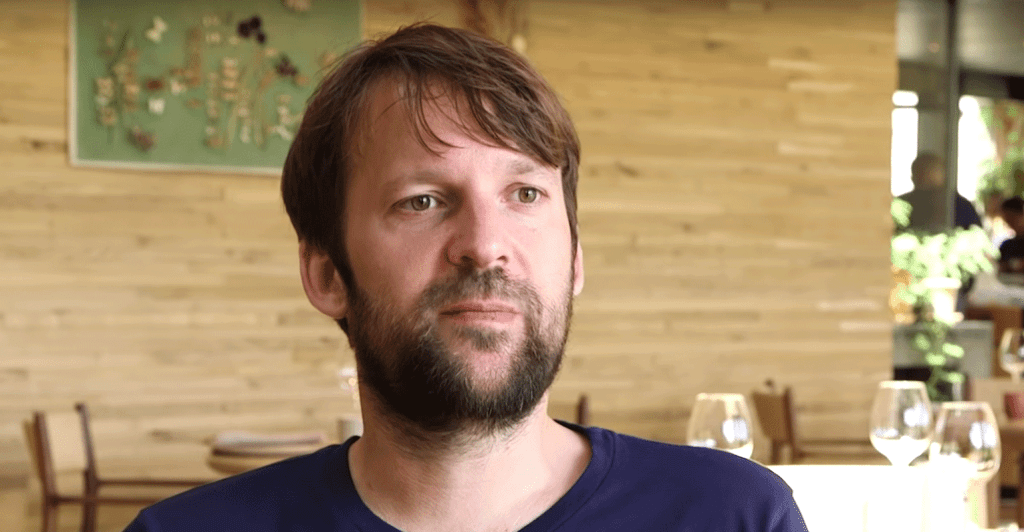
How did René Redzepi build this fortune?
The answer unfolds through the career, earnings, deals and assets behind the headline estimate.
Before the fame
The background and early turning points that shaped René Redzepi’s route to prominence.
Rene Redzepi was born on December 16, 1977, in Copenhagen, Denmark, to a Danish mother and an Albanian father who had emigrated from what was then the Yugoslav Socialist Republic of Macedonia (present-day North Macedonia). That mixed heritage, split between Scandinavian and Balkan households, later shaped the way he talked about food as something rooted in place and memory rather than luxury for its own sake. He grew up in Copenhagen and in his father’s home region, an upbringing he has credited with giving him an outsider’s eye on Danish culture and cuisine, which he would later help redefine. Wikipedia and other biographical sources trace his early life in detail.
Redzepi left mainstream schooling at 15 to enroll in culinary school, a decision that set the direction of his working life early. He completed a four-year apprenticeship at Pierre Andre, a Michelin-starred restaurant in Copenhagen, then moved to Le Jardin des Sens in Montpellier, France, at 19 to broaden his technique. He went on to stage at the legendary elBulli in Spain under Ferran Adria, widely regarded as the most influential kitchen of its era, and spent time under Thomas Keller at The French Laundry in California. Those postings gave him both classical French technique and exposure to the avant-garde, experimental thinking that elBulli was known for, a combination he later fused with a hyper-local Nordic pantry. Details of this training period are documented by Britannica.
The breakthrough years
The career decisions and defining moments that turned recognition into sustained earning power.
In 2002, Danish entrepreneur Claus Meyer approached Redzepi to become head chef of a new restaurant project in Copenhagen. The result was Noma, a name formed by combining the Danish words “nordisk” (Nordic) and “mad” (food). The restaurant opened in a former warehouse on the Christianshavn waterfront and built its entire identity around foraged, fermented, and hyper-seasonal Nordic ingredients at a time when French and Mediterranean technique still dominated fine dining. The approach was radical enough that critics initially struggled to categorize it. By 2010, that gamble had paid off decisively when Noma was named the World’s Best Restaurant for the first time, a result that effectively created the “New Nordic” movement as a global culinary category. Background on the restaurant’s founding and early identity is covered on its Wikipedia page.
What the work can earn
Reported pay, contracts, royalties and performance income reveal how the fortune was funded.
Under Redzepi, Noma topped the World’s 50 Best Restaurants list in 2010, 2011, 2012, and 2014, and again in 2021, making it one of the most decorated restaurants of the past two decades. The restaurant also held three Michelin stars during the final years of its original service model. Redzepi’s personal profile grew alongside the restaurant’s; in 2012, Time magazine named him one of the 100 most influential people in the world, a recognition unusual for a working chef rather than a celebrity or public figure. That honor and the press attention that followed are recounted in Smithsonian Magazine.
Redzepi became one of the most recognizable chefs in the world, a status built on television, publishing, and his role as a public commentator on the restaurant industry rather than on any single dish. He appeared in documentary profiles for years and in 2024 created and narrated “Omnivore,” an eight-part Apple TV+ documentary series exploring how ingredients such as chile, rice, salt, and tuna have shaped human history and are being reshaped by climate change. The series, filmed across more than a dozen countries, extended his public identity well beyond the restaurant industry and into mainstream food media. Apple’s own announcement of the series is available via Apple TV Press.

The business beyond the main career
Endorsements, ownership interests and investments can keep compounding long after the initial breakthrough.
Redzepi’s pop-up events and Noma Projects ventures have historically drawn corporate sponsorship, including a partnership with American Express, whose Resy and Tock reservation platforms backed several high-profile Noma pop-ups, along with support from other hospitality and lifestyle brands. That sponsorship relationship became a point of scrutiny in 2026, when American Express and another sponsor, Blackbird, withdrew their support for a Los Angeles pop-up following renewed allegations against Redzepi, illustrating how closely his personal brand and Noma’s commercial partnerships were tied together. Details of the sponsor withdrawals are reported by Bloomberg.
Beyond the restaurant itself, Redzepi built a wider commercial operation around the Noma name. Noma Projects, launched as a consumer products company, translates recipes and techniques from Noma’s in-house fermentation lab, such as garums, hot sauces, and vinegars, into products sold directly to home cooks online and through retail partners. In January 2023, Redzepi announced that Noma would close its traditional restaurant format at the end of 2024, explaining that the economics of running a fixed-location fine-dining restaurant with a large brigade of cooks had become unsustainable relative to what diners could realistically be charged. Rather than shutting down entirely, the operation shifted toward what has been described as a food lab model, running periodic pop-ups around the world while putting more weight behind Noma Projects as a scalable, product-based revenue stream. Coverage of this transition and Noma’s stated economics can be found via Fast Company.
Notable luxury item
A reported property or major asset offers a tangible glimpse of the wealth behind the public estimate.
Redzepi’s most publicly documented property is his family home in the Christianshavn district of Copenhagen, a converted 17th-century row house that once served as a smithy, located a short walk from Noma itself. The home has been featured in design press for its use of traditional Danish oak flooring and bespoke joinery, reflecting the same Nordic design sensibility that defines his cooking, and was developed in collaboration with his wife, cookbook author Nadine Levy Redzepi. No public real estate filings or additional property holdings for Redzepi have been reported by mainstream outlets, so the Christianshavn home remains the one asset consistently documented in the press. It is profiled in detail by Nordic Design.
René Redzepi’s estimated net worth
Public estimates vary because private contracts, investments, taxes and liabilities are not fully disclosed.
How this estimate is calculated
Noma operates as a privately held Danish company, and neither Redzepi nor Noma has published audited financial statements or a verified personal net worth figure through a major financial outlet such as Bloomberg or Forbes. In the absence of that disclosure, estimates of Redzepi’s fortune circulating online are built from a mix of publicly known income streams rather than a single confirmed source: roughly two decades of ownership income from one of the world’s most awarded and highest-priced restaurants, royalties from several bestselling cookbooks including “Noma: Time and Place in Nordic Cuisine” and “The Noma Guide to Fermentation,” revenue from the Noma Projects consumer products line, and fees tied to documentary work, speaking engagements, and the MAD Symposium platform. Entertainment finance sites such as Sportskeeda, drawing on aggregated estimates including figures commonly attributed to Celebrity Net Worth, size his fortune modestly relative to his fame, reflecting the reality that fine-dining restaurant ownership, even at the highest level of acclaim, is a notoriously low-margin business. Celebrity Net Worth itself does not currently maintain a dedicated, sourced profile for Redzepi, so its figures should be treated as a secondary, unverified estimate rather than a primary financial disclosure. Weighing those aggregated estimates against his two decades of restaurant ownership, publishing income, and product-line revenue produces the following range.
In 2011, Redzepi founded MAD, a nonprofit organization and annual symposium in Copenhagen that brings together chefs, farmers, scientists, and food policy figures to discuss sustainability and working conditions across the restaurant industry. MAD has been described as a kind of industry-wide think tank for food, pushing conversations about foraging, food waste, and fair labor practices well beyond Noma’s own kitchen. Redzepi used the platform for years to position himself as a reform-minded figure within an industry he was openly critical of, including its treatment of kitchen staff, a stance that took on a more complicated meaning after later events described below. Background on MAD’s founding and mission is available through Forbes.
Noma’s labor practices drew sustained scrutiny well before 2026. Reporting in 2022 detailed the restaurant’s long-standing reliance on unpaid stagiaires, with dozens of interns working alongside paid line cooks for as many as 70 hours a week without wages, a common but increasingly criticized practice across fine dining. Noma began paying all of its interns in October 2022 following that scrutiny, a change that added meaningfully to its monthly labor costs. The more serious reckoning came in March 2026, when a New York Times investigation drawing on accounts from 35 former Noma employees detailed alleged physical and verbal abuse by Redzepi between 2009 and 2017, including claims of employees being struck, threatened, and publicly humiliated in the kitchen. Redzepi announced his resignation as Noma’s head chef days after the report, also stepping down from the board of MAD, and issued a statement saying he would “take responsibility” for his past behavior. Reporting on the intern labor practices is covered by Paste Magazine, and the resignation and its fallout are covered by The Washington Post.